£20,000 for a Stocks and Shares ISA? Here’s how to try and turn it into a monthly passive income of £493

Hundreds of pounds in passive income a month from a £20k Stocks and Shares ISA? Here’s how that might work in practice for a patient investor.

| More on:
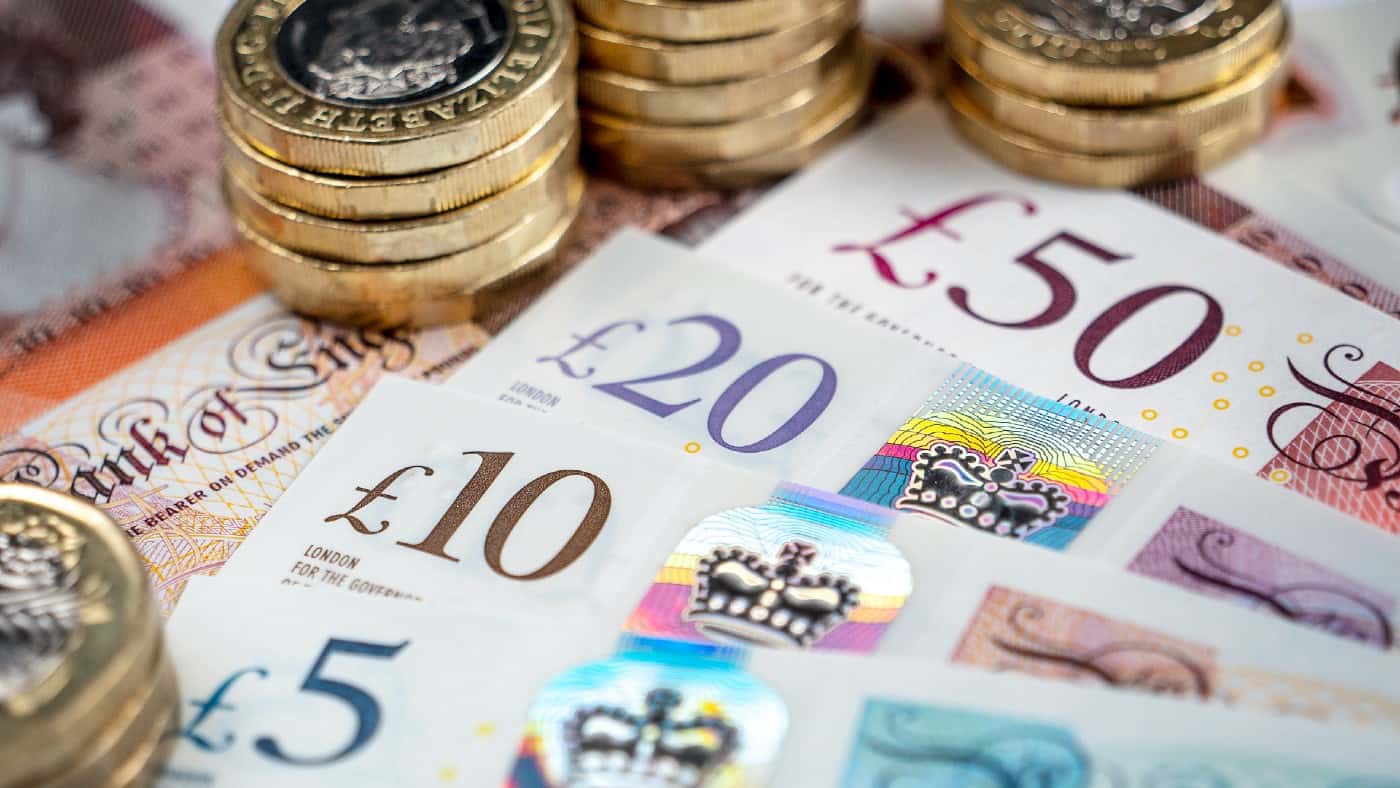
Close-up of British bank notes

Image source: Getty Images

You’re reading a free article with opinions that may differ from The Motley Fool’s Premium Investing Services. Become a Motley Fool member today to get instant access to our top analyst recommendations, in-depth research, investing resources, and more. Learn More.

At this time of year, some more money could come in handy for many of us. Passive income is a way of describing money that is earned without working for it. That may sound too good to be true, but it can be as simple as using a Stocks and Shares ISA to invest in some blue-chip businesses that pay dividends.

With a long-term mindset, such an approach can potentially earn hundreds (or even thousands) of pounds in passive income each month.

Dividends can earn dividends… that earn dividends!

For example, imagine somebody sets up a Stocks and Shares ISA with £20k then is able to grow its worth at a compound annual growth rate of 7.5%.

After 19 years (remember – I mentioned a long-term approach to investing is helpful here), that ISA ought to be worth around £79k.

In other words, in slightly less than two decades, its value should nearly have quadrupled thanks to the power of compounding – dividends earning dividends.

Capital growth could have helped too, although share prices can move down as well as up – and dividends are never a sure thing.

At a 7.5% dividend yield, that Stocks and Shares ISA would then be big enough to earn passive income of around £5,927 a year. That averages out to around £493 a month.

Setting realistic expectations – and taking action

Is a 7.5% compound annual growth rate realistic? After all, the FTSE 100 yield currently stands at a far more modest 3%.

I think that target is achievable – and realistically so – in today’s market.

I do not think aiming for it ought to require investing in little-known businesses. It should be achievable with a suitably diversified portfolio of well-known and proven blue-chip firms.

Another helpful factor could be keeping a keen eye on dealing costs and management charges, so it makes sense to look around for the most suitable Stocks and Shares ISA.

Dividend yield well above average

As an example of what such an approach might look like in action, one income share I think investors should consider is British American Tobacco (LSE: BATS).

When it comes to income, for investors who do not have an ethical objection to the line of business, the tobacco industry has some attractions.

Cigarettes are cheap to make but can be sold plentifully for a pretty penny. With limited avenues for growth, tobacco manufacturers can use cash flows to fund dividends.

British American is a case in point. It has grown its dividend per share annually for decades.

The firm’s premium brands give it pricing power: Pall Mall is a pricey proposition whether on a tobacconist’s shelf or an estate agent’s listings!

The current dividend yield is 5.7% — and British American’s share price has gained 54% in five years.

Falling cigarette sales are a risk to profits. But pricing power can help the company mitigate falling sales volumes by increasing the price tag.

Meanwhile, the FTSE 100 business has also been growing its non-cigarette business with products like Velo nicotine pouches.


C Ruane has no position in any of the shares mentioned. The Motley Fool UK has recommended British American Tobacco P.l.c. Views expressed on the companies mentioned in this article are those of the writer and therefore may differ from the official recommendations we make in our subscription services such as Share Advisor, Hidden Winners and Pro. Here at The Motley Fool we believe that considering a diverse range of insights makes us better investors.

More on Investing Articles

Investing Articles

2 stocks to buy before they bounce back in 2026?

Buying undervalued stocks is a great way to try and build wealth. But it’s even better when the companies are…

Read more »

Mixed-race female couple enjoying themselves on a walk
Investing Articles

1 of the FTSE 100’s best bargains to consider for 2026!

Royston Wild discusses a top FTSE 100 share he owns in his portfolio -- and explains why he think it's…

Read more »

British Pennies on a Pound Note
Investing Articles

On a P/E ratio of just 3, is this penny stock a deep bargain?

Christopher Ruane previously made a profit buying and later selling this penny stock. Why has he bought it again, with…

Read more »

Young woman working at modern office. Technical price graph and indicator, red and green candlestick chart and stock trading computer screen background.
Investing Articles

I’ve bought this 6.6%-yielding FTSE 250 share, hoping for a 2026 price recovery

This FTSE 250 share has more than halved in the past five years. But it still offers an attractive dividend…

Read more »

Finger clicking a button marked 'Buy' on a keyboard
Investing Articles

A once-in-a-decade chance to buy these UK income shares cheap?

The investing focus in 2026 might just be returning to long-term income shares after a roller-coaster decade for the UK…

Read more »

A GlaxoSmithKline scientist uses a microscope
Investing Articles

Up 9.9%! Here’s why Oxford Nanopore stock topped the FTSE 250 today

This innovative company's stock price marched higher today in the FTSE 250 index. Might this be my first Stocks and…

Read more »

Tesla building with tesla logo and two teslas in front
Investing Articles

Tesla stock’s defied gravity before. Can it do it again?

Could Tesla stock really be worth close to 300 times earnings -- or more? Christopher Ruane explains his thinking about…

Read more »

Businessman with tablet, waiting at the train station platform
Investing Articles

As Greggs’ share price dives, is this a once-in-a-decade opportunity?

The Greggs share price looks incredibly cheap on paper. But does this represent an attractive dip-buying opportunity? Royston Wild investigates.

Read more »