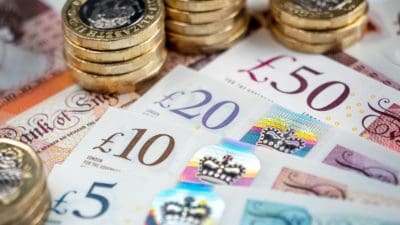
Winter has arrived at last (albeit too late to save retailers from their rotten Christmases), and with the snow, rain and higher heating bills come thoughts of escaping to somewhere less miserable.
Australia, perhaps, if your wallet can stretch that far, or maybe the Canary Islands if it can’t?
Just don’t let your daydreams drift over the Atlantic to thoughts of catching the winter sun with the snowbirds of Florida or California.
Nearly everything is bigger in the US – the burgers, the cars, and the carbon emissions – but there’s one thing that definitely isn’t right now.
And that’s the value of the pound in your pocket.
Currency ups and downs
As I type, £1 will buy you $1.42.
That’s the fewest cents for your pence since the financial crisis.
As recently as 2014, you could get $1.70 for your pound.
And back before the credit crisis, the pound/dollar exchange rate peaked at nearly $2.10 to the UK pound!
In December, the US Federal Reserve raised its benchmark interest rate for the first time in nearly a decade, which instantly made the dollar more attractive to international investors.
In fact, the greenback was rising for months beforehand in expectation of such a move.
But here at home, prospects for an interest rate rise from the Bank of England have been pushed further into the future.
After Governor Mark Carney admitted this month that inflation seems more subdued than Bank officials had previously thought, Bank Rate is now expected to stay at its current rock bottom 0.5% level until 2017.
Add the risks of a disruptive Brexit following the upcoming referendum on our membership of the European Union, and the pound has become less attractive as a currency, even as the dollar has looked more appealing.
Hence the pound has slid while the dollar has strengthened.
Dollar dividends
Now, I like a bargain when I travel just as much as when I hunt for shares.
And that means I’d feel like a pauper of an Englishman in New York thanks to today’s pathetic pound/dollar exchange rate.
But what’s bad for my holiday plans could be good news for your dividends.
You see, many of the big dividend payers in the UK that contribute to the FTSE’s current better-than-4% dividend yield do their business in dollars.
That means the dividends we’re paid in pounds and pence typically benefit when the dollar is strong versus the UK currency.
To be sure, I don’t think we should expect a dividend bonanza from the strong dollar.
Many of the FTSE’s giant dividend payers are currently struggling in troubled sectors of the economy, which is already pressuring their cash flows.
Indeed, data firm Capita Asset Services recently predicted that the total dividend payout from the UK stock market could fall modestly in 2016.
But there’s no denying that for those large multinationals where the dollar is the accounting currency of choice, a stronger dollar is helping to counteract some of these headwinds.
What’s it worth?
Capita estimates that 40% of UK dividends are declared in US dollars, and that the stronger dollar added £2.5bn to the total payout in 2015.
It also reckons that if the present weakness of the pound persists in 2016, then that could add another £1bn to the £89.9bn total dividend payout it predicts for 2016.
Of course, if you’re a stock picker with outsized exposure to the big UK dividend payers who declare in dollars, you could see an even bigger benefit.
Four of the five biggest payers on the UK market – contributing 34% to the total dividend pot – declare their dividends in dollars.
I’m thinking of behemoths like HSBC (LSE: HSBC), Royal Dutch Shell (LSE: RDSB), BP (LSE: BP) and GlaxoSmithKline (LSE: GSK).
Between them, these dollar dividend declarers are forecast to pay dividends in 2016 equating to yields of 6-8%.
And if you’re one of their shareholders, the weak pound is a boon.
(For those who are wondering, the exception in the top five is Vodafone (LSE: VOD), which is the fourth largest contributor to the UK market’s dividend total. It does its accounting in pounds).
Don’t bet your bottom dollar
Exchange rates are but one of the factors you should evaluate when weighing up income stocks, of course.
Indeed, those big market-beating yields I pointed to suggest many investors are sceptical these particular companies can maintain their high payouts.
Equally, the dollar could – and probably some day will – weaken against the pound. That would then see such dividends shrink by the time they hit your British bank account.
But for now, bad news for the pound looks like good news for your dividends.