FTSE 100-listed Unilever (LSE:ULVR) is rising again as hopes over a permanent Middle East ceasefire grow. Yet at £43.38 per share, the consumer goods giant is still 11% cheaper than it was a month ago. Does this represent an attractive dip buying opportunity?
Food on the block
Like the broader stock market, Unilever’s shares slumped after the Iran war began. With it came fears of higher costs and weaker consumer spending power as oil prices surged. Inflation and its impact on global interest rates and economic growth could be catastrophic.
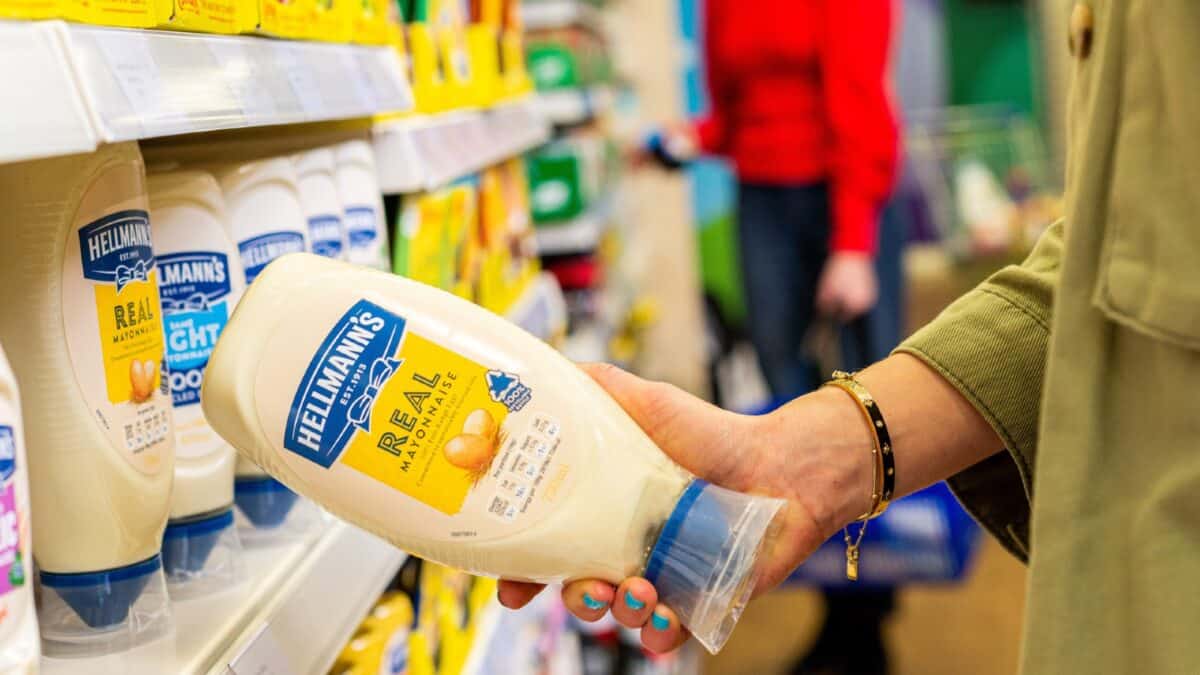
But that’s not the whole story behind the FTSE firm’s decline. Investors also reacted badly to news on 31 March that Unilever was selling its Foods division to McCormick & Company for $44.8bn.
The move makes sense to me, allowing the company to focus better on its Home Care and Personal Care divisions. This carries advantages like the opportunity to lean into faster-growth categories, products with better profit margins, and regions with booming population and wealth levels.
It follows the divestment of the firm’s ice cream division last year. So what’s the problem on this occasion? Put simply, the Food unit is more valuable than Unilever’s remaining operations, prompting the re-rating of its share price. Investors were also unimpressed by the structure of the deal — just $15.7bn of the deal in cash, with the remainder settled in shares in the spun-off business.
But I view the news as a net positive for Unilever, provided it goes through. So are its shares a buy?
Downgrades to come?
Let’s first look at this in the context of the firm’s most recent financial statement. In 2025, Unilever recorded underlying sales growth of 3.5%, below its multi-year target of 4% to 6%. And it’s warned that the top line could continue to underwhelm — this year, it expects growth to “be at the bottom end” of the range due to “slower market conditions“.
The trouble is these predictions were made before the Iran war kicked off. So there’s a good chance that sales will miss even this modest target. It’s also possible margin forecasts will be downgraded as cost pressures increase. Unilever predicted “a modest improvement in underlying operating margin” from the 20% last year.
In this landscape, Unilever’s share price could fall further over the coming months. And particularly if the recent Middle East ceasefire crumbles. But for long-term investors, I think the consumer goods giant could be worth a close look.
A FTSE 100 bargain?
Make no mistake: Unilever is a high-quality business, with ‘power brands’ like Dove soap and Persil detergent driving growth. It also has strong exposure to emerging markets, where consumer spending is rising especially rapidly.
What’s more, its shares trade at a slight discount to their historical average. The forward price-to-earnings (P/E) ratio is 16.5, below the 10-year average of 17-18. This doesn’t make Unilever shares a white-hot bargain, but it provides an added little sweetener for investors. Taken altogether, I think this is a top FTSE 100 share to consider following recent price weakness.