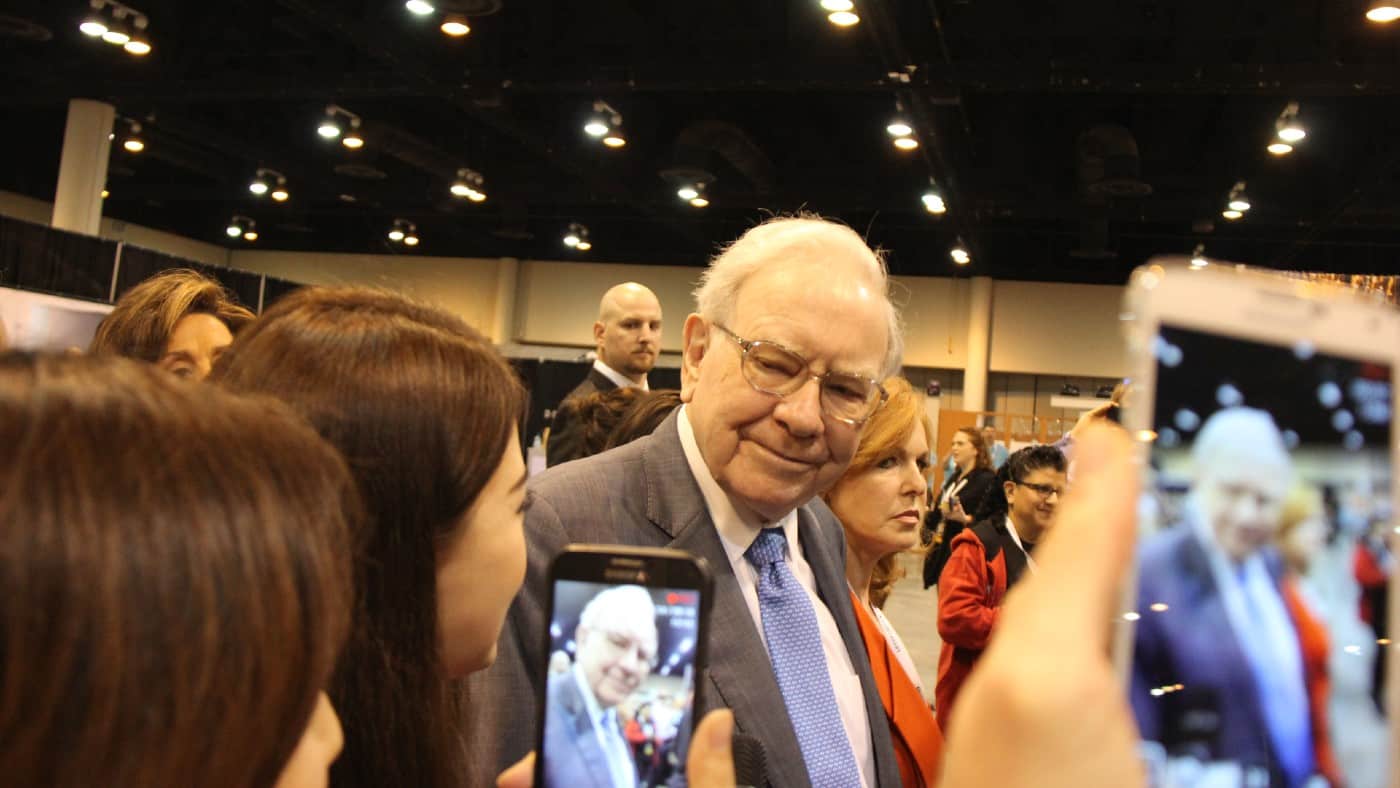
At the end of this month, legendary investor Warren Buffett is set to stand down as boss of Berkshire Hathaway (NYSE: BRK.A) (NYSE: BRK.B).
Buffett’s record is widely acclaimed. But just how good is it really?
Multi-millionaire maker
Buffett took the reins at Berkshire in 1964. In those days one pound bought a lot more US dollars than it does today, so to keep things simple I refer here to dollars, not pounds.
That said, leading US shares including Berkshire Hathaway are easily able to be bought by most UK investors through a Self-Invested Personal Pension (SIPP), Stocks and Shares ISA or other share dealing accounts.
To the end of last year, Berkshire’s per-share market value had grown since Buffett’s takeover by a phenomenal 5,502,284%.
To put that in perspective, during the same period, the benchmark S&P 500 index of US shares rose by 39,054%.
I would be very happy with that sort of performance – but Berkshire Hathaway shares beat it by a country mile!
So far this year, Berkshire shares are up 9.4%, putting the total gain from Buffett’s takeover until now at around 6,021,150%.
That means $1,000 invested back then would now be worth over $60m!
What about the dividends?
That return’s incredible. Would someone who bought Berkshire Hathaway shares when Buffett took over have earned dividends?
No. Unlike previous management, Buffett chose not to pay dividends at the firm. Instead he has used the cash Berkshire generates to invest in growth, whether in existing businesses or by buying new ones in whole or in part. That has included some legendary stock market purchases.
This is an example – and a very impressive one at that — of compounding in practice.
Buffett’s minted many millionaires
Is this all theoretical? Actually no! There were some fortunate investors in Buffett’s previous partnership (which he closed down when he took over Berkshire Hathaway) who then put the money from that into shares of his new venture — and kept it there for decades.
Even for most of us, who did not do that, I think the return provides a powerful lesson in why long-term investing can be so lucrative as an approach.
Applying the Berkshire model as a small investor
But a lot of what has helped propel Berkshire Hathaway shares can also be useful stimulus for a private investor even with a limited amount to invest.
The company has focused mainly on a few core areas, where it thinks it has some competitive advantage.
Buffett has always sought to distinguish between a good business and good investment, meaning he pays close attention to valuation. He has also stuck to what he calls his ‘circle of competence‘ when investing – businesses he feels he understands.
What will happen now to Berkshire? Under new leadership (though still with Buffett as chairman), applying the same time-proven principles may help the company keep doing well.
But any leadership transition brings risks, for example that the new leader is too keen to imprint their own personality on the role and so makes mistakes.
Berkshire’s huge cash pile presents massive opportunities – but it may be difficult for someone without Buffett’s discipline not to invest some of it just to put it to use.
Time will tell how the company’s incoming chief executive performs, against a stiff benchmark!