Share your opinion and earn yourself a free Motley Fool premium report!

We are looking for Fools to join a 75 minute online independent market research forum on 15th / 16th December.

To find out more and express your interest please click here

What you don’t buy matters, too

The importance of being selective.

The content of this article was relevant at the time of publishing. Circumstances change continuously and caution should therefore be exercised when relying upon any content contained within this article.

You’re reading a free article with opinions that may differ from The Motley Fool’s Premium Investing Services. Become a Motley Fool member today to get instant access to our top analyst recommendations, in-depth research, investing resources, and more. Learn More.

In the hunt for superior investing returns, most investors focus on what to buy.
 
This share, or that share? This sector, or that sector? And even this country, or that country?
 
Their logic: the investment returns that they achieve will depend on them making the best possible buying decisions.
 
Which, on the face of it, makes excellent sense.

Capital allocation

Today, I want to make a subtly different point.
 
Namely, that while investment returns will indeed depend on what you buy, they also depend on something else: what you don’t buy.
 
In other words, investment returns can be dragged down by poor capital allocation decisions.
 
A newspaper tip that sounded good at the time. A foray into emerging markets when they seemed buoyant. Or an AIM-listed oil explorer that looked set to make a big discovery.
 
Or even buying that share, when you should have bought this share.

Buffett said it first

Now, this thought isn’t exactly revolutionary.
 
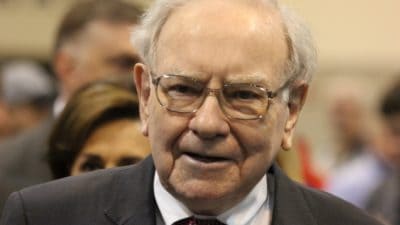
Warren Buffett made much the same point years ago, with his so-called ‘investment rules’, and the importance of not losing money.
 
Novice investors interpret the remark simplistically: don’t lose money. Period.
 
Which is actually very difficult. An investment bought in good faith may go on to hit a rocky patch years later, leaving investors underwater until management achieve a turnaround.

Relative choices

But Buffett’s ‘rule’ has a deeper meaning, too.
 
Because ‘don’t lose money’ also has a relative meaning. When you allocate your capital by making an investment decision, you are making a choice. A pound invested in this investment can’t also be invested in that investment.
 
So, if this investment underperforms that investment, relatively speaking, you are losing money. Your investment returns would have been higher, had you made a different choice.

Work the numbers

And over time, the ‘drag’ caused by underperforming investments can be considerable.
 
Consider, for example, a portfolio of 20 shares, held in equal amounts, with each share delivering a 10% return. Contrast this with an identical portfolio, apart from one share that delivers a 5% return instead.
 
The first portfolio delivers, as you would expect, a 10% return each year. But the second portfolio delivers only a 9.75% return.
 
Now imagine that there are two underperforming shares. Or three. Or four.

Minimise the downside

What to do?
 
Simplistically, choose carefully. Evaluate shares carefully. Seek advice, and undertake research.
 
More practically, perhaps, I find it helpful to have an investment strategy, to which I try to stick. If I’m tempted to stray from it, this usually prompts some introspection.
 
Usefully, too, if I am persuaded to dabble a little, I tend to do so in relatively small amounts. This minimises the upside, to be sure. But it also curtails the downside risk.
 
Another handy tip is to be very aware of the risks of ‘doubling-up’ on investments that seem to be temporarily cheap. A bargain is always tempting but be aware you could be catching a falling knife.
 
And finally, remember that you can only allocate each pound of capital once. If in doubt, sit on your hands. A more convincing investment proposition will come along.
 
So, just wait for it.
More on Investing Articles

A rear view of a female in a bright yellow coat walking along the historic street known as The Shambles in York, UK which is a popular tourist destination in this Yorkshire city.
Market Movers

£20,000 of British American Tobacco shares could generate dividends of…

British American Tobacco shares are tipped to deliver more huge dividends over the next three years. Does this make them…

Read more »

Tesla building with tesla logo and two teslas in front
Investing Articles

Tesla stock’s up 98% since April. Is that a warning?

Tesla stock's almost doubled in a matter of months -- but our writer struggles to rationalise that in terms of…

Read more »

One English pound placed on a graph to represent an economic down turn
Investing Articles

FTSE 100 shares are up 17% this year. Is it too late to invest?

The FTSE 100 index of leading British blue-chip shares is up by close to a fifth since the start of…

Read more »

Fans of Warren Buffett taking his photo
Investing Articles

What would $1,000 invested in Berkshire Hathaway shares when Warren Buffett took over be worth now?

Just how good has Warren Buffett been in driving up the value of Berkshire Hathaway shares in over six decades…

Read more »

A pastel colored growing graph with rising rocket.
Investing Articles

Investors can target £22,491 in passive income from £20,000 in this FTSE dividend gem

This ultra-high-yielding FTSE gem’s dividend is forecast to rise even higher in the coming years, driving high passive income flows…

Read more »

Young female business analyst looking at a graph chart while working from home
Investing Articles

After Qatar cuts its stake in Sainsbury’s, is its share price now a great short-term risk/long-term reward play?

Sainsbury’s share price slid after Qatar cut its stake, but with a new activist investor at the helm, does it…

Read more »

The flag of the United States of America flying in front of the Capitol building
Investing Articles

British billionaire has 61% of his hedge fund in these 3 S&P 500 stocks 

This world-class hedge fund manager only invests in companies with extremely wide moats. Which three S&P 500 stocks currently dominate…

Read more »

Businessman hand flipping wooden block cube from 2024 to 2025 on coins
Investing Articles

I’m targeting £11,363 a year in retirement from £20,000 in Aviva shares!

£20,000 invested in Aviva shares could make me £11,363 in annual retirement income from this FTSE 100 passive income investment…

Read more »