Could shares in this car dealer double in 2017?

The automotive sector offers some tempting opportunities for investors but you need to do your research, says Roland Head.

| More on:

The content of this article was relevant at the time of publishing. Circumstances change continuously and caution should therefore be exercised when relying upon any content contained within this article.

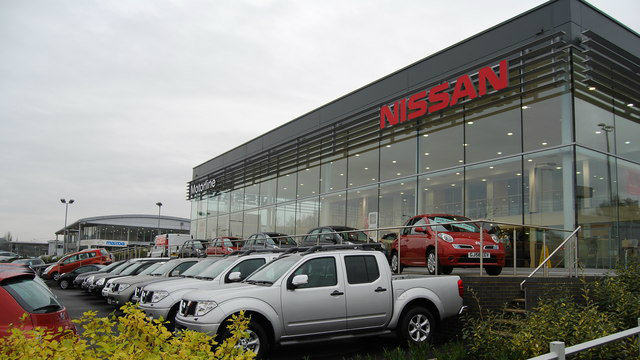
Nissan Dealership

Photo: N Chadwick. Cropped. Licence: https://creativecommons.org/licenses/by-sa/2.0/

You’re reading a free article with opinions that may differ from The Motley Fool’s Premium Investing Services. Become a Motley Fool member today to get instant access to our top analyst recommendations, in-depth research, investing resources, and more. Learn More.

Shares in car dealers were hammered by the UK’s Brexit vote and haven’t fully recovered. These stocks now look cheap, but an uncertain outlook is holding back share prices.

In this article I’ll look at today’s trading update from Vertu Motors (LSE: VTU) and ask whether investors should buy into this cheap-looking UK group, or focus their cash on Vertu’s larger and more global peer Inchcape (LSE: INCH).

Strong trading?

Vertu Motors’ share price rose by 3% this morning, after the group said that full-year results are expected to be in line with current expectations. This puts the stock on a forecast P/E of 7.9 and a dividend yield of 2.8%.

These certainly seem attractive figures. Vertu says trading during the first half was “robust,” with “profitability ahead of last year.”

Increasing profit margins is a key challenge for the group. The margins on new cars are very low, but used cars and after-sales are far more profitable. Vertu’s operating margin has risen from 0.6% in 2011, to 1.1% last year. Yet this is still lower than most peers, so further gains should be possible.

The argument for investing today is that several years of strong new car sales have created a reliable stream of profitable after-sales work on cars under warranty. This should support Vertu’s profits even if new private car sales continue to slow.

Vertu also has a strong balance sheet, with plenty of freehold property and net cash. Tangible net assets totalled 38p per share at the end of February.

At 50p, Vertu looks a reasonable buy to me. But I’m not sure if the stock will rise above last year’s peak of 79p in 2017. With new car sales already at record levels, more modest growth seems likely to me.

Is bigger better?

Inchcape has a market value of £3bn, 15 times larger than Vertu, at £193m. However, what’s most interesting about this comparison is that Inchcape’s sales over the last year were only three times greater than those of Vertu.

Inchcape’s market cap is much higher because it’s much more profitable than Vertu with it 1.1% operating margin last year, whereas Inchcape managed 4.5%.

The upshot of this is that Inchcape is expected to report a net profit of £241.3m for 2016, 10 times greater than Vertu’s expected profit of £23.6m.

Inchcape’s profit margins are higher because it operates as an overseas distributor to many car manufacturers, as well as a retailer. During the first half of this year, 73% of Inchcape’s trading profit came from distribution.

The superior profit margins of this business mean that Inchcape has a stronger valuation and offers a higher dividend yield. Here’s how it compares to Vertu based on Reuters’ consensus forecasts for the current year:


Vertu

Inchcape

Forecast P/E

7.9

12.7

Forecast yield

2.8%

3.2%

Price/book ratio

1.0x

2.2x

Both Vertu and Inchcape have net cash or minimal debt and are expected to deliver mid-single-digit earnings growth this year. Inchcape’s global diversity could make it a safer buy than Vertu, as it shouldn’t suffer too much from any regional downturns. Further growth seems likely to me over the next couple of years.

Roland Head has no position in any shares mentioned. The Motley Fool UK has recommended Vertu Motors. We Fools don't all hold the same opinions, but we all believe that considering a diverse range of insights makes us better investors.

More on Investing Articles

Young Caucasian man making doubtful face at camera
Dividend Shares

Will the Diageo share price crash again in 2026?

The Diageo share price has crashed 35.6% over one year, making it one of the FTSE 100's worst performers in…

Read more »

Investing Articles

Is Alphabet still one of the best shares to buy heading into 2026?

The best time to buy shares is when other investors are seeing risks. Is that the case with Google’s parent…

Read more »

Investing Articles

Could the Barclays share price be the FTSE 100’s big winner in 2026?

With OpenAI and SpaceX considering listing on the stock market, could investment banking revenues push the Barclays share price higher…

Read more »

Investing Articles

Will the Nvidia share price crash in 2026? Here are the risks investors can’t ignore

Is Nvidia’s share price in danger in 2026? Stephen Wright outlines the risks – and why some might not be…

Read more »

Middle-aged white man pulling an aggrieved face while looking at a screen
Growth Shares

I asked ChatGPT how much £10,000 invested in Lloyds shares 5 years ago is worth today? But it wasn’t very helpful…

Although often impressive, artificial intelligence has its flaws. James Beard found this out when he used it to try and…

Read more »

Portrait of pensive bearded senior looking on screen of laptop sitting at table with coffee cup.
Investing Articles

Did ChatGPT give me the best FTSE stocks to buy 1 year ago?

ChatGPT can do lots of great stuff, but is it actually any good at identifying winning stocks from the FTSE…

Read more »

Surprised Black girl holding teddy bear toy on Christmas
Investing Articles

Who will be next year’s FTSE 100 Christmas cracker?

As we approach Christmas 2025, our writer identifies the FTSE 100’s star performer this year. But who will be number…

Read more »

Businessman with tablet, waiting at the train station platform
Investing Articles

I asked ChatGPT for an 8%-yielding passive income portfolio of dividend shares and it said…

Mark Hartley tested artificial intelligence to see if it understood how to build an income portfolio from dividend shares. He…

Read more »