Share your opinion and earn yourself a free Motley Fool premium report!

We are looking for Fools to join a 75 minute online independent market research forum on 15th / 16th December.

To find out more and express your interest please click here

Will debt become toxic in 2017?

Should you avoid highly indebted companies at all costs?

The content of this article was relevant at the time of publishing. Circumstances change continuously and caution should therefore be exercised when relying upon any content contained within this article.

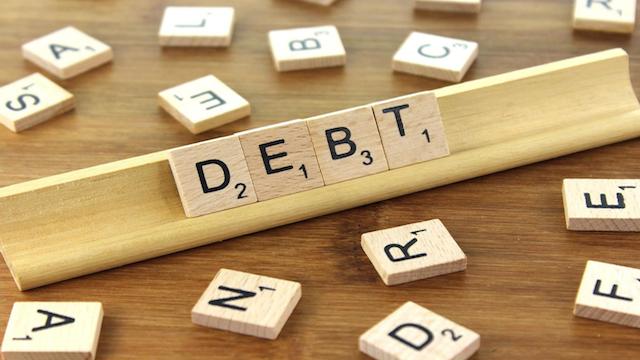
debt scrabble piece spelling

You’re reading a free article with opinions that may differ from The Motley Fool’s Premium Investing Services. Become a Motley Fool member today to get instant access to our top analyst recommendations, in-depth research, investing resources, and more. Learn More.

Across much of the global economy, low interest rates have led to a rise in debt levels in recent years. In fact, no major economy in the world has decreased its debt to GDP ratio since 2007. This shows that while debt has been successfully used to avert a global depression following the global financial crisis, the world is now increasingly reliant upon borrowed money in order to grow and even function. Looking ahead, this could prove to be a major problem.

Of course, high debt levels are sustainable as long as they remain affordable. As mentioned, low interest rates have made this possible in recent years. However, across major economies there is a more hawkish feeling among policymakers. For example, in the US the Federal Reserve is expected to raise interest rates in December. Further rate rises are very much on the cards following Donald Trump’s election victory, since he is expected to pursue fiscal policies which are highly inflationary.

Not only does this cause a problem for companies listed in the US, it could cause challenges for non-US companies which have their debt denominated in US dollars. That’s because a rising US interest rate is likely to cause an appreciation in the value of the US dollar. This would make it more difficult for companies based outside of the US and which report in a non-US currency to make repayments in US dollars. As such, their financial sustainability may be called into question – especially if their interest coverage ratios are relatively low.

Therefore, it makes sense for Foolish investors to invest in companies which have manageable levels of debt. ‘Manageable’ refers to not only while interest rate rates are low, but also if they increased by 100, 200 or even 300 basis points over the medium term. If global inflation is positively catalysed by Trumponomics, then significantly higher interest rates in the US and elsewhere could be necessary.

In addition, the profitability of stocks across the globe could come under pressure in the short run, which may make current debt levels less affordable. Trump’s economic policies represent major change and could cause investment in projects across the globe as well as consumer spending levels to come under pressure. This may hurt the profitability of companies across the world and lead to a narrowing of their headroom when making interest payments on their debt.

Clearly, the vast majority of companies have debt, so avoiding it completely is unlikely to be a realistic option for Foolish investors. However, focusing on a company’s interest coverage, cash flow reliability and the strength of its balance sheet could become even more crucial in 2017 and beyond. Borrowing has always been a risky business. But in 2017 its potential problems could present themselves for the first time in a decade.


More on Investing Articles

Young mixed-race couple sat on the beach looking out over the sea
Investing Articles

How big a Stocks and Shares ISA is needed to earn £1,000 of passive income each month?

Christopher Ruane does the maths and explains how a Stocks and Shares ISA could potentially generate a four-figure monthly passive…

Read more »

Businessman hand stacking up arrow on wooden block cubes
US Stock

This iconic S&P 500 fashion stock is one of my favourite picks for 2026

Jon Smith explains why he's optimistic about the prospects for a S&P 500 company that has smashed the broader index…

Read more »

Black woman using smartphone at home, watching stock charts.
Growth Shares

These analysts have updated their forecasts for the Rolls-Royce share price

Jon Smith takes notes from updated broker views for the Rolls-Royce share price and offers his opinion on where it…

Read more »

Three generation family are playing football together in a field. There are two boys, their father and their grandfather.
Investing Articles

How much do you need in a SIPP to target a passive retirement income of £555 a month?

Harvey Jones crunches the numbers to show how a SIPP investor could assemble a portfolio of FTSE 100 shares to…

Read more »

Person holding magnifying glass over important document, reading the small print
Investing Articles

1 FTSE 250 share to consider for the coming decade

With a long-term approach to investing, our writer looks at one FTSE 250 share with a dividend yield north of…

Read more »

Snowing on Jubilee Gardens in London at dusk
Investing Articles

3 UK shares to consider for the long term

What will the world look like years from now? Nobody knows, but our writer reckons this trio of UK shares…

Read more »

BUY AND HOLD spelled in letters on top of a pile of books. Alongside is a piggy bank in glasses. Buy and hold is a popular long term stock and shares strategy.
Investing Articles

Martin Lewis just gave a brilliant presentation on the power of investing in stock market indexes like the FTSE 100

Had an investor stuck £1,000 in the FTSE 100 index a decade ago, they would have done much better than…

Read more »

Surprised Black girl holding teddy bear toy on Christmas
Investing Articles

I asked ChatGPT if we’ll get a stock market crash or rally before Christmas and it said…

Harvey Jones asks artificial intelligence if the run-up to Christmas will be ruined by a stock market crash, and finds…

Read more »