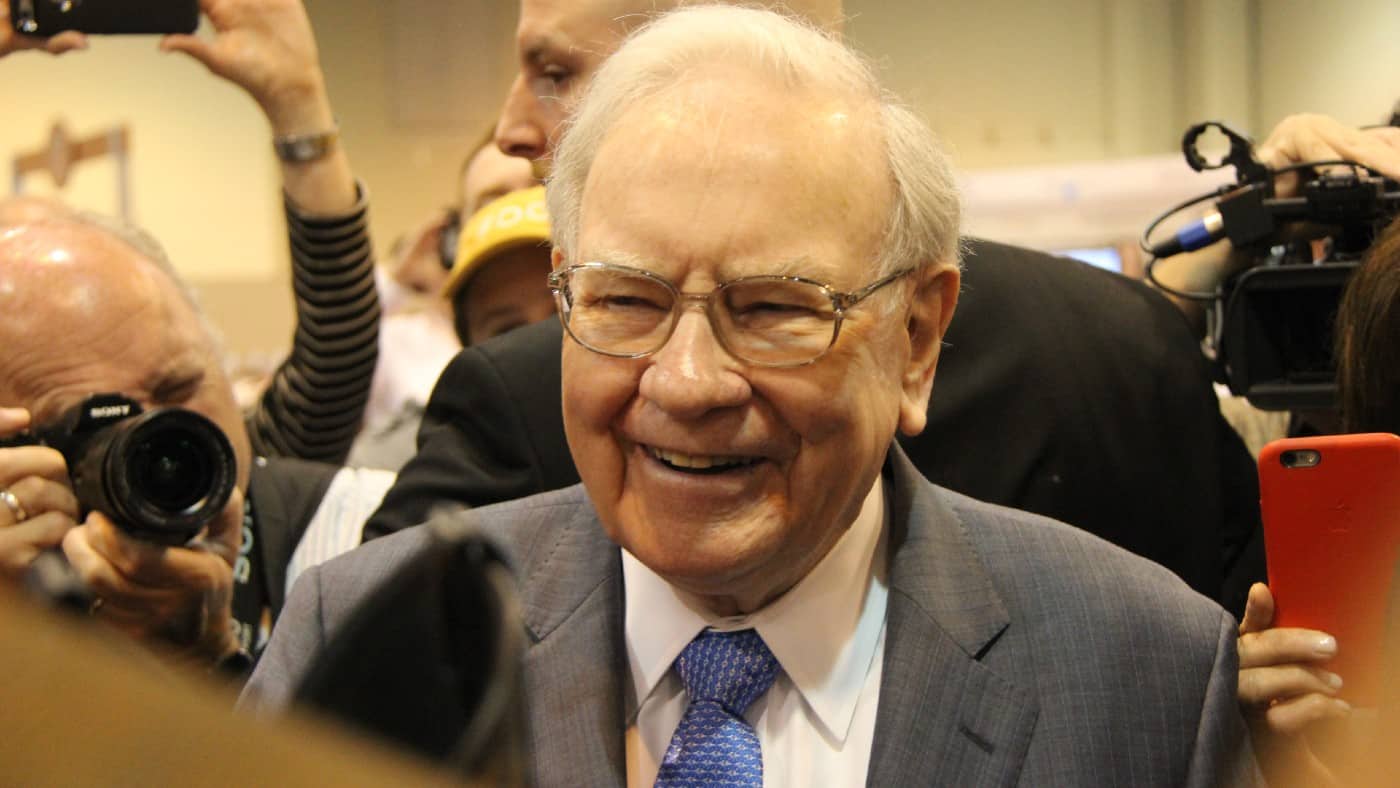
2026 has certainly so far been a busy year in the stock market, with wild swings. Some shares I own have done brilliantly (S4 Capital is an example). For others, like Lululemon, it has been a very bad few months. Amid stock market turbulence, it can be easy to let emotion take over where rationality could be more helpful – potentially a costly mistake. That is why, as markets continue to seesaw, I am following the wisdom of billionaire investor Warren Buffett.
Nobody’s forcing you to act
One of the things Buffett likes about the stock market is that you do not have to do anything. He has said that, if the market closed for a decade, it would not bother him.
That may sound odd. But compared to other types of investment, I see it as a big advantage of share ownership.
By contrast, imagine you own a rental property or small business. Even if you went 10 years without selling it (or buying a new one), there would still be plenty to do. You might have to renovate the property, for example, or keep working in the business.
Compare that to shares. You can buy a share – something Buffett thinks of as a small stake in a business, not just a piece of paper. You can hang onto it without doing anything. There is no need to lift a finger. With some shares, you may even receive regular financial rewards simply for owning the share, in the form of dividends.
Riding the storm
That is nimportant, because it means that no matter how panicked other people may start to be during a period of stock market volatility, there is typically no need for a shareholder to act if they do not want to.
If you own shares and believe the underlying value of the business remains unchanged, a tumbling share price does not matter. As Buffett notes, the market offers you a price at which you can buy or sell a share each day it is open – but you have no obligation to act on it.
Buffett’s own approach in such a situation tends to be simply riding out the storm. Having owned some shares for decades, he has hung onto them through thick and thin in the wider stock market, because he continues to believe in their investment case.
On the hunt for bargains
But a rocky market can throw up some bargains. Take ExxonMobil as an example. During the 2020 stock market crash, it traded for as little as a fifth of the all-time high price it has hit over recent weeks. That means a huge capital gain for some shareholders.
On top of that, the company has raised its dividend per share annually for decades. The yield is 2.6% — but for a buyer at the lower price back in 2020, the current yield would be over 13%.
Current oil price volatility is a risk to the company’s earnings. For now, I will therefore not be investing.
But ExxonMobil’s underlying strengths today remain the same as in 2020: a large base of proven energy resources, long extraction and marketing expertise and a cost-efficient operation.
ExxonMobil is on my watchlist in case future market turbulence again marks its stock down to a bargain price.