Is it last call for below-£1 Lloyds shares?

Lloyds shares are on the up and up. Is this the last time we’re going to see the bank’s shares trade below the £1 mark? Our Foolish author explores.

| More on:

The content of this article was relevant at the time of publishing. Circumstances change continuously and caution should therefore be exercised when relying upon any content contained within this article.

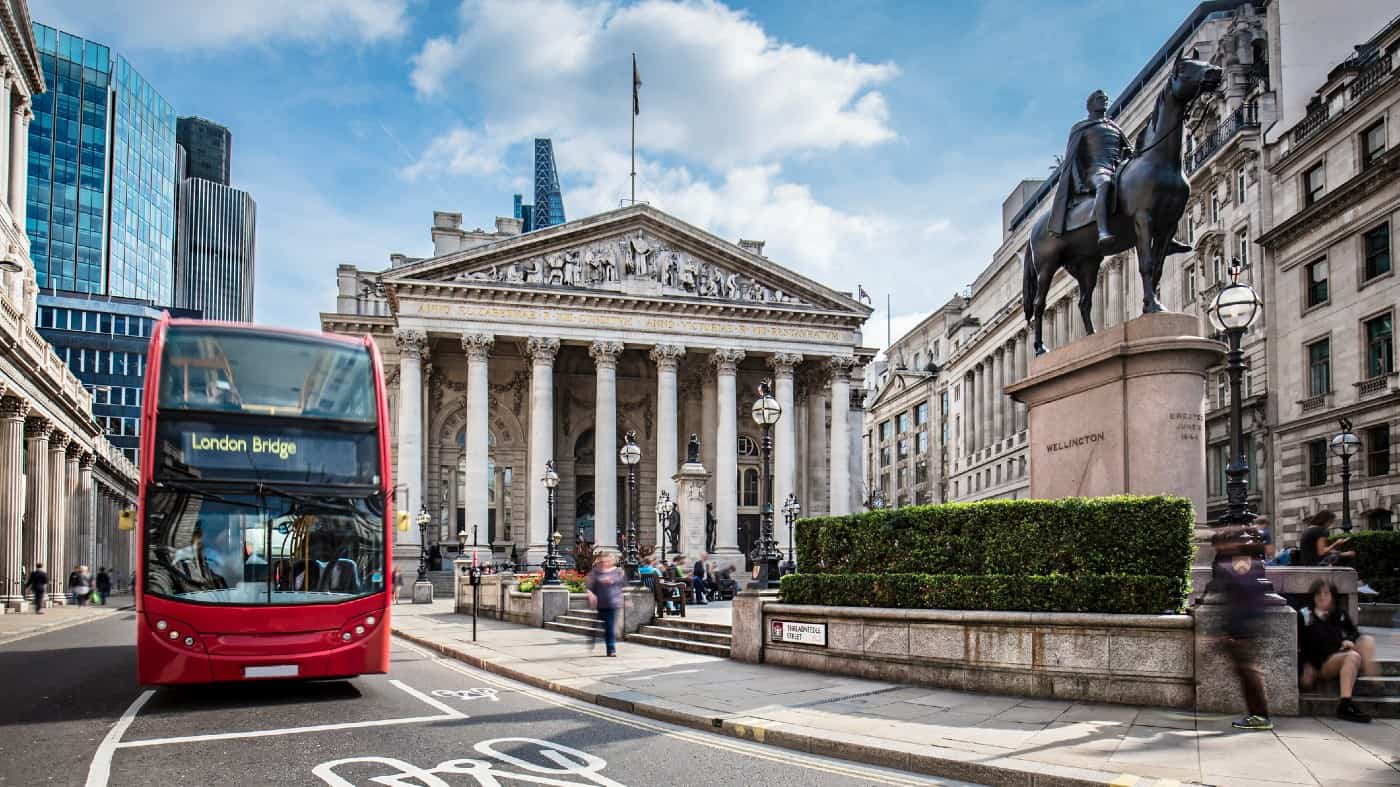
Bus waiting in front of the London Stock Exchange on a sunny day.

Image source: Getty Images

You’re reading a free article with opinions that may differ from The Motley Fool’s Premium Investing Services. Become a Motley Fool member today to get instant access to our top analyst recommendations, in-depth research, investing resources, and more. Learn More.

Few shares have traded for pennies for as long as Lloyds (LSE: LLOY). The ‘great recession’ brought the share price from £3 all the way down to 27p, and it has stuck below the pound mark ever since. That’s 17 years of anaemic growth and 17 years of a share price counted in pennies. That could all be changing however.

The shares are up 62% in a year. They’re up 224% in five years. The FTSE 100 bank is in a better place than it has been in decades. And its current 89p share price looks like it could keep on increasing for here. Is this the last time we ever see Lloyds shares under a pound?

Reasons

While we can never predict future crashes of a single stock or the market in general, I expect Lloyds to continue its ascent. Here are two of the reasons for this.

The first is inflation. Companies are a decent (though not perfect) hedge against rising prices. That’s because they can increase prices in line with inflation. This can create pushback for firms that sell items with stickers. But banks like Lloyds, whose products are often priced in percentage terms, suffer no such issues. Therefore, it’s natural to see a bank’s share price keep pace with inflation to some degree (all else being equal).

A second factor is buybacks. Share buybacks, where a company buys its own shares and takes them off the market, get a bad rep. Some investors prefer the ‘cash in hand’ of using that money for dividends.

But unless you believe markets don’t price in the changes from buybacks, then they will drive the share price higher. I don’t think it’s a coincidence that Lloyds shares have been rising following a £2bn buyback in 2024 and a £1.7bn buyback in 2025.

A buy?

Buybacks don’t spring out of thin air, of course. They are paid for by earnings, which is the ultimate driver of the share price. Whether Lloyds keeps humming along in this regard will come down to two things in my opinion.

The first is interest rates. Higher rates of borrowing (usually) mean bigger margins for banks. That rates are still at 4% and longer-term borrowing like gilts are even higher suggests this could work in Lloyds’ favour for years to come.

A second thing to keep an eye on is the UK economy. This is because Lloyds is much more domestic-focused than the other FTSE 100 banks. The mood around Britain’s economic performance is somewhat pessimistic, however. Ryanair chief Michael O’Leary went so far as to call the economy “doomed” under the current government.

Overall, I think there’s plenty of good here. There’s even a fair chance we won’t see Lloyds trade for pennies for much longer, too. I’d call it one to consider.


John Fieldsend has positions in Lloyds Banking Group Plc. The Motley Fool UK has recommended Lloyds Banking Group Plc. Views expressed on the companies mentioned in this article are those of the writer and therefore may differ from the official recommendations we make in our subscription services such as Share Advisor, Hidden Winners and Pro. Here at The Motley Fool we believe that considering a diverse range of insights makes us better investors.

More on Investing Articles

Young mixed-race woman jumping for joy in a park with confetti falling around her
Investing Articles

UK income stocks: a serious long-term wealth creator?

Can regular investment in income stocks be the rocket fuel for someone's dreams of building wealth? Christopher Ruane explains why…

Read more »

Close-up as a woman counts out modern British banknotes.
Investing Articles

A simple 3-step plan for targeting a £1,000 monthly second income

Stephen Wright outlines a three-step strategy for targeting a substantial second income by investing just £100 a month in the…

Read more »

National Grid engineers at a substation
Investing Articles

How many National Grid shares are needed for £1,000 a year in passive income?

National Grid shares have been on a strong rally over the past 12 months. How has this left the forward-looking…

Read more »

Three generation family are playing football together in a field. There are two boys, their father and their grandfather.
Investing Articles

How much could a £3-a-day passive income plan deliver?

Passive income plans don't need to be complicated or suck up lots of cash. Christopher Ruane explains one approach that…

Read more »

Group of young friends toasting each other with beers in a pub
Investing Articles

How much might £1,000 invested in Diageo shares pay out in dividends by 2040?

Shares in FTSE 100 brewer and distiller Diageo have slumped in recent years. But it has a juicy yield. Our…

Read more »

Investing Articles

Prediction: in 12 months, high-flying, high-yielding BT shares could turn £10,000 into…

Harvey Jones is impressed by the recent performance of BT shares, while the dividend isn't bad either. Yet he's a…

Read more »

Portrait of pensive bearded senior looking on screen of laptop sitting at table with coffee cup.
Investing Articles

Might AI cause a massive stock market crash? 

The stock market is rapidly turning away from AI uncertainty and towards surer bets. Here's one 'boring' share to check…

Read more »

Young mixed-race woman jumping for joy in a park with confetti falling around her
Investing Articles

Meet the S&P 500 stock in my ISA that’s gained 59% a year over the last 3 years

This S&P 500 tech stock has generated huge returns for investors over the last three years. But Edward Sheldon believes…

Read more »