£9K of savings? Here’s how that could produce £108 a month in passive income

£9k could earn over £100 a month in passive income if invested in the right selection of blue-chip shares over the long term. Here’s how.

| More on:

The content of this article was relevant at the time of publishing. Circumstances change continuously and caution should therefore be exercised when relying upon any content contained within this article.

You’re reading a free article with opinions that may differ from The Motley Fool’s Premium Investing Services. Become a Motley Fool member today to get instant access to our top analyst recommendations, in-depth research, investing resources, and more. Learn More.

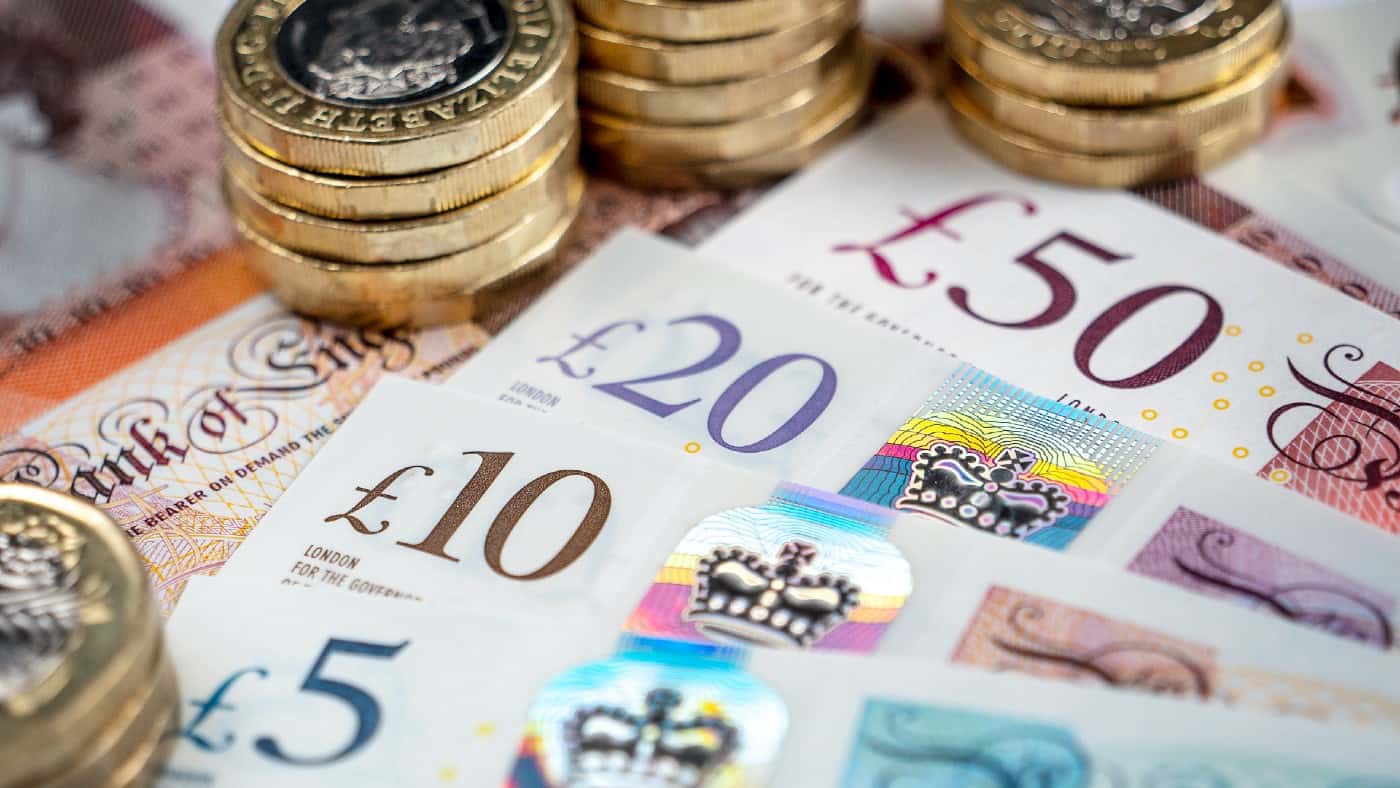
Close-up of British bank notes

Image source: Getty Images

Putting some savings to work can be a simple way of setting up passive income streams. For example, by investing £9k in a range of dividend shares, I think someone could realistically target £108 each month on average in passive income.

Here’s how.

Setting up a passive income machine, thanks to dividend shares

In my example, I make three key assumptions. One is a compound annual growth rate of 6%. That seems plausible to me in today’s market, even while investing in blue-chip shares.

The second assumption is that the dividends are initially reinvested (compounded) and, after a period of time, the portfolio is reinvested (if necessary) in dividend shares yielding an average 6%.

It might have been like that all along, but it could also have been that some of the growth came from share price increase. When it comes time to draw down the passive income, the whole portfolio should be yielding 6%, not just compounding in value at that level.

The third assumption is that the investor stops compounding and starts receiving the passive income after 15 years. This is a serious income building plan, not some get-rich-quick quackery.

The same approach could be applied much sooner, but the 15-year timeframe should enable a bigger passive income than, say, waiting only two or three years.

A 6% dividend yield’s possible, while laser-focused on quality

At the moment, the blue-chip FTSE 100 index of leading shares yields 3.4%. So the 6% target I use here is quite aggressive. But I think it is achievable even sticking to members of the FTSE 100.

For example, I own shares in Legal & General (LSE: LGEN). At the moment, it yields 8.6%. Even better, the financial services firm has set out plans to keep growing its dividend per share annually, as it has done over the past several years.

Now, this month it has also set out plans to sell its US protection business. While that could boost shareholder returns in the short-term, it will also likely mean lower long-term cash generation for the smaller firm. That is a risk to the long-term dividend outlook.

But I think there is a lot to like about Legal & General and have no plans to sell my shares. Its target market is large and thanks to its powerful brand and large customer base it has a strong competitive position.

As the recent news demonstrated, management is focused on shareholder returns. From a passive income perspective, I think that is good news for me and lots of other small, private shareholders who get dividends from the company without needing to work for them.

Turning savings into an income machine

Of course, while that is all well in theory, to join in dividends from Legal & General or any other company, a would-be investor needs to turn into an actual investor.

To get the ball rolling, they could put the £9k into a share-dealing account or Stocks and Shares ISA, so they are ready to invest.


C Ruane has positions in Legal & General Group Plc. The Motley Fool UK has no position in any of the shares mentioned. Views expressed on the companies mentioned in this article are those of the writer and therefore may differ from the official recommendations we make in our subscription services such as Share Advisor, Hidden Winners and Pro. Here at The Motley Fool we believe that considering a diverse range of insights makes us better investors.

More on Investing Articles

Rolls-Royce's Pearl 10X engine series
Investing Articles

Are the glory days over for Rolls-Royce shares?

Rolls-Royce shares have soared in recent years. Lately, though, they have taken a tumble. Could there be worse still to…

Read more »

Group of friends meet up in a pub
Investing Articles

Are ‘66% off’ Diageo shares a once-in-a-decade opportunity?

Diageo shares have taken another hit in the early weeks of 2026. Are we looking at a massive bargain or…

Read more »

Investing Articles

Meet the UK stock under £1.50 smashing Rolls-Royce shares over the past year

While Rolls-Royce shares get all the attention, this under-the-radar trust has quietly made investors a fortune. But is it still…

Read more »

UK financial background: share prices and stock graph overlaid on an image of the Union Jack
Investing Articles

Down 19%, the red lights are flashing for Barclays shares!

Barclays shares have fallen almost a fifth in value as the Middle East war has intensified. Royston Wild argues that…

Read more »

Aviva logo on glass meeting room door
Investing Articles

After falling another 5%, are Aviva shares too cheap to ignore?

£10,000 invested in Aviva shares five years ago would have grown 50% by now. But what might the future hold,…

Read more »

Two female adult friends walking through the city streets at Christmas. They are talking and smiling as they do some Christmas shopping.
Investing Articles

Next impresses again, but could its shares be about to crash?

Next shares have leapt after the retailer raised its full-year profits guidance. But could the FTSE 100 retailer be running…

Read more »

Investing Articles

Time to buy, after Next shares are lifted by storming FY results?

Retail sector weakness is holding back Next shares, is it? Tell that to the fashion shoppers who've driven up full-year…

Read more »

Three signposts pointing in different directions, with 'Buy' 'Sell' and 'Hold' on
Growth Shares

Why the Barclays share price is currently its most undervalued in months

Jon Smith talks through why the Barclays share price has struggled in recent weeks, and flags up reasons why it…

Read more »