
Share your opinion and earn yourself a free Motley Fool premium report!

We are looking for Fools to join a 75 minute online independent market research forum on 15th / 16th December.

To find out more and express your interest please click here

How much should an investor considering putting in the stock market to return £250 a week?

Mark Hartley looks at the various metrics investors typically use to calculate how much income they could earn on the stock market.

| More on:

The content of this article was relevant at the time of publishing. Circumstances change continuously and caution should therefore be exercised when relying upon any content contained within this article.

Businessman with tablet, waiting at the train station platform

Image source: Getty Images

You’re reading a free article with opinions that may differ from The Motley Fool’s Premium Investing Services. Become a Motley Fool member today to get instant access to our top analyst recommendations, in-depth research, investing resources, and more. Learn More.

Investors often try calculating their passive income potential when investing in the stock market. This is a key part of formulating an income-based strategy, as the outcome relies on meeting certain criteria. Notably, it’s important to know how much to invest when aiming to achieve a specific return

For example, an investor wants to earn an extra £250 a week to supplement their current income. That equates to a return of approximately £1,000 a month (or £12,000 a year). How much would they need to invest to return £12,000 of income per year?

Formulating a strategy

An investment provides returns through both capital appreciation and dividends. Income investors typically prefer dividends due to the regular payments they deliver.

The best dividend stocks for passive income are those with a long track record of growth. This reduces the risk of a dividend cut in the near future.

A high yield is also important — but not so high that it’s unsustainable. Risk tolerance and diversification are also key criteria to consider. A less-diversified portfolio may provide higher returns at the risk of greater losses.

For example, diversifying into volatile US tech stocks can be risky. However, the opportunity for growth is good. Alternatively, low-volatility consumer goods or healthcare stocks are less risky but slow-growing.

How much to invest

Imagine a portfolio with a 7% average yield and 3% annualised growth. With £120,000 invested, that could return approximately £12k per year.

That amount could be reached by investing £200 a month for 20 years. It would require reinvesting the dividends to compound the returns so the investment grows exponentially.

By upping the monthly contribution to £300, the time could be reduced to 15 years. And an investor with already £20,000 in savings could further reduce it to only 11 years. Of course none of those returns are guaranteed.

What kind of stock meets those criteria?

Ideally, the portfolio should have 10 to 20 stocks with yields between 5% and 9%. They should span a range of different industries and geographical regions.

One example I think is worth considering is the FTSE 250 stock Investec (LSE: INVP). The international wealth management group is one of the largest companies on the index, with a market cap of £4.66bn. Larger-cap stocks tend to be less volatile.

It maintains a fairly stable yield between 5% and 7%, which is higher than average. Although it has made two cuts in the past 20 years, dividends have grown at a rate of 6.9%.
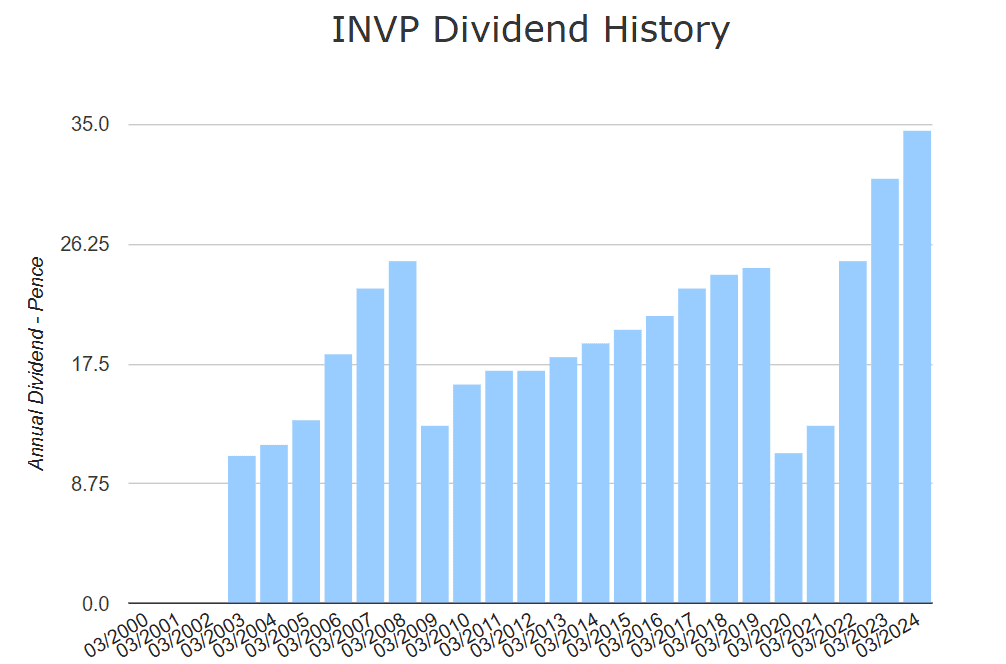
Investec dividend history
Screenshot from DividendData.co.uk

As an investment firm, Investec is at higher risk from macroeconomic factors that lead to market volatility. These include interest rate changes, geopolitical conflicts and supply and demand issues. Profits may also suffer if a company it invests in defaults on its debt or falls into administration.

So far, it appears to have made good investment decisions. Analysts on average expect a 12-month price of 653p, 31% higher than today.
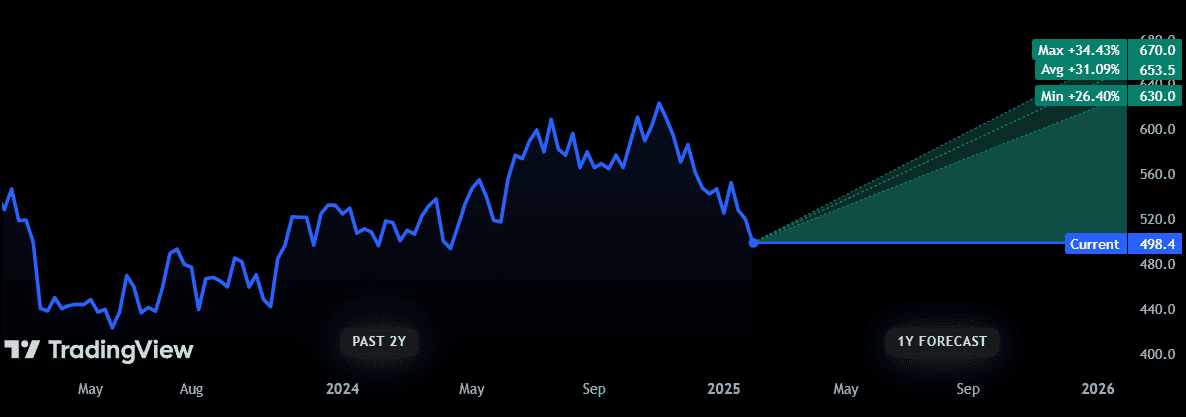
Investec stock market chart
Created on TradingView.com

The share price has increased at an annualised rate of 7.3% over the past decade. That makes it an attractive addition to an income portfolio, as dividend stocks typically have lower price growth. 

It also has good ratios, with a price of only 6.7 times earnings and a price-to-sales (P/S) ratio of 0.87. 

Mark Hartley has no position in any of the shares mentioned. The Motley Fool UK has no position in any of the shares mentioned. Views expressed on the companies mentioned in this article are those of the writer and therefore may differ from the official recommendations we make in our subscription services such as Share Advisor, Hidden Winners and Pro. Here at The Motley Fool we believe that considering a diverse range of insights makes us better investors.

More on Investing Articles

Thoughtful man using his phone while riding on a train and looking through the window
Investing Articles

Here’s how much passive income someone could earn maxing out their ISA allowance for 5 years

Christopher Ruane considers how someone might spend a few years building up their Stocks and Shares ISA to try and…

Read more »

Man putting his card into an ATM machine while his son sits in a stroller beside him.
Investing Articles

Was I wrong about Barclays shares, up 196%?

Our writer has watched Barclays shares nearly triple in five years, but stayed on the sidelines. Is he now ready…

Read more »

Wall Street sign in New York City
Investing Articles

Up 17% in 2025, can the S&P 500 power on into 2026?

Why has the S&P 500 done so well this year against a backdrop of multiple challenges? Our writer explains --…

Read more »

National Grid engineers at a substation
Investing Articles

National Grid shares are up 19% in 2025. Why?

National Grid shares have risen by almost a fifth this year. So much for it being a sleepy utility! Should…

Read more »

Road 2025 to 2032 new year direction concept
Investing Articles

Here are the potential dividend earnings from buying 1,000 Aviva shares for the next decade

Aviva has a juicy dividend -- but what might come next? Our writer digs into what the coming decade could…

Read more »

Person holding magnifying glass over important document, reading the small print
Investing Articles

Just released: our top 3 small-cap stocks to consider buying in December [PREMIUM PICKS]

Small-cap shares tend to be more volatile than larger companies, so we suggest investors should look to build up a…

Read more »

This way, That way, The other way - pointing in different directions
Investing Articles

Is the unloved Aston Martin share price about to do a Rolls-Royce?

The Aston Martin share price has inflicted a world of pain on Harvey Jones, but he isn't giving up hope…

Read more »

Surprised Black girl holding teddy bear toy on Christmas
Investing Articles

How much do you need in a Stocks and Shares ISA to raise 1.7 children?

After discovering the cost of raising a child, James Beard explains why he thinks a Stocks and Shares ISA is…

Read more »