
Here’s how much I’d need in an ISA to earn £10,000 of passive income a year

When calculating how much to invest for a sufficient passive income stream, it’s important to consider the methods that might generate the highest returns.

| More on:

The content of this article was relevant at the time of publishing. Circumstances change continuously and caution should therefore be exercised when relying upon any content contained within this article.

Portrait of elderly man wearing white denim shirt and glasses looking up with hand on chin. Thoughtful senior entrepreneur, studio shot against grey background.

Image source: Getty Images

You’re reading a free article with opinions that may differ from The Motley Fool’s Premium Investing Services. Become a Motley Fool member today to get instant access to our top analyst recommendations, in-depth research, investing resources, and more. Learn More.

When gearing up to build a passive income stream, there are a number of things to consider. One of the most important is the type of savings account to use.

Many UK citizens use a Cash ISA to minimise the tax they pay on their capital gains. While this can be a good option, falling interest rates leave them less attractive.

In the long term, I think it makes more sense to consider a Stocks and Shares ISA. It offers similar tax relief with the advantage of potentially beating the returns of a Cash ISA.

Please note that tax treatment depends on the individual circumstances of each client and may be subject to change in future. The content in this article is provided for information purposes only. It is not intended to be, neither does it constitute, any form of tax advice. Readers are responsible for carrying out their own due diligence and for obtaining professional advice before making any investment decisions.

So how much are we talking about?

It’s often best to save as much as one can each month. But it’s still important to get a rough idea of how much is sufficient. Investing few pounds here and there is unlikely to generate life-changing wealth — but that doesn’t mean investors need to stash every penny they have in their ISAs.

Each individual has different needs when it comes to financial requirements. So, for want of a better number, I’m using £10,000 of annual passive income as an example. That would be a decent bit of extra cash on top of a State Pension.

To draw down £10k a year for 30 years, a £300,000 pot is needed. However, with the money invested and earning a return, the amount could be less.

Using an average return of 5%, a pot of around £200,000 could last indefinitely (5% of £200k is £10k). But annual returns aren’t stable and some years may require reducing the pot. What’s more, inflation may necessitate larger withdrawals each year.

With that in mind, I’d consider £250,000 a responsible goal to aim for. This also ties in with the recommended 4% drawdown for retirement funds.

Building a portfolio

A quarter million pounds is no small amount of savings. It would take a decent portfolio about 25 years to reach that amount with £200 invested per month. That’s assuming an average return of around 6% with an average of 4% in dividends reinvested.

Consumer goods giant Reckitt Benckiser (LSE: RKT) may be one to consider. It has provided annualised returns of 6% per year for the past 20 years and currently has a 4% dividend yield. Plus, it has a solid history of reliable payments and consistent dividend growth.
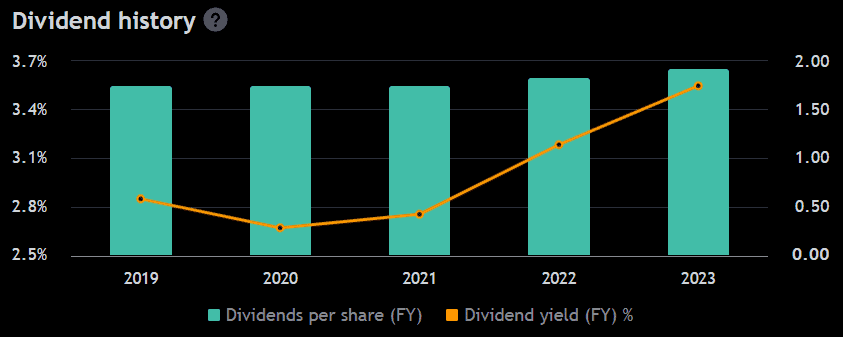
Created on TradingView.com

But past performance is no indication of future results. Will it keep it up?

To figure that out, I’m checking its risks and valuation.

Reckitt took a big hit last year after acquiring the baby food business Mead Johnson. One of its products, Enfamil, was implicated in a lawsuit regarding an infant fatality. While that issue has reportedly been resolved, there’s always a risk of similar cases arising.

Acquisitions are critical for business expansion but they can be costly if things go wrong.
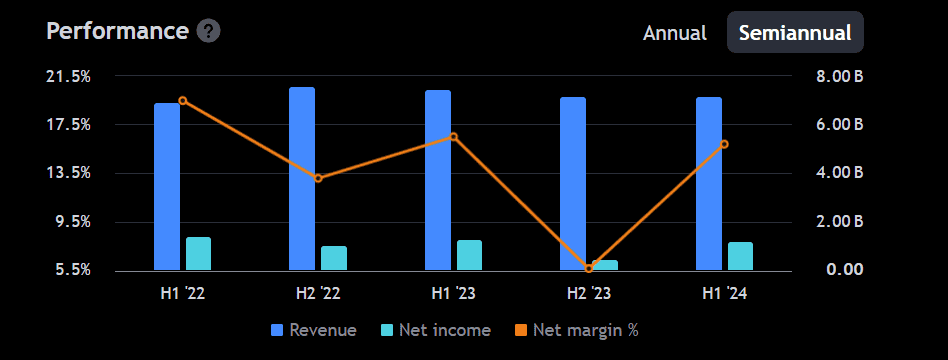
Created on TradingView.com

On the plus side, the falling price makes it look attractive. A recovery has already begun but the price remains 37% down from its five-year high. With earnings expected to improve, analysts forecast an average price increase of 14.21% in the coming year.

That’s why I consider it a good option as part of a passive income strategy. I’ll be regularly topping up my Reckitt position as the year progresses.


Mark Hartley has positions in Reckitt Benckiser Group Plc. The Motley Fool UK has recommended Reckitt Benckiser Group Plc. Views expressed on the companies mentioned in this article are those of the writer and therefore may differ from the official recommendations we make in our subscription services such as Share Advisor, Hidden Winners and Pro. Here at The Motley Fool we believe that considering a diverse range of insights makes us better investors.

More on Investing Articles

Rear view image depicting a senior man in his 70s sitting on a bench leading down to the iconic Seven Sisters cliffs on the coastline of East Sussex, UK. The man is wearing casual clothing - blue denim jeans, a red checked shirt, navy blue gilet. The man is having a rest from hiking and his hiking pole is leaning up against the bench.
Investing Articles

2 ideas for a SIPP or ISA in 2026

Looking for stocks for an ISA or SIPP portfolio? Our writer thinks a FTSE 100 defence giant and fallen pharma…

Read more »

Midnight is celebrated along the River Thames in London with a spectacular and colourful firework display.
Investing Articles

Could buying this stock at $13 be like investing in Tesla in 2011?

Tesla stock went on to make early investors a literal fortune. Our writer sees some interesting similarities with this eVTOL…

Read more »

Close-up of British bank notes
Investing Articles

3 reasons the Lloyds share price could keep climbing in 2026

Out of 18 analysts, 11 rate Lloyds a Buy, even after the share price has had its best year for…

Read more »

Chalkboard representation of risk versus reward on a pair of scales
Growth Shares

Considering these UK shares could help an investor on the road to a million-pound portfolio

Jon Smith points out several sectors where he believes long-term gains could be found, and filters them down to specific…

Read more »

Close-up image depicting a woman in her 70s taking British bank notes from her colourful leather wallet.
Investing For Beginners

Martin Lewis is embracing stock investing, but I think he missed a key point

It's great that Martin Lewis is talking about stocks, writes Jon Smith, but he feels he's missed a trick by…

Read more »

House models and one with REIT - standing for real estate investment trust - written on it.
Investing Articles

This 8% yield could be a great addition to a portfolio of dividend shares

Penny stocks don't usually make for great passive income investments. But dividend investors should consider shares in this under-the-radar UK…

Read more »

Queen Street, one of Cardiff's main shopping streets, busy with Saturday shoppers.
Investing Articles

Why this 9.71% dividend yield might be a rare passive income opportunity

This REIT offers a 9.71% dividend yield from a portfolio with high occupancy, long leases, and strong rent collection from…

Read more »

Portsmouth, England, June 2018, Portsmouth port in the late evening
Investing Articles

A 50% discount to NAV makes this REIT’s 9.45% dividend yield impossible for me to ignore

Stephen Wright thinks shares in this UK REIT could be worth much more than the stock market is giving them…

Read more »