
With a P/E ratio of 8 and selling for pennies, is this FTSE 250 share a bargain?

Christopher Ruane digs into a cheap-looking FTSE 250 share that sells an iconic product and considers whether it’s really a bargain for his portfolio.

| More on:

The content of this article was relevant at the time of publishing. Circumstances change continuously and caution should therefore be exercised when relying upon any content contained within this article.

Mature Caucasian woman sat at a table with coffee and laptop while making notes on paper

Image source: Getty Images

You’re reading a free article with opinions that may differ from The Motley Fool’s Premium Investing Services. Become a Motley Fool member today to get instant access to our top analyst recommendations, in-depth research, investing resources, and more. Learn More.

One common way to value shares is to look at their price-to-earnings (P/E) ratio. As a rule of thumb, the lower it is, the cheaper the share is, although there are a couple of important caveats to consider: the sustainability of the earnings and the firm’s debt both matter. At the moment, one well-known FTSE 250 share sells for pennies and has a P/E ratio of just 8.

So, is it a bargain I ought to buy for my portfolio?

Well-known consumer brand

The share in question is Dr Martens (LSE: DOCS).

With an iconic footwear brand, large customer base, and unique place in the market, I think there is a lot to like about the business.

So, why is the FTSE 250 share selling for pennies? (And why has it fallen 88% since it listed on the London stock market just three years ago?)

The answer lies in the firm’s weak performance lately.

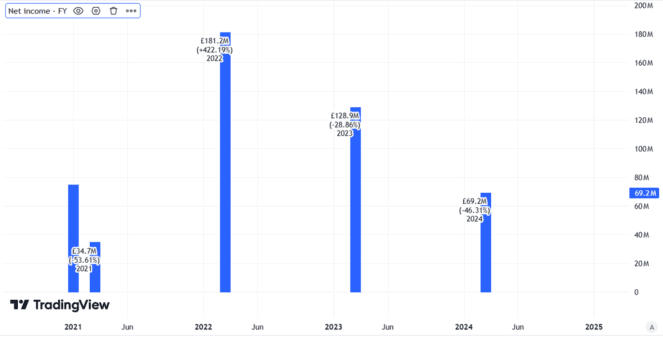
Take last year as an example. Revenues fell by 12%. Profit after tax crashed by 46%.
Created using TradingView

Meanwhile, net debt rose by 24%. As I said above, debt matters when it comes to valuation as servicing and repaying it can eat into earnings.

Potential for turnaround

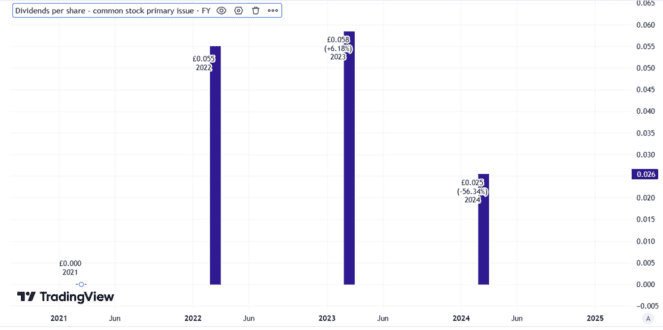
Still, while the company’s profits after tax fell badly, it remained firmly in the black. It cut the dividend, but did not cancel it altogether.
Created using TradingView

Weak US consumer demand was given as a key reason for last year’s poor performance. But the business announced plans to address that, including increasing marketing spend in the crucial region.

The most recent update came in July, when the company said that trading in its most recent quarter had been in line with expectations. I think a big test will come this month, when Dr Martens is set to announce its interim results.

If they contain positive news about sales trends and costs, I reckon the current share price could turn out to be a bargain.

However, the reverse could happen. If there are only weak signs of a turnaround (or none at all), the share price may fall further. Dr Martens shoes are not cheap and US consumer spending remains fairly weak.

I’m not buying

I am in no rush to buy here. The company’s huge share price decline since listing points to a number of factors that concern me, from net debt to the seeming fragility of the business model.

At best, I think the business can start to show evidence of a turnaround and see the share price climb. But any such turnaround is unlikely to happen overnight. So there will likely be time for me to buy when evidence of it comes, even if that means paying a higher price than today for the FTSE 250 share.

Meanwhile, the risks concern me. Dr Martens is a strong brand but it is a business that has been battling sizeable challenges. Those may continue.


C Ruane has no position in any of the shares mentioned. The Motley Fool UK has no position in any of the shares mentioned. Views expressed on the companies mentioned in this article are those of the writer and therefore may differ from the official recommendations we make in our subscription services such as Share Advisor, Hidden Winners and Pro. Here at The Motley Fool we believe that considering a diverse range of insights makes us better investors.

More on Investing Articles

Investing Articles

Will the S&P 500 crash in 2026?

The S&P 500 delivered impressive gains in 2025, but valuations are now running high. Are US stocks stretched to breaking…

Read more »

Teenage boy is walking back from the shop with his grandparent. He is carrying the shopping bag and they are linking arms.
Investing Articles

How much do you need in a SIPP to generate a brilliant second income of £2,000 a month?

Harvey Jones crunches the numbers to show how investors can generate a high and rising passive income from a portfolio…

Read more »

Investing Articles

Will Lloyds shares rise 76% again in 2026?

What needs to go right for Lloyds shares to post another 76% rise? Our Foolish author dives into what might…

Read more »

Investing Articles

How much passive income will I get from investing £10,000 in an ISA for 10 years?

Harvey Jones shows how he plans to boost the amount of passive income he gets when he retires, from FTSE…

Read more »

Investing Articles

Down 34% in 2025 — but could this be one of the UK’s top growth stocks for 2026?

With clarity over research funding on the horizon, could Judges Scientific be one of the UK’s best growth stocks to…

Read more »

piggy bank, searching with binoculars
Investing Articles

Can the rampant Barclays share price beat Lloyds in 2026?

Harvey Jones says the Barclays share price was neck and neck with Lloyds over the last year, and checks out…

Read more »

Investing Articles

Here’s how Rolls-Royce shares could hit £25 in 2026

If Rolls-Royce shares continue their recent performance, then £25 might be on the cards for 2026. Let's take a look…

Read more »

Departure & Arrival sign, representing selling and buying in a portfolio
Investing Articles

Prediction: in 2026 the red-hot Rolls-Royce share price could turn £10,000 into…

Harvey Jones can't believe how rapidlly the Rolls-Royce share price has climbed. Now he looks at the FTSE 100 growth…

Read more »