Should I buy cheap bank shares like Lloyds and Natwest?

Our writer thinks some UK bank shares look quite cheap at the moment — depending on what happens to the economy. So, is he ready to buy them yet?

| More on:

The content of this article was relevant at the time of publishing. Circumstances change continuously and caution should therefore be exercised when relying upon any content contained within this article.

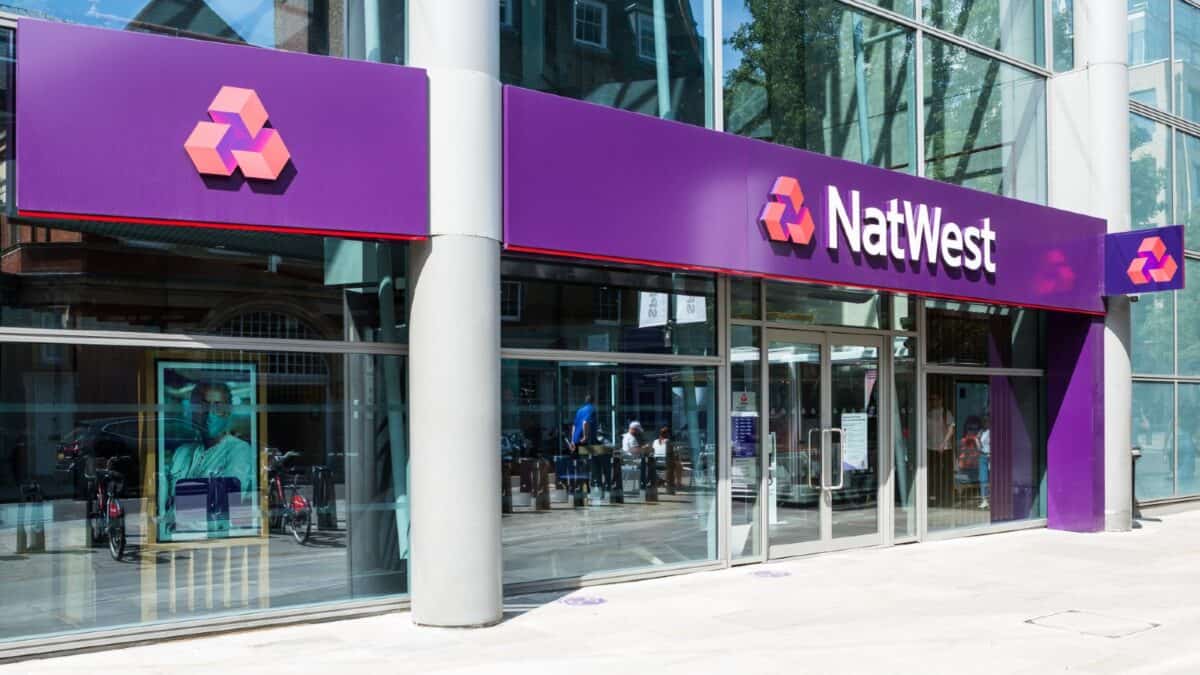
Branch of NatWest bank

Image source: NatWest Group plc

You’re reading a free article with opinions that may differ from The Motley Fool’s Premium Investing Services. Become a Motley Fool member today to get instant access to our top analyst recommendations, in-depth research, investing resources, and more. Learn More.

The past few years have not been good ones for British banking shares. In the past five years, for example, Lloyds (LSE: LLOY) and Natwest (LSE: NWG) have fallen 22% and 2% respectively. Both now trade on a price-to-earnings ratio of under seven, making these shares look cheap.

A common way to value bank shares, though, is not using earnings but instead book value. However, on that basis, too, Lloyds and Natwest shares look cheap.

Both are trading at a sizeable discount to book value. In each case, buying one share now would give me a (theoretical) slice of the bank’s asset book for at least a quarter less than its value. I say theoretical because buying a share in a bank does not in itself let me claim a fraction of its asset base. But the point is clear: these shares in well-known British banks look cheap.

Ongoing concerns about the banking sector

But wait – other investors have access to the same information as I do. Yet both shares have declined in value over the past few years.

If these really are cheap shares — with dividend yields well above the FTSE 100 average (5.5% for Lloyds and 6.2% for Natwest) — why are investors not snapping them up in droves, pushing up the share prices?

One explanation is that investors have been burned before — badly.

Bank shares fared poorly during and after the 2008 financial crisis. Both Lloyds and Natwest shares are a fraction of what they were before then.

It is no coincidence that for many years, the government has been Natwest’s biggest shareholder. It stepped in to bail out the bank when it was in dire straits.

Another concern investors like me have is that it is not clear whether banking shares are as cheap as they look.

Take book value as an example.

That is largely based on what prices are taken to be. But in the property market, for example, having a house valued at £250,000 today does not mean that it will actually turn out to be worth that a year from now.

The fear holding many investors back is that a weak economy may push up default rates on loans. That could hurt profits at banks like Natwest and Lloyds, the country’s largest mortgage lender.

Possible value at current prices

For now, though, the signs of that happening are limited.

Last year, Lloyds saw post-tax profits surge 41% to £5.5bn. The rise at Natwest was a smaller but still impressive 23%, to £4.7bn.

If anything, banking earnings look robust and there could be room for future growth.

After all, both banks enjoy widespread name recognition, have large customer bases and operate in an industry known for its ability to generate sizeable profits. They proved that last year.

If that turns out to be the case, both look like cheap shares to me now.

But I think the global economy remains fragile, posing ongoing risks to banking profits. I am tiptoeing back towards the sector as an investor — but am not yet ready to buy.


C Ruane has no position in any of the shares mentioned. The Motley Fool UK has recommended Lloyds Banking Group Plc. Views expressed on the companies mentioned in this article are those of the writer and therefore may differ from the official recommendations we make in our subscription services such as Share Advisor, Hidden Winners and Pro. Here at The Motley Fool we believe that considering a diverse range of insights makes us better investors.

More on Investing Articles

Investing Articles

Will the S&P 500 crash in 2026?

The S&P 500 delivered impressive gains in 2025, but valuations are now running high. Are US stocks stretched to breaking…

Read more »

Teenage boy is walking back from the shop with his grandparent. He is carrying the shopping bag and they are linking arms.
Investing Articles

How much do you need in a SIPP to generate a brilliant second income of £2,000 a month?

Harvey Jones crunches the numbers to show how investors can generate a high and rising passive income from a portfolio…

Read more »

Investing Articles

Will Lloyds shares rise 76% again in 2026?

What needs to go right for Lloyds shares to post another 76% rise? Our Foolish author dives into what might…

Read more »

Investing Articles

How much passive income will I get from investing £10,000 in an ISA for 10 years?

Harvey Jones shows how he plans to boost the amount of passive income he gets when he retires, from FTSE…

Read more »

Investing Articles

Down 34% in 2025 — but could this be one of the UK’s top growth stocks for 2026?

With clarity over research funding on the horizon, could Judges Scientific be one of the UK’s best growth stocks to…

Read more »

piggy bank, searching with binoculars
Investing Articles

Can the rampant Barclays share price beat Lloyds in 2026?

Harvey Jones says the Barclays share price was neck and neck with Lloyds over the last year, and checks out…

Read more »

Investing Articles

Here’s how Rolls-Royce shares could hit £25 in 2026

If Rolls-Royce shares continue their recent performance, then £25 might be on the cards for 2026. Let's take a look…

Read more »

Departure & Arrival sign, representing selling and buying in a portfolio
Investing Articles

Prediction: in 2026 the red-hot Rolls-Royce share price could turn £10,000 into…

Harvey Jones can't believe how rapidlly the Rolls-Royce share price has climbed. Now he looks at the FTSE 100 growth…

Read more »