Down 50% in 5 years, does the BT share price reflect the 2024-26 dividend forecast?

The BT share price has halved over the past five years. Our writer looks at the three-year dividend forecast and wonders whether this is the reason.

| More on:

The content of this article was relevant at the time of publishing. Circumstances change continuously and caution should therefore be exercised when relying upon any content contained within this article.

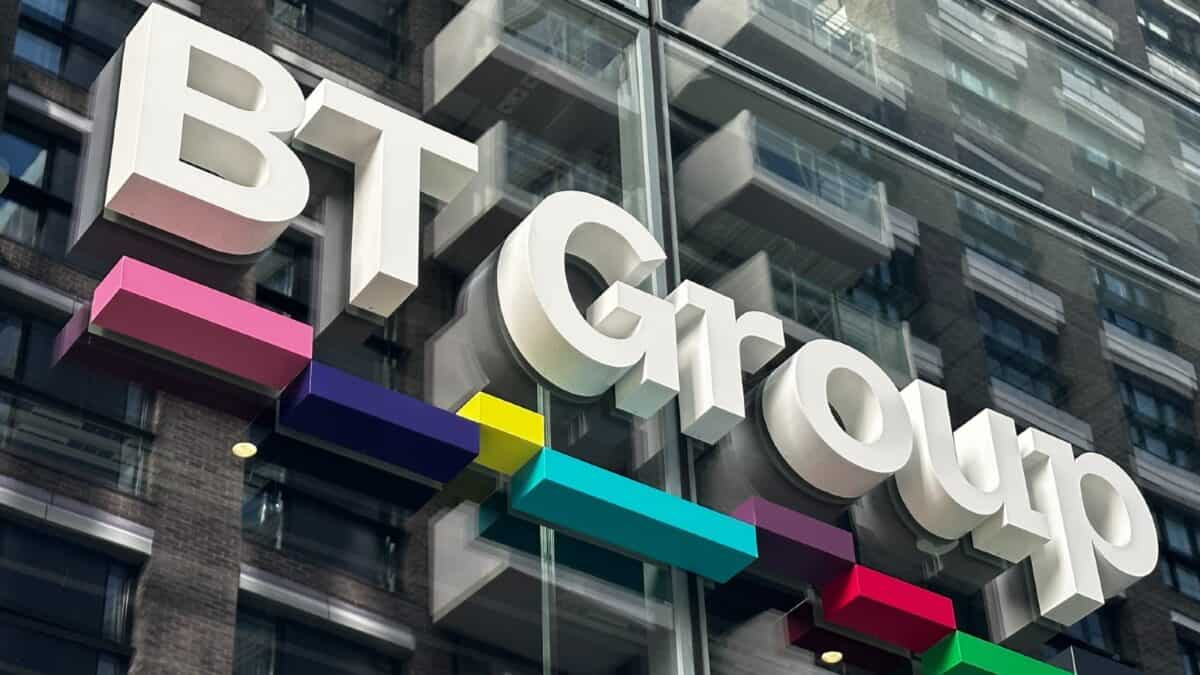
Exterior of BT Group head office - One Braham, London

Image source: BT Group plc

You’re reading a free article with opinions that may differ from The Motley Fool’s Premium Investing Services. Become a Motley Fool member today to get instant access to our top analyst recommendations, in-depth research, investing resources, and more. Learn More.

Since March 2019, the BT (LSE:BT.A) share price has been the fourth worst-performing on the FTSE 100. It’s crashed by 50%, beaten only by St James’ Place, Ocado and International Consolidated Airlines.

A falling share price could be indicative of a reduction in the dividend. Indeed, for the year ended 31 March 2023 (FY23), the company paid 7.7p a share, compared to 15.4p in FY19.

But the stock’s still yielding 7.2% — well above the FTSE 100 average of 3.9% – which could be a sign that investors are expecting a further cut.

Seeing into the future

The company regularly publishes a summary of analysts’ forecasts on its website. And if correct, these will disappoint income investors.

For each of the next three years, the average of these predictions is forecasting a lower dividend than now — 7.44p for FY24, then 7.2p for FY25 and 7.31p for FY26.

However, even the lowest of these would imply a current yield of 6.8%. Again, this is comfortably higher than the average of its Footsie peers.

Encouragingly, the forecasts for earnings per share (EPS) suggest there’s plenty of headroom for a dividend in excess of 7p.

For example, the expected payout for FY24 is half the anticipated EPS of 14.9p. Should the company’s results be slightly worse than expected, there’s still plenty of scope to maintain the dividend.

This makes me think there must be another reason why investors appear to have fallen out of love with the stock.

And looking at the company’s prospectus from 1984 — published at the time of its privatisation — I think there are some clues as to why BT’s share price performance has been so disappointing in recent years.

A history lesson

At 31 March 1984, the company had a stock market valuation of £7.8bn.

Today – nearly 40 years later – it’s increased by ‘only’ 36%, to £10.7bn. But when inflation is taken into account, it’s fallen by 54%!

For the year ended 31 March 1984, its EPS was 18.1p – higher than the figures expected for FY24 (14.9p), FY25 (14.8p) and FY26 (15p).

In other words, after nearly four decades, the company’s financial performance has worsened.

A familiar story

BT isn’t alone in experiencing falling earnings. Vodafone has suffered a similar fate. Its share price has also halved over the past five years.

The problem is that the telecoms sector requires huge investment but the returns generated, largely due to intense competition, haven’t kept pace. A backdrop of rising interest rates over the past couple of years hasn’t helped the situation either.

In nominal terms (ignoring inflation), BT’s borrowings are now seven times higher than they were on flotation. But it hasn’t benefitted from this investment. For the year ended 31 March 1984, its return on equity was 16.6%. In FY23, it was 13.1%.

According to Barclays, only the utilities sector performs worse when sales and earnings, relative to the amounts invested, are analysed.

In my opinion, the disappointing BT share price performance has more to do with the industry in which it operates, rather than the company itself. It might not be growing rapidly – its performance over the next three years is expected to be solid, if unspectacular – but the dividend at current levels looks affordable to me.


James Beard has positions in Vodafone Group Public. The Motley Fool UK has recommended Vodafone Group Public. Views expressed on the companies mentioned in this article are those of the writer and therefore may differ from the official recommendations we make in our subscription services such as Share Advisor, Hidden Winners and Pro. Here at The Motley Fool we believe that considering a diverse range of insights makes us better investors.

More on Investing Articles

Investing Articles

With a huge 9% dividend yield, is this FTSE 250 passive income star simply unmissable?

This isn't the biggest dividend yield in the FTSE 250, not with a handful soaring above 10%. But it might…

Read more »

Finger clicking a button marked 'Buy' on a keyboard
Investing Articles

With a big 8.5% dividend yield, is this FTSE 100 passive income star unmissable?

We're looking at the biggest forecast dividend yield on the entire FTSE 100 here, so can it beat the market…

Read more »

Business manager working at a pub doing the accountancy and some paperwork using a laptop computer
Investing Articles

Why did the WH Smith share price just slump another 5%?

The latest news from WH Smith has just pushed the the travel retailer's share price down further in 2025, but…

Read more »

ISA coins
Investing Articles

How much would you need in a Stocks & Shares ISA to target a £2,000 monthly passive income?

How big would a Stocks and Shares ISA have to be to throw off thousands of pounds in passive income…

Read more »

Middle-aged white man wearing glasses, staring into space over the top of his laptop in a coffee shop
Investing Articles

£10,000 invested in Diageo shares 4 years ago is now worth…

Harvey Jones has taken an absolute beating from his investment in Diageo shares but is still wrestling with the temptation…

Read more »

Investing Articles

Dividend-paying FTSE shares had a bumper 2025! What should we expect in 2026?

Mark Hartley identifies some of 2025's best dividend-focused FTSE shares and highlights where he thinks income investors should focus in…

Read more »

piggy bank, searching with binoculars
Dividend Shares

How long could it take to double the value of an ISA using dividend shares?

Jon Smith explains that increasing the value of an ISA over time doesn't depend on the amount invested, but rather…

Read more »

Businessman hand stacking money coins with virtual percentage icons
Investing Articles

£5,000 invested in Tesco shares 5 years ago is now worth this much…

Tesco share price growth has been just part of the total profit picture, but can our biggest supermarket handle the…

Read more »