
Forget Primark, 51% of Associated British Foods shares’ sales come from other businesses!

Exceptional depth of brand talent makes Associated British Foods shares a top FTSE 100 company, according to our writer Royston Wild.

| More on:

The content of this article was relevant at the time of publishing. Circumstances change continuously and caution should therefore be exercised when relying upon any content contained within this article.

You’re reading a free article with opinions that may differ from The Motley Fool’s Premium Investing Services. Become a Motley Fool member today to get instant access to our top analyst recommendations, in-depth research, investing resources, and more. Learn More.

Mature Caucasian woman sat at a table with coffee and laptop while making notes on paper

Image source: Getty Images

Many investors consider Associated British Foods (LSE:ABF) shares to be a play on Primark. They can perhaps be forgiven, considering that news on the FTSE 100 company tends to centre around its value clothing chain.

This isn’t a surprise given how critical Primark is to the group’s bottom line. During the 16 weeks to 6 January, some 49% of Associated British Food’s revenues came from its retail operations.

But on the other side of the coin, this means more than half of group sales come from elsewhere, as shown below.

DivisionProportion of group sales
Retail49%
Grocery21%
Sugar12%
Ingredients10%
Agriculture8%
* Revenue split as recorded during the 16 weeks to 6 January 2024.

I believe this strength in depth makes Associated British Food, or ABF, one of the best FTSE stocks to consider buying today.

Brilliant brands

As usual, trading news from Primark stole the show in ABF’s latest financial update on Tuesday. Higher average selling prices meant retail sales rose 7.9% at constant currencies in the first quarter.

But there were also impressive results at the firm’s other divisions. At Grocery — its second-most-important unit by sales — turnover increased 5.4% at stable exchange rates. ABF said that “our US-focused brands… continued their strong performances from last year“, and added that its Twinings teas also “traded well” across the board.

The FTSE company has a wide stable of beloved food brands. These include Jordans cereals, Ovaltine powdered beverages, and Kingsmill bread.
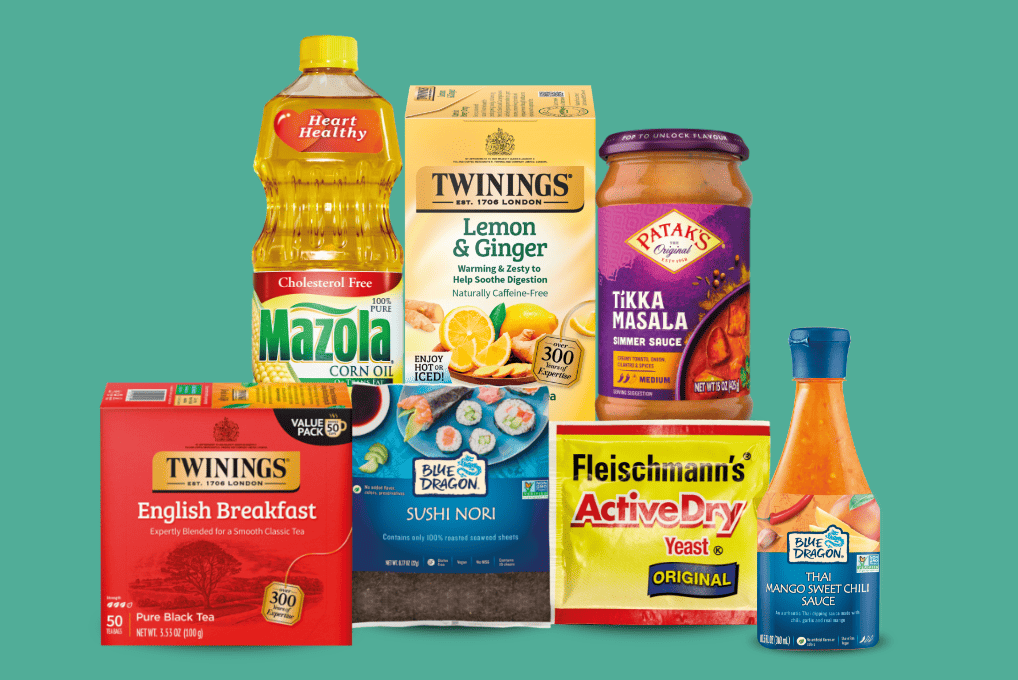
A selection of ABF's popular brands.
Source: Associated British Foods

Despite the threat of private label competition, these multinational and local brands remain highly popular with consumers, as the numbers above show.

In fact I think they’re worth their weight in gold. Their excellent brand power mean they remain in high demand even when consumers are feeling the pinch. ABF can even raise their prices during tough times, mitigating the problem of higher costs and helping the firm to grow earnings.

Encouragingly, demand for these products is shooting higher in international markets too, and especially in the US. Twinings, for instance, is the fastest-growing tea brand in the US, and is the top selling tea brand on Amazon.

On the downside, margins here aren’t as impressive as those of ABF’s rivals. Analysts at Liberum note that ABF’s Grocery EBITDA margin of 15% comes in below a peer group average of 20%. But the business is investing heavily in its global production facilities to pull this number higher.

Sweet as sugar

On top of Retail and Grocery, ABF’s Sugar division — where first-quarter sales leapt 13% at stable currencies — also contains significant earnings potential looking ahead. Indeed, an improved UK sugar beet crop means divisional production is tipped to be “significantly above” levels recorded last year.

The long-term outlook here is also very exciting. Around 40% of sugar revenue comes from Africa, a region where sales should rise strongly as personal income levels improve. A stabilising European market will also boost profits here, as will project investment initiatives to bolster margins.

ABF is expected to grow earnings by 22% in this financial year (to September 2024). This leaves its shares trading on a price-to-earnings growth (PEG) ratio of just 0.6.

With any reading below one indicating that a stock could be undervalued, I’ll be looking to add the FTSE stock to my own portfolio at the next opportunity.


John Mackey, former CEO of Whole Foods Market, an Amazon subsidiary, is a member of The Motley Fool’s board of directors. Royston Wild has no position in any of the shares mentioned. The Motley Fool UK has recommended Amazon and Associated British Foods Plc. Views expressed on the companies mentioned in this article are those of the writer and therefore may differ from the official recommendations we make in our subscription services such as Share Advisor, Hidden Winners and Pro. Here at The Motley Fool we believe that considering a diverse range of insights makes us better investors.

More on Investing Articles

Abstract 3d arrows with rocket
Investing Articles

Will the stock market go off like a rocket on Monday?

Middle East turmoil is yet to trigger a full-blown stock market crash. Harvey Jones says the recent recovery could have…

Read more »

Young mixed-race woman jumping for joy in a park with confetti falling around her
Investing Articles

Here’s what £15,000 invested in Taylor Wimpey shares on Thursday is worth today…

Investors holding Taylor Wimpey shares finally had something to celebrate on Friday as the beaten-down FTSE 250 housebuilder rallied. What…

Read more »

Three generation family are playing football together in a field. There are two boys, their father and their grandfather.
Investing Articles

How much would it take to turn an ISA into a £1,000-a-month passive income machine?

Focusing on dividend shares in well-known, big companies, what would it take for someone to target a four-figure monthly passive…

Read more »

Female Tesco employee holding produce crate
Investing Articles

2 reasons a stock market crash could be a good thing!

Our writer does not know when the next stock market crash might arrive. But he hopes that, whenever it does,…

Read more »

Close-up image depicting a woman in her 70s taking British bank notes from her colourful leather wallet.
Investing Articles

How much do I need in a Stocks and Shares ISA to target a £13,400 annual income?

£13,400 is the minimum required income for retirement. But how big does a Stocks and Shares ISA need to be…

Read more »

Woman riding her old fashioned bicycle along the Beach Esplanade at Aberdeen, Scotland.
Investing Articles

Want to aim for £31,353 more than the State Pension? A SIPP could be the answer

The State Pension offers a safety net, but here’s why you could consider a Self-Invested Personal Pension (SIPP) for a…

Read more »

Business man pointing at 'Sell' sign
Investing Articles

Why are some investors rushing to sell BP shares?

Some UK investors seem to be moving away from BP shares. But could the impact of the recent oil price…

Read more »

Investing Articles

The largest FTSE 100 holding in my Stocks and Shares ISA is…

Our writer reveals the 12 FTSE 100 stocks he currently has in his ISA portfolio. Which blue chip is the…

Read more »