Could the stock market be about to crash big time? The reality is that nobody really knows for sure. But that doesn’t stop certain investors from speculating.
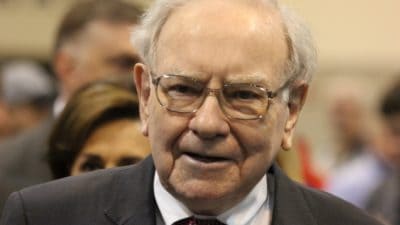
One is John Hussman, an economist and fund manager who talks a lot about asset bubbles and market cycles. He thinks the current US stock rally will “end in tears“.
Indeed, he reckons the market could end up collapsing by as much as 64%. That’s obviously a scary prospect, if it turns out to be accurate. It would almost certainly have a huge knock-on effect for UK investors.
Why does he think this? And more importantly, what should I be doing in case he’s right?
Here’s my take.
A stopped clock is right twice a day
Whenever I hear such alarmist projections, I consider who’s making them.
In the case of Hussman, we’re talking about an investor who’s been about (and making forecasts) for decades.
In a recent note, he said: “At present, the valuation extremes we observe imply that a -64% loss in the S&P 500 would be required to restore run-of-the-mill long term prospective returns…That sounds preposterous…[But] I’ve become used to making seemingly preposterous risk estimates at bubble peaks.”
These previous ‘bubble peaks’ refer to the periods just before the stock market crashes of 2000 and 2008, which he correctly predicted.
However, I would also highlight that between 2013 and 2017, Hussman was extremely bearish on US stocks on valuation grounds (again).
In July 2017, he said that markets were “at the most offensive level of overvaluation in history.” Yet the market kept going up.
Then in 2018, he said an imminent crash could wipe out $20trn of stock market value. That never happened.
Last year in the annual Hussman Funds report, he wrote: “I expect S&P 500 total returns to be negative, on average, for well over a decade.”
This may well turn out to be true by 2033, but his forecast has started terribly, with the S&P 500 rising over 15% year to date.
As a result of this misplaced bearishness, two of his investment funds have badly underperformed over the years.
My Foolish takeaway
Investors like this who are almost permanently negative about the future direction of the economy and market are known as permabears.
Often, their doomsday forecasts are so persuasive because they’re accompanied by historical charts, figures and data points. These are used to make projections, often scary ones, but they’re often inaccurate.
The reality is that the average bear market lasts around 18 months, while the average bull market lasts for years. That’s why, over time, global stock markets go up more than they decline.
Therefore, it literally pays to stay invested at all times. Indeed, investing may be the only area of life where I profit the most by doing the least.
Of course, that’s not to say that a stock market crash won’t happen. At some point, another meltdown is inevitable, and enduring them is almost like an admission fee one has to pay to be an investor.
But short-term volatility and fear eventually get nullified by long-term progress.
I feel the numbers really are stacked in our favour as Foolish long-term investors.