The forecasts were right! Now, can the FTSE 100 hit 8,500? And what should I do?

Dr James Fox explores where the FTSE 100 will go next after closing at an all-time high on Friday. And what does this mean for his portfolio?

The content of this article was relevant at the time of publishing. Circumstances change continuously and caution should therefore be exercised when relying upon any content contained within this article.

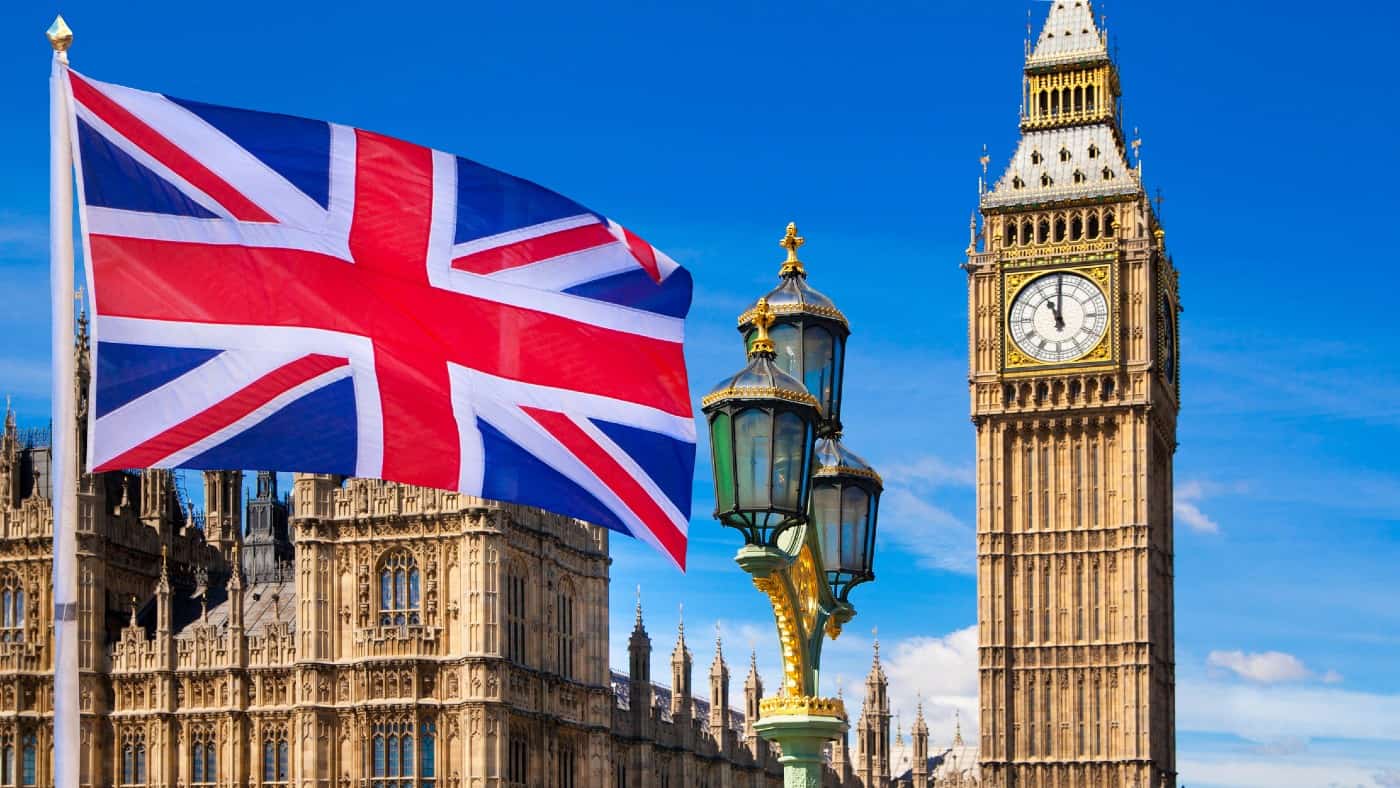
British flag, Big Ben, Houses of Parliament and British flag composition

Image source: Getty Images

You’re reading a free article with opinions that may differ from The Motley Fool’s Premium Investing Services. Become a Motley Fool member today to get instant access to our top analyst recommendations, in-depth research, investing resources, and more. Learn More.

The FTSE 100 closed above 7,900 on Friday afternoon — a record high. This might seem unusual to some, as during the week, the UK was forecast to be the only G7 economy to experience a recession in 2023.

However, there were several reasons for last week’s surge that extended gains over the past month. For one, investors gained confidence that central banks will slow down recent interest rate increases. Meanwhile, the pound fell against the dollar.

Accurate forecasts

Research from the Economic Forecast Agency (EFA) had suggested that the FTSE 100 would end January around 7,900. And they weren’t far off.

But the current forecast, also from the EFA, suggests that the index could reach 8,400 by the end of February and 8,500 by the end of March.

In fact, some of the EFA’s estimates suggest that the index could reach 8,912 at the end of April and 9,623 by the end of July.

These are the top end of the estimates, but even the average monthly closing figures are very positive.

My take

These are clearly quite optimistic views, but it’s worth remembering that the FTSE 100 isn’t a reflection of the UK economy. In fact, around 70% of index revenues comes from outside the UK. This means that these FTSE-listed companies have considerable exposure to faster-growing markets.

Moreover, nearly a quarter of firms on the index can be described as resource or energy stocks. And this is a booming sector right now, and one that’s showing few signs of slowing down. Resource-importing economies such as China and India are expected to grow at 5.2% and 6.1%, respectively, this year.

In this respect, we could see more of the same going forward. Resource and energy stocks could continue soaring, while companies in other sectors, including banking, retail and homebuilding trade at discounts in the near term.

There are certainly signs that interest rates will start to fall towards the end of the year — the Bank of England has indicated that it may have done enough. This would be positive for a host of sectors, perhaps most obviously housebuilders.

What should I do?

As an investor, I’m always trying to anticipate what will happen in six-to-12 months time. As such, I’m increasingly looking at sectors that have underperformed in in the current environment.

It may still be too early to consider buying more housebuilder stocks, but as inflation and interest rates come down towards the end of the year, the sector will become a lot more appealing.

UK-focused banks such as Lloyds and Barclays are another area of interest. 2023 looks like a year of negative growth for the UK, but the end of the year and 2024 looks more promising. Forecasts suggest we’re likely to see interest rates between 2% and 3% while the economy returns to growth. In such an environment, net interest margins will remain elevated while impairment costs should fall.


James Fox has positions in Barclays Plc and Lloyds Banking Group Plc. The Motley Fool UK has recommended Barclays Plc and Lloyds Banking Group Plc. Views expressed on the companies mentioned in this article are those of the writer and therefore may differ from the official recommendations we make in our subscription services such as Share Advisor, Hidden Winners and Pro. Here at The Motley Fool we believe that considering a diverse range of insights makes us better investors.

More on Investing Articles

Young Caucasian man making doubtful face at camera
Dividend Shares

Will the Diageo share price crash again in 2026?

The Diageo share price has crashed 35.6% over one year, making it one of the FTSE 100's worst performers in…

Read more »

Investing Articles

Is Alphabet still one of the best shares to buy heading into 2026?

The best time to buy shares is when other investors are seeing risks. Is that the case with Google’s parent…

Read more »

Investing Articles

Could the Barclays share price be the FTSE 100’s big winner in 2026?

With OpenAI and SpaceX considering listing on the stock market, could investment banking revenues push the Barclays share price higher…

Read more »

Investing Articles

Will the Nvidia share price crash in 2026? Here are the risks investors can’t ignore

Is Nvidia’s share price in danger in 2026? Stephen Wright outlines the risks – and why some might not be…

Read more »

Middle-aged white man pulling an aggrieved face while looking at a screen
Growth Shares

I asked ChatGPT how much £10,000 invested in Lloyds shares 5 years ago is worth today? But it wasn’t very helpful…

Although often impressive, artificial intelligence has its flaws. James Beard found this out when he used it to try and…

Read more »

Portrait of pensive bearded senior looking on screen of laptop sitting at table with coffee cup.
Investing Articles

Did ChatGPT give me the best FTSE stocks to buy 1 year ago?

ChatGPT can do lots of great stuff, but is it actually any good at identifying winning stocks from the FTSE…

Read more »

Surprised Black girl holding teddy bear toy on Christmas
Investing Articles

Who will be next year’s FTSE 100 Christmas cracker?

As we approach Christmas 2025, our writer identifies the FTSE 100’s star performer this year. But who will be number…

Read more »

Businessman with tablet, waiting at the train station platform
Investing Articles

I asked ChatGPT for an 8%-yielding passive income portfolio of dividend shares and it said…

Mark Hartley tested artificial intelligence to see if it understood how to build an income portfolio from dividend shares. He…

Read more »