We have some exciting news to share! The Motley Fool UK has now become an independent, UK-owned company, led by our long-serving UK management team — Mark Rogers, Chris Nials and Heather Adlington. In practical terms, it’s the same team you know, now fully focused on serving our UK readers and members.

Just as importantly, our approach remains unchanged: long-term, jargon-free, and on your side. We’ll be introducing a new name and brand over the coming weeks — we're very excited to share it with you and embark on this new chapter together!

Why Warren Buffett won’t invest in many profitable companies

Warren Buffett knowingly excludes many profitable companies from his consideration as an investor. Christopher Ruane explains why.

The content of this article was relevant at the time of publishing. Circumstances change continuously and caution should therefore be exercised when relying upon any content contained within this article.

You’re reading a free article with opinions that may differ from The Motley Fool’s Premium Investing Services. Become a Motley Fool member today to get instant access to our top analyst recommendations, in-depth research, investing resources, and more. Learn More.

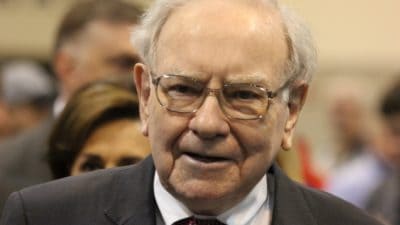
Warren Buffett at a Berkshire Hathaway AGM

Image source: The Motley Fool

As an investor, one often hears about companies tipped for greatness. Exactly what they do may be a bit mysterious or difficult to understand, but with fast growth and profitability such companies can be tempting. Legendary investor Warren Buffett is pretty clear on what he would do in such a situation. 

What Warren Buffett looks for in companies

In his 2007 shareholders’ letter, Buffett laid out clearly the criteria he and his partner used when considering companies to buy. He said they “look for companies that have a) a business we understand; b) favourable long-term economics; c) able and trustworthy management; and d) a sensible price tag”.

There is a lot of investing wisdom packed into a few words there. But what’s most interesting for me is the fact that Buffett’s first criterion is that he understands the business.

Why does this matter? After all, if a company performs well financially, couldn’t that on its own make it attractive?

Speculation versus investment

Buffett clearly doesn’t think so. I think his approach makes sense for me as an investor too.

If I put money into a business I don’t understand, it’s basically a form of speculation. Even if the company has respectable management, ubiquitous advertising, a long financial track record, and strong financial results, it’s still speculation. I am putting money into an opportunity based on its momentum, rather than any sort of fundamental understanding.

In my mind, that isn’t what investing is about. Instead, investing is a way for me to put money to work in shares of a company that I think has a bright financial future. Such future prospects can be hard to assess. So to do so, I typically look at a company’s financial reports and try to form a view of how the business performance may be in coming years and decades. But I can’t do that if I don’t understand the business.

For example, consider a company such as Argo Blockchain. Its shares performed spectacularly at points over the last year. But a lot of investors piled into Argo purely on the basis of its share price performance. That’s just speculation. If I didn’t understand key elements of Argo’s business – such as  what competitive advantage it may have in mining and how its planned North American data centres will impact its productivity – then I wouldn’t even consider buying its shares.

Circle of competence

This is part of Buffett’s focus on his “circle of competence”. He doesn’t invest outside the area of his understanding.

The good news is that one’s circle of competence isn’t static. It is possible to learn more over time. In that way I could start to understand businesses which previously baffled me. But that takes time and effort. Until then, I’d choose to stay away from such businesses. Like Buffett, I think staying inside my circle of competence is more likely to improve my investment performance. That means only investing in companies I understand, even though that means letting some potentially lucrative opportunities pass me by.


The Motley Fool UK has no position in any of the shares mentioned. Views expressed on the companies mentioned in this article are those of the writer and therefore may differ from the official recommendations we make in our subscription services such as Share Advisor, Hidden Winners and Pro. Here at The Motley Fool we believe that considering a diverse range of insights makes us better investors.

The content in this article is provided for information purposes only. It is not intended to be, neither does it constitute, any form of investment advice. Bitcoin and other cryptocurrencies are highly speculative and volatile assets, which carry several risks, including the total loss of any monies invested. Readers are responsible for carrying out their own due diligence and for obtaining professional advice before making any investment decisions.

More on Investing Articles

Businessman with tablet, waiting at the train station platform
Dividend Shares

After years of pain, is the Diageo share price looking up?

For almost five years, the Diageo share price has delivered nothing but pain to long-suffering shareholders. But I see early…

Read more »

Thoughtful man using his phone while riding on a train and looking through the window
Investing Articles

Should I dump Duolingo from my ISA and buy Palantir stock instead?

These two AI-powered software stocks have been heading in very different directions, making me wonder if I should sell one…

Read more »

Warren Buffett at a Berkshire Hathaway AGM
Investing Articles

Warren Buffett just sounded an alarm to the stock market

Last week Warren Buffett used a six-letter word that should give investors pause for thought. But is the Oracle of…

Read more »

Investing Articles

Here are the lazy passive income streams paying me while I sleep

Find out which passive income stocks this writer owns, as well as one from the FTSE 100 index that he's…

Read more »

View of Lake District. English countryside with fields in the foreground and a lake and hills behind.
Investing Articles

How much do you need in an ISA to aim for a £2,613 monthly second income

Harvey Jones explains how a spread of FTSE 100 shares held in an ISA could generate enough second income to…

Read more »

A senior man and his wife holding hands walking up a hill on a footpath looking away from the camera at the view. The fishing village of Polperro is behind them.
Investing Articles

9 dividend-paying FTSE 100 shares to target a huge ISA retirement income!

Royston Wild explains how a diversified portfolio of FTSE 100 shares can deliver a strong (and growing) passive income in…

Read more »

Front view of a young couple walking down terraced Street in Whitley Bay in the north-east of England they are heading into the town centre and deciding which shops to go to they are also holding hands and carrying bags over their shoulders.
Investing Articles

£20,000 in an ISA? This passive income stock could give you £3,271 in dividends in 2025 and 2026

This passive income stock carries yields of 7.8% for 2026 and 7.9% for next year. So what makes it one…

Read more »

happy senior couple using a laptop in their living room to look at their financial budgets
Investing Articles

Plan to fund your retirement with just the State Pension? Good luck with that!

The UK's State Pension is ranked as one of the worst among the world's developed economies. Consider this alternative to…

Read more »