Share your opinion and earn yourself a free Motley Fool premium report!

We are looking for Fools to join a 75 minute online independent market research forum on 15th / 16th December.

To find out more and express your interest please click here

What to do with the lockdown dividend?

With investors’ finances repaired, the stock market now looks like a smart move.

| More on:

The content of this article was relevant at the time of publishing. Circumstances change continuously and caution should therefore be exercised when relying upon any content contained within this article.

You’re reading a free article with opinions that may differ from The Motley Fool’s Premium Investing Services. Become a Motley Fool member today to get instant access to our top analyst recommendations, in-depth research, investing resources, and more. Learn More.

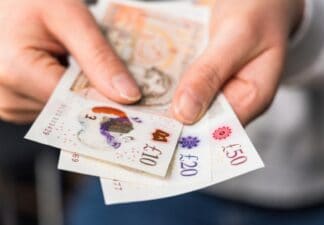
At the beginning of July, I pointed out that Bank of England statistics were showing that since lockdown, consumers had been pumping considerable sums of money into their bank and savings accounts. Not only that, they were also sharply deleveraging, paying off significant amounts of debt – a whopping £12bn worth, in fact.
 
June’s statistics, released a little later, showed that while net debt repayment had slowed, consumers’ bank balances continued to grow.

And when July’s statistics come out, later in August at the time of writing, I think we’ll see much the same thing, albeit perhaps a little muted by seasonal expenditure on holidays.
 
It’s not difficult to see the thinking. Yes, some consumers are undoubtedly feeling financial pain during the pandemic. But many others aren’t.
 
And with fewer opportunities to spend money, spare cash is accumulating. In times of economic uncertainty, paying off debt – and putting money aside for a rainy day – makes excellent sense.

No more ‘urge to splurge’

In the last few weeks, I’ve seen other commentators pick up on the same thing, perhaps first alerted to the fact by their own burgeoning bank balances.
 
For while people’s individual circumstances differ, the same broadly comparable imperatives are driving the behaviour. Working from home is cheaper than working from, er, work – there’s no cost of commuting, and no expensive coffees and sandwiches.
 
People are also going out shopping less, so they’re making fewer impulse purchases. Sources of entertainment are either closed, or are unappealing for consumers keen to socially distance themselves. And with fewer opportunities for social interaction, people are travelling less, and spending less on social gatherings.
 
What’s more, freed from the office and from social gatherings, the ‘urge to splurge’ diminishes: to quote economist Tim Jackson, we’re less likely to want to spend money we don’t have, on things that we don’t need, to create impressions that won’t last, on people we don’t care about.
 
And so on, and so on. Lots of small changes in behaviour add up to one thing: flusher finances.
 
What are people going to do with this money? What are you going to do with it?

Saving becomes the new normal

I ask the question because I don’t think that all this is going to be a short-term phenomenon.
 
Businesses have discovered that they don’t need all their employees to be at work in their offices, all the time. Some individuals have found that they are more productive, and less stressed, working from home offices. Investment bank Schroders decreed that employees could work from home permanently, not just for the duration of the pandemic.
 
Travel, shopping, entertainment, socialising – even if there’s a vaccine, I expect that some of the behavioural changes that we’ve seen will linger on for quite some time.
 
Meaning that people’s finances will also a little flusher for a little longer.
 
And who knows? When the penny drops, the urge to splurge could permanently diminish.

Smart move

Paying off debt is sensible: do that first. Bolstering your bank balance is also sensible: cash savings are a handy safety net. But with interest rates on the floor, savers must recognise that the real level of return is either close to zero, or negative.
 
In early January, before the pandemic panic of late February and early March, the Footsie was close to 7700. Since late May, it’s been bumping along at around 6100 – a 20% discount, in other words.
 
Granted, plenty of businesses have taken a pandemic pounding, taking their share prices to even steeper discounts. But many others are recovering nicely, with dividends being restored and confidence returning.
 
With surplus cash, a few judicious stock market investments is looking more and more like a smart move.
 
What are you waiting for? For as I’ve remarked before: if you don’t buy shares when they’re cheap, when do you buy them?

Malcolm owns shares in Schroders. The Motley Fool UK has recommended Schroders (Non-Voting). Views expressed on the companies mentioned in this article are those of the writer and therefore may differ from the official recommendations we make in our subscription services such as Share Advisor, Hidden Winners and Pro. Here at The Motley Fool we believe that considering a diverse range of insights makes us better investors.

More on Investing Articles

Rolls-Royce's Pearl 10X engine series
Investing Articles

Can the Rolls-Royce share price do it again in 2026?

Can the Rolls-Royce share price do it again? The FTSE 100 company has been a star performer in recent years…

Read more »

Businessman hand flipping wooden block cube from 2024 to 2025 on coins
Investing Articles

After huge gains for S&P 500 tech stocks in 2025, here are 4 moves I’m making to protect my ISA and SIPP

Gains from S&P tech stocks have boosted Edward Sheldon’s retirement accounts this year. Here’s what he’s doing now to reduce…

Read more »

View of Lake District. English countryside with fields in the foreground and a lake and hills behind.
Investing Articles

With a 3.2% yield, has the FTSE 100 become a wasteland for passive income investors?

With dividend yields where they are at the moment, should passive income investors take a look at the bond market…

Read more »

Smart young brown businesswoman working from home on a laptop
Investing Articles

Should I add this dynamic FTSE 250 newcomer to my Stocks and Shares ISA?

At first sight, a UK bank that’s joining the FTSE 250 isn’t anything to get excited by. But beneath the…

Read more »

Investing Articles

£10,000 invested in BT shares 3 months ago is now worth

BT shares have been volatile lately and Harvey Jones is wondering whether now is a good time to buy the…

Read more »

Person holding magnifying glass over important document, reading the small print
Investing Articles

After a 66% fall, this under-the-radar growth stock looks like brilliant value to me

Undervalued growth stocks can be outstanding investments. And Stephen Wright thinks he has one in a company analysts seem to…

Read more »

Content white businesswoman being congratulated by colleagues at her retirement party
Investing Articles

Don’t ‘save’ for retirement! Invest in dirt cheap UK shares to aim for a better lifestyle

Investing in high-quality and undervalued UK shares could deliver far better results when building wealth for retirement. Here's how.

Read more »

Black woman using smartphone at home, watching stock charts.
Investing Articles

1 growth and 1 income stock to kickstart a passive income stream

Diversification is key to achieving sustainable passive income. Mark Hartley details two broadly different stocks for beginners.

Read more »