Want to build wealth? Investing beats playing the National Lottery

James J. McCombie demonstrates with simulations that investing, rather than playing the National Lottery, is far likelier to leave you with real wealth.

The content of this article was relevant at the time of publishing. Circumstances change continuously and caution should therefore be exercised when relying upon any content contained within this article.

You’re reading a free article with opinions that may differ from The Motley Fool’s Premium Investing Services. Become a Motley Fool member today to get instant access to our top analyst recommendations, in-depth research, investing resources, and more. Learn More.

The chances of winning big on the lottery are slim, and every ticket is likely to return much less than you paid for it.  But would you really be better off investing rather than buying lottery tickets? Sometimes a simulation can be illuminating, even when the answer seems obvious.

What we will do is assume that we either invest £26 a month for 25 years in a fund or spend it on lottery tickets. I chose £26 a month because it’s an amount just above the minimum regular contribution threshold for a few ISAs, and spending this amount on the lottery does not sound outlandish. Plus 25 years might be the period over which someone saves for retirement.

Let’s play the (simulated) lottery

Using numbers drawn from the National Lottery website, matching five numbers and the bonus ball pays £1,000,000 on average, matching five numbers gets you £1,750, four wins £140, three pays £30, and two nets you just £2. Matching all six numbers will pay an average jackpot of £5,000,000.

I randomly generated 300 lottery results and 13 lucky dip ticket numbers for each draw to simulate 25 years of monthly play, for which the player would be £7,800 down if they won nothing. This was done 1,000 times, so we have a range of simulated winnings (or losses). None of these players would have been celebrating.
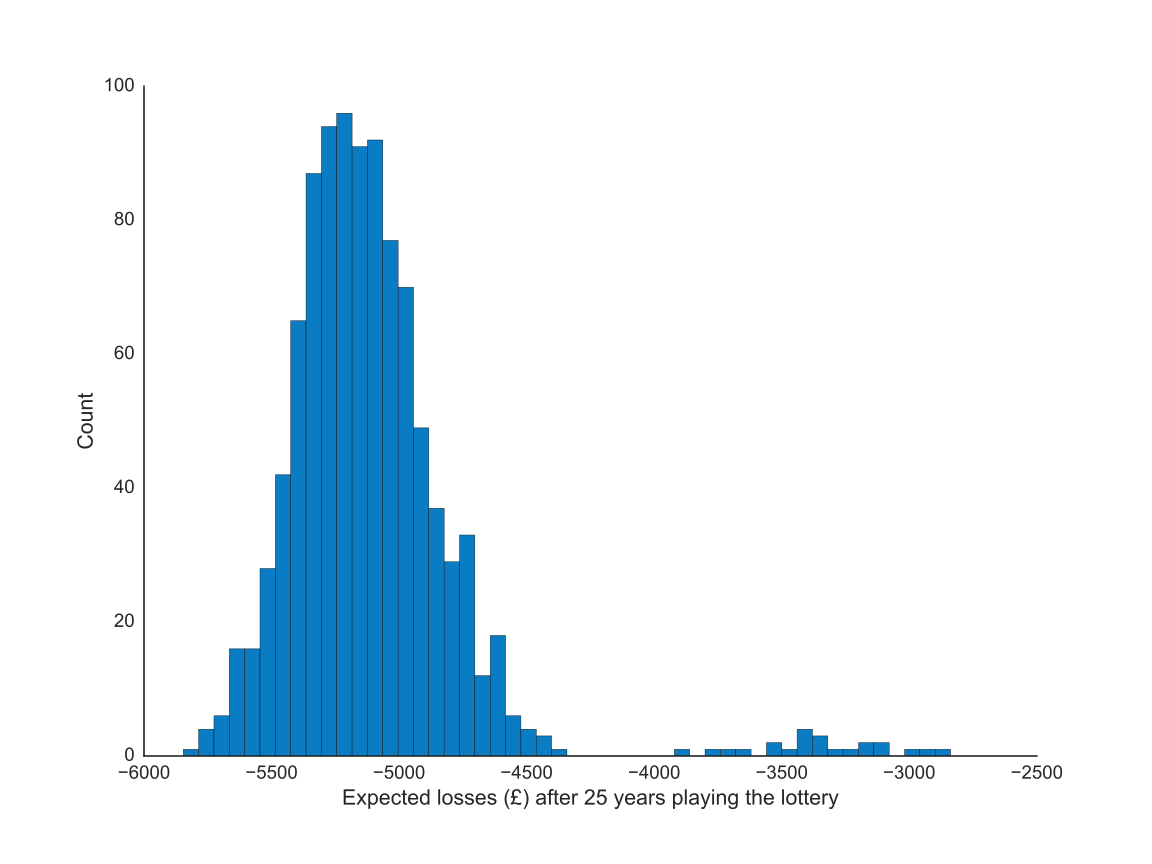
Demonstrate simulated results from playing the lottery for 25 years

Our lottery players lost £5,105 on average, with £5,846 being the worst loss recorded and being £2,838 down the best performance. No life-changing amounts were won.

Smart investors?

What we will simulate investing in is the iShares Edge MSCI Europe Minimum Volatility ETF offered by Blackrock. This will track the performance of a European, large-cap equities benchmark, and returns 0.78% per month on average after fees, with a standard deviation of 2.76%.

How did our 1000 investors do? They invested £26 every month for 25 years and received a monthly return (randomly generated from a normal distribution based on our fund’s monthly mean return and standard deviation) on whatever they had invested at the time. They did much better than the lottery players.
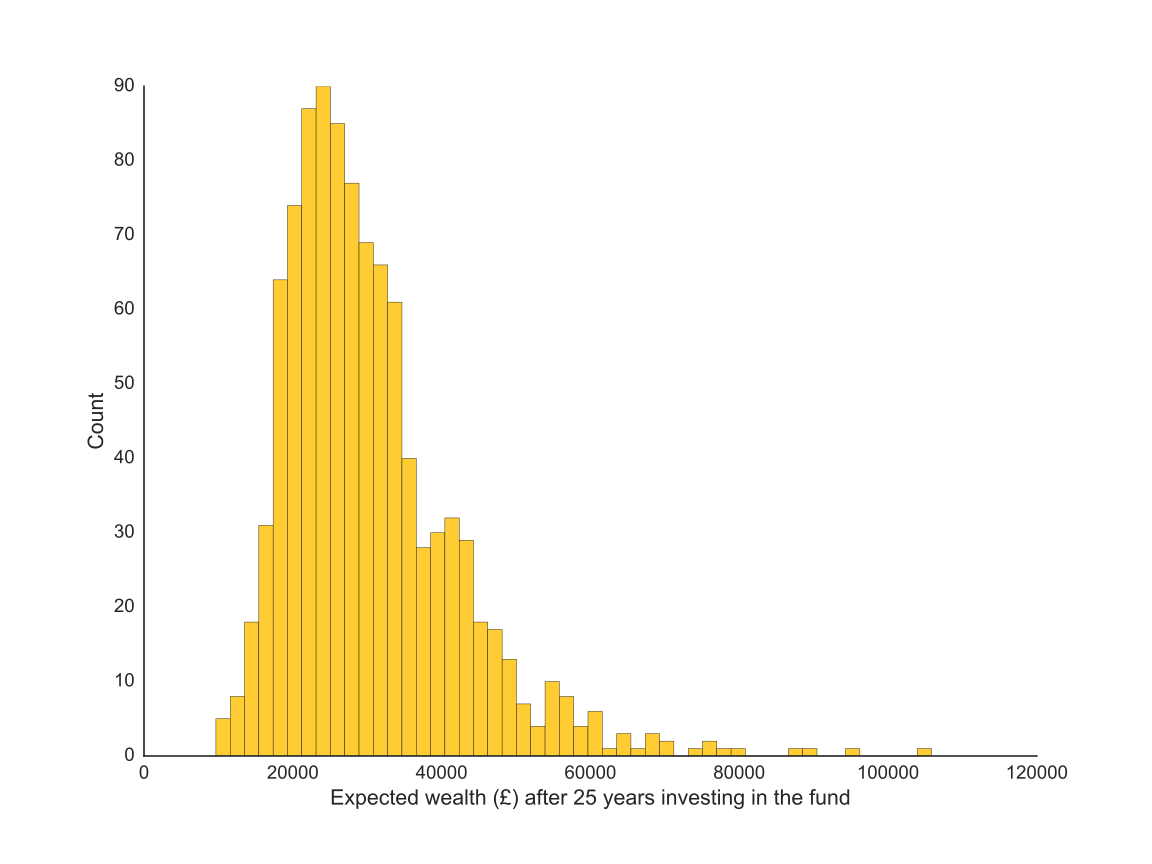
demonstrate expected wealth investing 25 pounds a month into a fund

The simulated investors ended up with £30,390 on average with one lucky investor walking away with £105,842. Even the worst performance of £9,664 was far better than the luckiest lottery player and beats stuffing £26 a month under the mattress.

The winning ticket

Past performance is not a guide to future performance, and yes, the fund results are based on historical numbers and investing is not without risk. If I had simulated 10,000 or 100,000 lottery players we may have had a jackpot winner, and maybe the average winnings do not represent the true range of prizes given now or in the future.

But I think the assumptions are reasonable, and the difference in fortunes is so stark that we can say with confidence that wealth is more likely to be built by investing in this single fund (and do not forget the many others that are out there) compared with playing the lottery. Of course, in the real world, a portfolio should be appropriately diversified and reflect the investor’s risk and return preferences.

If someone enjoyed playing the lottery, perhaps for the chance to dream about winning, I would not say they must stop. But I would suggest that they invest what they can afford first, and then buy lottery tickets.


James J. McCombie has no position in any of the shares mentioned. The Motley Fool UK has no position in any of the shares mentioned. Views expressed on the companies mentioned in this article are those of the writer and therefore may differ from the official recommendations we make in our subscription services such as Share Advisor, Hidden Winners and Pro. Here at The Motley Fool we believe that considering a diverse range of insights makes us better investors.

More on Investing Articles

Warren Buffett at a Berkshire Hathaway AGM
Investing Articles

Can someone invest like Warren Buffett with a spare £500?

Christopher Ruane explains why an investor without the resources of billionaire Warren Buffett could still learn from his stock market…

Read more »

Investing Articles

Can these 2 incredible FTSE 250 dividend stocks fly even higher in 2026?

Mark Hartley examines the potential in two FTSE 250 shares that have had an excellent year and considers what 2026…

Read more »

Thoughtful man using his phone while riding on a train and looking through the window
Investing Articles

Is 45 too late to start investing?

Investing at different life stages can come with its own challenges -- and rewards. Our writer considers why a 45-year-old…

Read more »

Hand of person putting wood cube block with word VALUE on wooden table
Investing Articles

UK shares look cheap — but the market might be about to take notice

UK shares have traded at a persistent discount to their US counterparts. This can create huge opportunities, but investors need…

Read more »

Investing Articles

This FTSE 100 growth machine is showing positive signs for a 2026 recovery

FTSE 100 distributor Bunzl is already the second-largest holding in Stephen Wright’s Stocks and Shares ISA. What should his next…

Read more »

Investing Articles

I asked ChatGPT for the best FTSE 100 stocks to buy for passive income in 2026 and it said…

Paul Summers wanted to learn which dividend stocks an AI bot thinks might be worth buying for 2026. Its response…

Read more »

ISA Individual Savings Account
Investing Articles

Stop missing out! A Stocks and Shares ISA could help you retire early

Investors who don't use a Stocks and Shares ISA get all the risks that come with investing but with less…

Read more »

Investing Articles

Will Greggs shares crash again in 2026?

After a horrible 2025, Paul Summers takes a look at whether Greggs shares could sink even further in price next…

Read more »