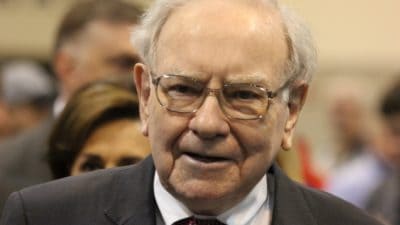
Warren Buffett is widely considered to be one of the greatest value investors of all time. His ability to consistently identify bargain opportunities over many decades is legendary, as is his patience and self-discipline. However, just because you don’t have his wealth, doesn’t mean you can’t use some of Buffett’s methods. Here are two ways that you can follow in his footsteps.
Look for wide moats
Over the decades, Warren Buffett has evolved and refined his investing philosophy. When he began his career in the early 1950s, he was primarily what he himself refers to as a ‘cigar butt’ investor — that is, he would look for distressed companies that were on their last legs and buy them for pennies on the dollar — akin to finding a cigar butt and sucking the last puff of smoke out of it.
Since then, the Oracle has moved on to seeking businesses with unassailable moats. A moat is a competitive advantage that a company has over its rivals that is not easily replicable. This can include superior branding, complicated intellectual property, a proprietary formula, or anything else that sets it apart from the pack. For instance, Coca-Cola, one of Buffett’s favourite holdings, is one of the most powerful brands in the world, and dominates its market, despite the fact that sugary water is not really that difficult to manufacture.
Importantly, these kinds of businesses tend to exist primarily in mature industries. In a rapidly-developing sector like artificial intelligence, it can be difficult to figure out who is going to end up being the leader. Once an industry ages and the dust settles down, however, you should be free to determine whether there is a business with a strong moat in it. In the 1990s, Buffett didn’t get involved in the tech sector because he knew that he didn’t understand the economics of it, and also because it was moving too quickly. Today, he is a major shareholder in Apple, because it’s clear to anyone that it has an incredibly wide moat.
Seek out forthright management
Another factor that Buffett considers is good management. He looks at what effect the current executive suite has had on the performance of the company. This doesn’t mean what the stock has done. Buffett is famously disinterested in what the day-to-day stock prices of his investments are. Instead, he looks at cash flow and capital allocation. Has management been able to generate money? Is this rate good relative to the industry the business is in? Is it reinvesting money efficiently? If not, is that capital being returned to investors via dividends or share buybacks? These are all questions you should also be asking.
Granted, Buffett is a major shareholder, and so has the clout to communicate with management whenever he wants to, which is an ability that the average investor usually lacks. However, you must always remember that as a shareholder, even a small one, you are a part-owner of a business, and therefore should evaluate the management of that business. You wouldn’t open a restaurant with an untrustworthy partner, so why should you do so when it comes to a public company?