Is it game over for the Premier Oil share price?

Roland Head explains why he thinks Premier Oil plc (LON:PMO) has been hit so hard by the falling price of oil.

| More on:

The content of this article was relevant at the time of publishing. Circumstances change continuously and caution should therefore be exercised when relying upon any content contained within this article.

You’re reading a free article with opinions that may differ from The Motley Fool’s Premium Investing Services. Become a Motley Fool member today to get instant access to our top analyst recommendations, in-depth research, investing resources, and more. Learn More.

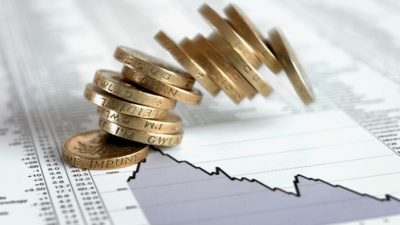
It’s been a painful few weeks for Premier Oil (LSE: PMO) shareholders. The oil and gas producer’s share price has fallen by more than 50% since the start of October, when it hit a 52-week high of 146p.

As a shareholder, I have a keen interest in this situation. So today I’m going to take a fresh look at Premier. I’ll explain why the share price fall has been so brutal, and ask whether the shares are still worth buying.

What’s really happened

You probably already know that the price of Brent Crude oil has fallen by around 30% since the start of October, from a high of $86.70 to about $60.

It’s no surprise that oil stocks have suffered. But you may wonder why Premier’s share price has fallen by over 50% when the price of oil has only dropped about 30%.

There’s a good reason for this. The cost of producing a barrel of oil is relatively constant over short periods. For our purposes, we can consider it to be a fixed cost. This means that if the price of oil rises, the extra sales revenue is almost all profit.

In a rising market, the firm’s profits from selling oil will rise more quickly than the price of oil. On the other hand, when the price of oil falls, Premier’s profits will fall more quickly than the oil price. This is an effect known as operating leverage.

Although I’ve simplified it considerably, I estimate that a 10% increase in the price of oil could increase Premier’s profits by as much as 14%. I hope this makes it easy to understand why oil shares can move so sharply when the price of oil changes.

Still making good progress

A recent trading update made it clear that Premier is still making good progress. Production is up, spending is down, and operating expenses are under control, at $17-$18 per barrel.

The firm has also put in place new hedging contracts for 2019, covering over 30% of planned production. They guarantee a minimum oil price of $69 per barrel during the first half of the year, and of $72 per barrel during the second half.

Chief executive Tony Durrant expects net debt to fall by $320m to $2.4bn this year, which he says will reduce the group’s net debt-to-EBITDA ratio to 3x. Although this is still high, Mr Durrant expects this ratio to fall further in 2019. I believe this could open the door to a more normal valuation for the firm.

Too cheap to ignore?

Broker forecasts for 2018 and 2019 have actually risen over the last three months, despite October’s oil price slump. Analysts appear to remain confident that the company can return to profit and continue repaying its debts.

If that view is correct, the stock’s 2018 forecast price/earnings ratio of 4.6 may be too cheap. A forecast P/E of 2.7 for 2019 also seems to be pricing in a lot of bad news. I continue to rate the shares as a buy.


Roland Head owns shares of Premier Oil. The Motley Fool UK has no position in any of the shares mentioned. Views expressed on the companies mentioned in this article are those of the writer and therefore may differ from the official recommendations we make in our subscription services such as Share Advisor, Hidden Winners and Pro. Here at The Motley Fool we believe that considering a diverse range of insights makes us better investors.

More on Investing Articles

Young mixed-race woman looking out of the window with a look of consternation on her face
Investing Articles

With stock market risks emerging, is now the time to consider the 60/40 portfolio?

The stock market could be in for a period of turbulence. Here’s a simple strategy that can help long-term investors…

Read more »

Bus waiting in front of the London Stock Exchange on a sunny day.
Investing Articles

Is a stock market crash coming? It’s not too late to get ready!

Christopher Ruane sees reasons to fear a coming stock market crash. Rather than tying to time it, he's hoping to…

Read more »

Investing Articles

Down 4% in 2026, is now the time to consider buying Nvidia shares

Has Nvidia become too big to keep growing? Or is the stock’s decline this year a chance to think about…

Read more »

Investing Articles

Is the party finally over for Rolls-Royce shares?

Rolls-Royce shares have made investors rich but momentum is slowing and the Iran conflict isn't helping. How worried should we…

Read more »

Asian man looking concerned while studying paperwork at his desk in an office
Investing Articles

7.8% dividend yield! A dirt-cheap UK income share to buy today?

I’m on the hunt for lucrative passive income opportunities, and this under-the-radar FTSE stock currently offers a whopping 7.8% dividend…

Read more »

Close-up image depicting a woman in her 70s taking British bank notes from her colourful leather wallet.
Investing Articles

3 passive income stocks tipped to soar 41% (or more) by 2027

One of these shares offering passive income is trading at a massive 79% discount to where City analysts think it…

Read more »

Mature Caucasian woman sat at a table with coffee and laptop while making notes on paper
Investing Articles

171,885 shares of this FTSE dividend star pays an income equal to the State Pension

Zaven Boyrazian calculates how many shares investors would have to buy to generate enough income to match the UK State…

Read more »

Finger clicking a button marked 'Buy' on a keyboard
Investing Articles

This stock’s the opposite of red-hot at the moment. But I reckon it could still be one to buy

The recent dramatic fall in the value of this FTSE 100 stock makes James Beard think it’s a stock to…

Read more »