Many people dream of achieving financial freedom and the chance to retire early. Having taken the time to read these words, I’m fairly confident you’re one of them. I know I am.
For a lot of us it’s not about the money per se, it’s about having the opportunity to do what you desire with the only commodity that’s truly finite. Made an ill-advised purchase? You can earn that money back. Waste time and you’ll never see it again.
Of course, a lot of personal finance column inches are devoted to how people should behave to achieve independence. Given that what you don’t do that can be just as important — and arguably more so — than what you do when it comes to investing, that may seem a little odd. Let’s redress the balance somewhat.
Sit in cash
As an asset class, cash is as safe as you can get. So long as your bank doesn’t go bust, you can get up every morning safe in the knowledge that your balance will be the same (or at least reassuringly similar) as when you logged off the night before.
When it comes to achieving your financial goals, however, what’s ‘safe’ is rarely good, at least over the long term.
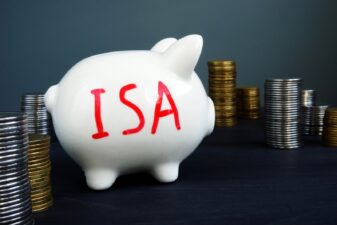
You don’t need me to tell you that our savings have been (and still are) held back by historically low rates of interest. The best instant access Cash ISA currently pays just 1.3% in interest, for example. As inflation picks up, this return will likely look even worse as the value of your savings is eroded.
To be clear, I’m not against having some money in the bank. If you’re considering a big purchase over the next few years, or saving up for a house deposit, it makes absolute sense to keep this accessible. Thanks to the predictable unpredictability of life, some kind of emergency fund is also an eminently prudent thing to have. Broken boiler? No problem. Sudden redundancy? These things happen.
But if you’ve more than, say, six months of expenses tucked up in an account and aren’t saving for a big purchase, you’re probably being cautious to the point of doing serious damage to your wealth. Don’t expect your future self to be grateful.
Buy index trackers
I’m a big fan of index trackers and, like Warren Buffett, believe the vast majority of those who have little interest in the stock market would benefit from devoting the core of their portfolio to these passive vehicles.
In addition to the instant diversification they bring — a FTSE 100 tracker simply means you own a bit of each of the UK’s biggest 100 companies — a huge benefit of these and exchange-traded funds are their low-cost nature. Given that you are only intending to generate the market return on your money (minus tracking error and fees), there isn’t any reason for paying over the odds and these funds are priced accordingly.
While this strategy will allow you to build a decent nest egg over the long term, however, it will not necessarily lead to early retirement. That’s fine if you love (or tolerate) what you do for a living and just want to plan for your twilight years.
Those who can’t bear the thought of continuing to run the rat race for decades, however, will need to outperform the market. And to earn better returns than the market, you’re going to need to zig while most zag. Which brings me to my final point.
Ignoring your risk level
If you were to ask me what my biggest regret from my early investing days was, it would be ignoring small-cap stocks for too long, particularly those showing the potential to grow earnings at a furious rate.
Sure, leaping headfirst into the small-cap universe and furnishing your portfolio with a smattering of oil and tech stocks from the outset isn’t advised. Unless you naturally possess a zen-like temperament, the huge volatility of such stocks increases the likelihood that you’ll sell everything at the first whiff of trouble. This might help you to avoid huge losses but, unfortunately, it also stops you from reaping the rewards when companies recover and flourish. For this reason, I totally understand why most people feel more comfortable picking shares from the market’s top tier in the early days.
The problem with favouring giants over minnows for too long is that the former’s sheer size prohibits fast growth. As legendary investor Jim Slater declared, ‘elephants don’t gallop‘. In other words, don’t expect your money to double in a couple of months if you’re invested in a plodding FTSE 100 giant. Small-cap stocks? That’s a completely different story.
Want an example of just how profitable these firms can be? I assume you do.
Back in 2001, a young fashion company — As Seen on Screen — listed on the Alternative Investment Market. In September 2003, shares were changing hands for under 4p each. Thanks to the phenomenal popularity of online shopping, the very same business, known simply as ASOS, now has a market capitalisation of £5bn. At the time of writing, its share price stands at a little over £60. Many early investors, even those with what we would regard as relatively modest holdings, will be multi-millionaires.
Of course, I’m cherry-picking here. For every ASOS there are many hundreds of companies who fall apart or fail to perform as well as hoped. Nevertheless, this example shows that searching for fast-growing, high-quality, under-researched stocks toward the lower end of the market spectrum has the potential to be very profitable. Far more so than the returns generated by your typical FTSE 100 behemoth.
Bottom line? Achieving financial independence early need not remain a pipe dream but it can depend on embracing capital risk early in your investing career, thus allowing sufficient time for winners to flourish and any losers to be compensated for. Ignore or underestimate your willingness to take risks and your time in the stock market could be a lot longer than you intended it to be.