Share your opinion and earn yourself a free Motley Fool premium report!

We are looking for Fools to join a 75 minute online independent market research forum on 15th / 16th December.

To find out more and express your interest please click here

What yesterday’s UK interest rate cut may mean for FTSE 100 shares

Here’s a closer look at the potential effect of yesterday’s interest rates cut on FTSE 100 (INDEXFTSE: UKX) shares.

The content of this article was relevant at the time of publishing. Circumstances change continuously and caution should therefore be exercised when relying upon any content contained within this article.

You’re reading a free article with opinions that may differ from The Motley Fool’s Premium Investing Services. Become a Motley Fool member today to get instant access to our top analyst recommendations, in-depth research, investing resources, and more. Learn More.

On 11 March, the Bank of England (BoE) cut the main interest rate from 0.75% to 0.25%. As I write, broader markets in the UK are (at least initially) taking a pause from their recent falls. And investors are wondering what this development may mean for their portfolios. Therefore, I’d like to discuss the potential effect of BoE’s interest rate decision on the FTSE 100 index.

Low interest rates are here to stay

Even before coronavirus-related headlines hit the newswires, policymakers had noted they expected interest rates to stay at low levels for many years to come.

Interest rate decisions affect the cost of mortgages, credit cards and other borrowings for both individuals and businesses. Typically, lower interest rates are considered good news for stock markets. In other words, there’s an inverse relationship.

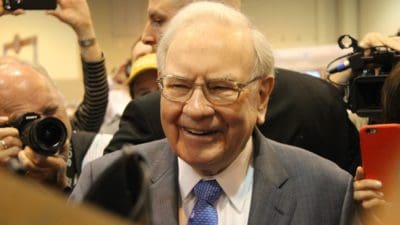
For example, legendary investor Warren Buffett firmly believes stocks outperform all other asset classes over the long term. Especially if interest rates and corporate tax rates remain low.

Rate cuts aim to add stimulus to our economy. They usually trigger mortgage, car and personal loan rates to fall. They make it cheaper for consumers to borrow money. 

British businesses may also find it easier to fund new investments. Many companies like utilities, such as National Grid and SSE, and telecoms firms, such as Vodafone or BT Group, tend to carry high levels of debt on their balance sheets. Therefore, lower rates may mean a boost to their bottom lines.

How about the pound?

When the BoE cuts rates, the pound is usually devalued against other major currencies, such as the US dollar or the euro. 

Most FTSE 100 companies are multinational conglomerates. Up to three-quarters of their revenue comes from overseas. When interest rates decrease and a devaluation of the pound against, for example, the US dollar occurs, this may impact UK businesses that generate income in dollars. The dollars they’re earning outside the UK now become worth more pounds. This, in turn, leads to a potential increase in profitability.

For US consumers, British goods would also become less expensive. Thus, UK exports may increase overall. That said, a weaker pound makes imported raw materials more expensive. And the increased costs eventually get passed down to the consumer.

However, other central banks globally have also been cutting interest rates in recent days. Therefore, the overall effect on the value of the pound may not be so clear cut. 

FTSE 100 shares with the highest non-UK revenue come from various industries. They include miners, industrials, oil companies and pharmaceuticals. FresnilloRio TintoBHP BillitonBPAstraZenecaGlaxoSmithKline, and Smith & Nephew are examples.

Foolish takeaway

Many established companies will normally hedge against currency risk. Yet earnings in the short-run may still be affected by exchange rate headwinds. However, any potential adverse effect may easily be offset by increased business opportunities offered by a lower interest rate environment in a given economy.

My strategy now? The current situation isn’t just an economic problem, it’s also an important human healthcare problem. I’d pay attention to what our health authorities advise but, at the same time, carry on investing in strong companies I believe in. I’d also watch out for short-term price dips to buy more.


tezcang has no position in any of the shares mentioned. The Motley Fool UK owns shares of and has recommended GlaxoSmithKline. The Motley Fool UK has recommended AstraZeneca and Fresnillo. Views expressed on the companies mentioned in this article are those of the writer and therefore may differ from the official recommendations we make in our subscription services such as Share Advisor, Hidden Winners and Pro. Here at The Motley Fool we believe that considering a diverse range of insights makes us better investors.

More on Investing Articles

DIVIDEND YIELD text written on a notebook with chart
Investing Articles

Forget high yields? Here’s the smart way to build passive income with dividend shares

Stephen Wright outlines how investors looking for passive income can put themselves in the fast lane with dividend shares.

Read more »

Businessman hand stacking up arrow on wooden block cubes
Investing Articles

15,446 Diageo shares gets me a £1,000 monthly second income. Should I?

Diageo has been a second-rate income stock for investors over the last few years. But the new CEO sees potential…

Read more »

Investing Articles

2 FTSE 100 stocks to target epic share price gains in 2026!

Looking for blue-chip shares to buy? Discover which two FTSE 100 stocks our writer Royston Wild thinks could explode in…

Read more »

A row of satellite radars at night
Investing Articles

If the stock market crashes in 2026, I’ll buy these 2 shares like there’s no tomorrow

These two shares have already fallen 25%+ in recent weeks. So why is this writer wating for a stock market…

Read more »

British Pennies on a Pound Note
Investing Articles

How much money does someone really need to start buying shares?

Could it really be possible to start buying shares with hundreds of pounds -- or even less? Christopher Ruane weighs…

Read more »

Two gay men are walking through a Victorian shopping arcade
Investing Articles

With Versace selling for £1bn, what does this tell us about the valuations of the FTSE 100’s ‘fashionable’ stocks?

Reflecting on the sale of Versace, James Beard reckons the valuations of the FTSE 100’s fashion stocks don’t reflect the…

Read more »

A senior group of friends enjoying rowing on the River Derwent
Investing Articles

Want to stuff your retirement portfolio with high-yield shares? 5 to consider that yield 5.6%+

Not everyone wants to have a lot of high-yield shares in their portfolio. For those who might, here's a handful…

Read more »

Affectionate Asian senior mother and daughter using smartphone together at home, smiling joyfully
Investing Articles

How much do you need in a SIPP to target a £3,658 monthly passive income?

Royston Wild discusses a 9.6%-yielding fund that holds global stocks -- one he thinks could help unlock an enormous income…

Read more »