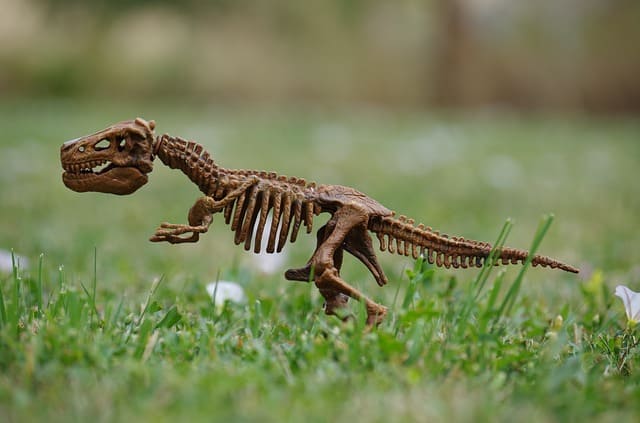
Dinosaur fund managers will eat your wealth

Fund managers are heading for extinction, all in the name of evolution

The content of this article was relevant at the time of publishing. Circumstances change continuously and caution should therefore be exercised when relying upon any content contained within this article.

You’re reading a free article with opinions that may differ from The Motley Fool’s Premium Investing Services. Become a Motley Fool member today to get instant access to our top analyst recommendations, in-depth research, investing resources, and more. Learn More.

CCO Public Domain

Active fund managers once ruled the earth, but now they are heading for extinction. And the sooner most of them die out, the better.

Recently, I revealed that 98% of US fund managers trailed the benchmark S&P Global 1200 index over 10 years.

Even more shockingly, every single active emerging market fund failed to beat their benchmark. That’s right, every single one.

Asset managers are still kings of all they survey, charging hefty fees and enjoying lavish lifestyles at investors’ expense, but now their days are numbered. Evolution is finally catching up with them.

Mass extinction

Fund managers aren’t the large-brained, nimble-footed mammals that investors have been led to believe.

Quite the reverse: they are dinosaurs. And like the dinosaurs, they are heading for extinction.

New figures from S&P show that more than half of all equity funds have died out in the last 10 years.

Its SPIVA Europe Scorecard found that of the 535 UK equity funds that were active in 2006, only 46% were still alive last year.

Life expectancy is even shorter in Europe, with only 39% living for a decade, and 41% in the US. The death rate is brutal.

In fact, I’m being unfair to dinosaurs: they roamed the earth for 350 million years, equity funds are lucky to last a decade.

S&P says reason they are being culled due to “continued underperformance”. It’s that simple.

Dying out

Ironically, this high extinction rate makes active fund performance look better than it really is. When judging active fund performance, too many people only look at the survivors, the dead are conveniently forgotten, which distorts overall performance in their favour.

S&P’s figures do allow for this “survivorship bias”, and expose active funds as the cold-blooded, slow-brained plodders they truly are.

Mass extinction

The dwindling number of investment industry professionals who still defend active funds like to point to the winners, the small breed of managers who regularly do beat the market.

At the same time they conveniently ignore the far larger number of losers, those destined to die, unmourned, in the great investment fund graveyard.

However, the message is steadily getting through, which explains the dramatic surge in popularity of exchange traded funds (ETFs).

These low-cost trackers, which can be bought and sold like shares, can never beat the market but nor can they underperform either. They are killing off active fund managers in the same way the meteor strike did for the dinosaurs.

Take control

It also explains why more investors now choose to build their own portfolio of stocks and shares, and live or die by their own decisions, rather than pay a fund manager to do the work on their behalf (and almost certainly fail).

It pays to keep a closer eye on your investment decisions. The alternative is to watch your portfolio go the way of the dinosaurs.


More on Investing Articles

Man hanging in the balance over a log at seaside in Scotland
Investing Articles

Will Lloyds shares rise 25% or 39% by this time next year?

Lloyds shares are expected to rebound after sinking to fresh multi-month peaks. Royston Wild considers the outlook for the FTSE…

Read more »

Modern suburban family houses with car on driveway
Investing Articles

£7,500 invested in Taylor Wimpey shares 18 months ago is now worth…

A raft of issues have been plaguing the housebuilding sector in the last year-and-a-half. How bad was the damage for…

Read more »

A rear view of a female in a bright yellow coat walking along the historic street known as The Shambles in York, UK which is a popular tourist destination in this Yorkshire city.
Investing Articles

£210 drip-fed into this 6.8%-yielding UK stock could lead to a £1,000 second income 

This FTSE 100 dividend stock has slumped nearly 11% inside two weeks, making it a worthy candidate to consider for…

Read more »

ISA Individual Savings Account
Investing Articles

ISA or SIPP? 2 factors to consider

As next month's ISA contribution deadline creeps up, our writer considers a couple of key differences between using a SIPP,…

Read more »

Portrait of pensive bearded senior looking on screen of laptop sitting at table with coffee cup.
Investing Articles

Is this 5.6% yielding dividend share a brilliant defensive bolthole as war rages?

Harvey Jones looks at a FTSE 100 dividend share with a brilliant record of delivering income and growth, and wonders…

Read more »

Hand of person putting wood cube block with word VALUE on wooden table
Investing Articles

2 quality UK stocks trading below intrinsic value?

UK stocks have a reputation for being cheap, but could value investors be in dreamland with the opportunities being presented…

Read more »

Businessman with tablet, waiting at the train station platform
Investing Articles

£15,000 put into Greggs shares a year ago is worth this much now…

Greggs' sausage rolls may be tasty enough -- but its shares have left a bad taste in some investors' mouths…

Read more »

Investing Articles

FTSE 100 drops sharply — are serious bargains emerging in UK stocks?

Andrew Mackie looks at the FTSE 100 and explores how sharp falls, market volatility, and structural opportunities are reshaping the…

Read more »