
We have some exciting news to share! The Motley Fool UK has now become an independent, UK-owned company, led by our long-serving UK management team — Mark Rogers, Chris Nials and Heather Adlington. In practical terms, it’s the same team you know, now fully focused on serving our UK readers and members.

Just as importantly, our approach remains unchanged: long-term, jargon-free, and on your side. We’ll be introducing a new name and brand over the coming weeks — we're very excited to share it with you and embark on this new chapter together!

£10,000 in savings? Here’s a 3-step plan to target a £9,287 second income

Buying dividend stocks and reinvesting the returns is one way to earn a second income. But Stephen Wright thinks there’s a better strategy available.

| More on:

You’re reading a free article with opinions that may differ from The Motley Fool’s Premium Investing Services. Become a Motley Fool member today to get instant access to our top analyst recommendations, in-depth research, investing resources, and more. Learn More.

British coins and bank notes scattered on a surface

Image source: Getty Images

How can you turn your excess savings into a second income? Investing in the stock market is a good strategy.

I think the best way to go is to break the project down into three stages. And the first is figuring out the numbers.

Step 1: work out the numbers

Targeting a second income involves building wealth and then turning that into income. But before that, the first step is to work out what the numbers look like.

In the first phase, a 9% return is enough to turn £10,000 into £132,676 after 30 years. Is that realistic?

I think it might be. Over the last five years, the FTSE 100 has returned an average of 11.99% a year.

In the second phase, the FTSE 100 currently has an average dividend yield of 3.3%. But in this case, I think you can realistically aim higher.

In my view, a 7% yield might be sensible. And that’s enough to earn £9,287 a year in dividend income from a £132,676 portfolio.

With an idea of what you’re aiming for in hand, it’s time to start thinking about how to get there. Specifically, what shares to consider buying.

Step 2: grow the initial capital

The first phase involves turning that £10,000 into as much as possible. And that means looking for companies that can grow.

I think Halma (LSE:HLMA) is one of the FTSE 100’s finest in this regard. The firm retains the vast majority of its cash and reinvests it for growth. 

Acquisitions are a big part of the company’s growth strategy. And this inevitably brings a risk of paying too much in a deal.

Halma’s returns on equity are above 15%, which is strong. Most importantly, though, they’ve consistently been above this level.
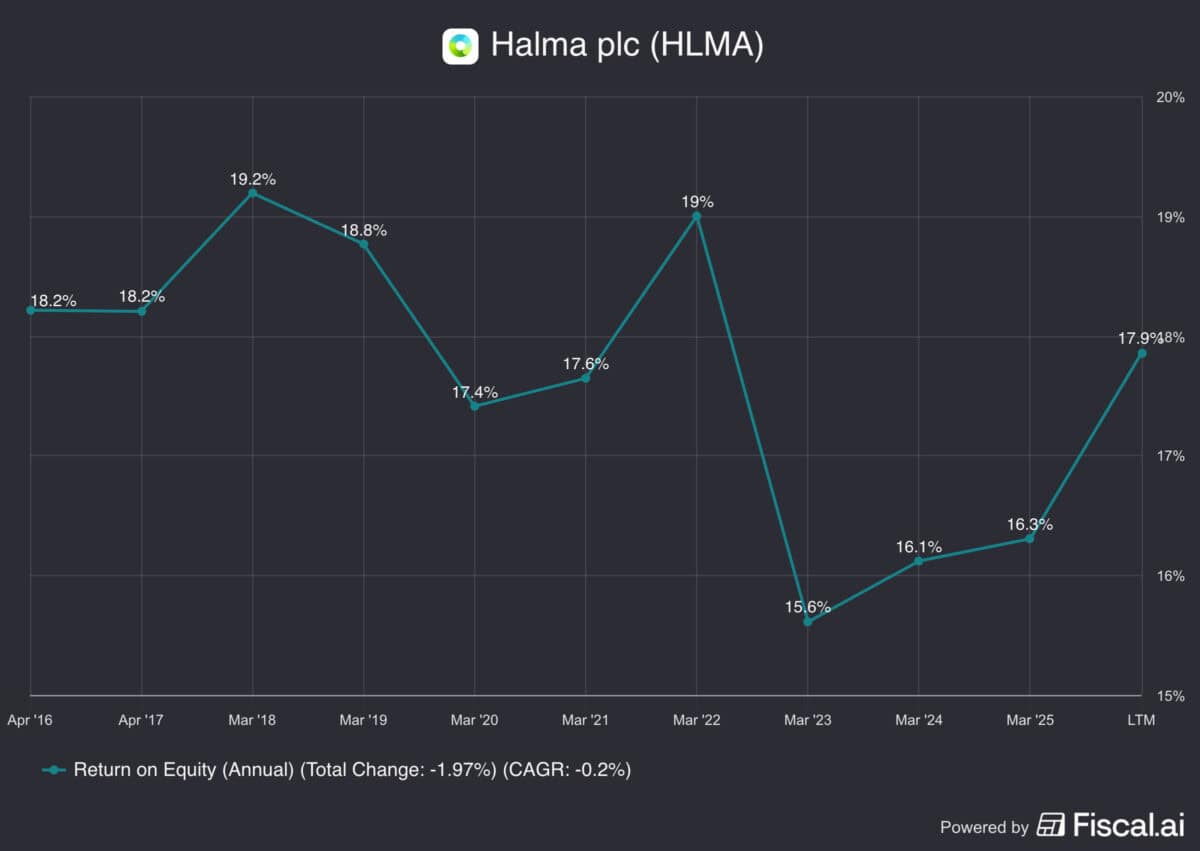
Source: Fiscal.ai

That shows the company isn’t just growing revenues at any cost. It’s doing so with smart investments that generate good returns.

It doesn’t jump out as a cheap stock. But it’s certainly the kind of firm investors trying to build wealth should be looking at.

Step 3: income investing

The second phase involves converting the accumulated capital into passive income. And there are a few ways of doing this. 

High yields can be risky. But I think there are stocks with dividend yields above 7% that are likely to be worth considering 30 years from now. 

In general, the real estate investment trust (REIT) sector is one that I think is interesting. Especially from a passive income perspective. These are companies that own and lease various different properties. And they distribute 90% of their rental income as dividends to shareholders.

In other words, they’re the opposite of companies like Halma. They don’t retain their cash and this limits growth opportunities. 

As a result, however, they often have much higher dividend yields. And this is where I think investors targeting a 7% yield should look.

Please note that tax treatment depends on the individual circumstances of each client and may be subject to change in future. The content in this article is provided for information purposes only. It is not intended to be, neither does it constitute, any form of tax advice.

Three steps

Turning excess cash into a second income involves two phases. The first is trying to grow the initial capital as much as possible. 

The second involves looking for dividend opportunities. But before either of these, the first step is to figure out what might be achievable.

This will vary as different investors have different timeframes. But with 30 years, I think turning £10,000 into a £9,287 second income is a realistic possibility.


Stephen Wright has no position in any of the shares mentioned. The Motley Fool UK has recommended Halma Plc. Views expressed on the companies mentioned in this article are those of the writer and therefore may differ from the official recommendations we make in our subscription services such as Share Advisor, Hidden Winners and Pro. Here at The Motley Fool we believe that considering a diverse range of insights makes us better investors.

More on Investing Articles

Young mixed-race couple sat on the beach looking out over the sea
Investing Articles

This S&P 500 giant is building a global super app

If this household S&P 500 company achieves its ultimate aim, it could become a hell of a lot bigger in…

Read more »

Friends at the bay near the village of Diabaig on the side of Loch Torridon in Wester Ross, Scotland. They are taking a break from their bike ride to relax and chat. They are laughing together.
Investing Articles

How to target a £1m Stocks and Shares ISA by investing £511 a month

Fancy becoming a Stocks and Shares ISA millionaire? Harvey Jones thinks this long-term investment strategy could help you get there…

Read more »

A senior group of friends enjoying rowing on the River Derwent
Investing Articles

How much do investors need in an ISA to target a £31,353 yearly passive income

Harvey Jones shows how building a portfolio of FTSE 100 shares can generate enough passive income to enjoy a truly…

Read more »

Man smiling and working on laptop
Investing Articles

These 3 ‘secret’ dividend shares could be top stocks to buy in May!

Forget FTSE 100 dividend shares. And look past the FTSE 250 for passive income. Here are three lesser-known dividend stocks…

Read more »

Friends and sisters exploring the outdoors together in Cornwall. They are standing with their arms around each other at the coast.
Investing For Beginners

How much is needed in an ISA for a £35,828 passive income from FTSE shares?

Royston Wild reveals how a Stocks and Shares ISA invested in FTSE 100 shares could deliver a huge passive income…

Read more »

Hydrogen testing at DLR Cologne
Investing Articles

17% below their 52-week high, is now an opportunity to consider Rolls-Royce shares?

Rolls-Royce Holdings shares have fallen significantly since March. James Beard asks whether now could be a good time for latecomers…

Read more »

Thoughtful man using his phone while riding on a train and looking through the window
Investing Articles

Just Released: Our Top Defence Stock For ISAs In May 2026 [PREMIUM PICKS]

Fire stock picks will tend to be more adventurous and are designed for investors who can stomach a bit more…

Read more »

Woman riding her old fashioned bicycle along the Beach Esplanade at Aberdeen, Scotland.
Investing Articles

Here’s how a £20k ISA could generate £2,413 every week from passive income shares

Investing in a Stocks and Shares ISA can deliver transformational wealth in retirement. Royston Wild explains the benefit of passive…

Read more »