Stocks and Shares ISA investors have been surprisingly quiet in recent weeks. This time of year usually sees a spike in trading activity, as Brits max out their ISA allowances before the 5 April deadline. Many investors also jump into the market after this date to put the new tax year’s £20k allowance to work.
It’s not tough to see why investors have been more reluctant in 2026, with stock market volatility picking up following the start of the Iran conflict. The FTSE 100 has been up and down like a yo-yo, and stacks of smaller-cap shares have been hit even harder.
No-one likes seeing the value of their investments plummet. But have ISA investors been too cautious in recent weeks?
Volatile markets
It depends. Stock investing isn’t necessarily for those with low risk tolerance. And the dangers to share prices and dividends have grown significantly in recent weeks.
With energy prices spiking, inflationary pressures are rising again and economic growth is coming under pressure. The longer the Middle East conflict drags on, the greater these problems become. And there are currently no signs of breakthrough in talks to end the fighting.
Could corporate earnings collapse in the fallout? It’s possible. But that’s not the only reason why stock investors have become more fearful. Financial markets are also tough to read at the moment.
For instance, gold is one of the most popular classic safe-haven assets during periods of economic turbulence and war. So why has the precious metal plunged in recent weeks? It’s because of the resurgent US dollar, though this unexpected turn of events wouldn’t have exactly soothed investor nerves.
Looking long term
But here’s the thing: market volatility is nothing new. And over the long term, the direction of stock markets is clearly up.
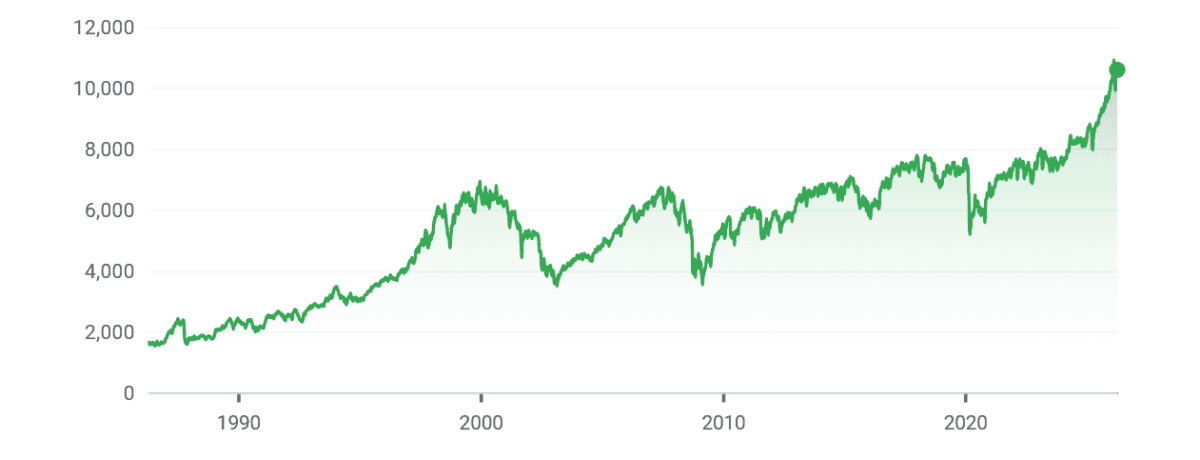
Let’s take the FTSE 100 again. It struck fresh record highs just shy of 11,000 points in late February before falling as the conflict started. But it overcame a multitude of crises down the years to get there, from banking sector meltdowns and European sovereign debt crises, to the bursting of tech bubbles and global pandemics.
ISA investors that bought in during the depth of these crises often managed to substantially boost their returns. They snapped up quality companies when stock markets were low, and booked big profits when share prices eventually recovered. The same opportunity has materialised for investors today.
Here’s what I’m doing
I’ve been busy bargain hunting myself, and recently added more Aviva (LSE:AV.) shares for my portfolio. The FTSE stock has recovered from March’s lows, but it still offers tremendous value today.
At 640p, Aviva’s share price has a price-to-earnings-to-growth (PEG) ratio of just 0.1, below the value watermark of one. Its dividend yield, meanwhile is a blue chip smashing 6.5%. Sure, the business faces danger as consumer spending comes under fresh pressure. Yet at these prices it was too cheap for me to ignore.
And critically, Aviva shares still have the capacity to deliver exceptional long-term returns. Its insurance, retirement, and wealth markets are set to rocket thanks to favourable demographic trends. And the company has brilliant brand power and balance sheet strength to capitalise on this.