We are only three weeks into the year, but already Marks and Spencer has been pleasing investors. The Marks and Spencer share price has risen 9% so far this year, making for a 153% gain over the past five years.
That is triple the rise seen in the FTSE 100 index of leading companies during that period.
We also learned this month that the company had a solid performance over the Christmas trading period.
In a statement, it said that the 13 weeks up to 27 December saw a 24% increase in total sales compared to the prior year period.
Ongoing sales growth potential
Most of that reflected sales being reported at the firm’s joint venture with Ocado.
They leapt by almost a quarter. That business does have high growth potential, though the leap came from the fact that those sales numbers had not been included in the prior year figures.
Even excluding the Ocado partnership, though, the company’s performance was a respectable 3% year-on-year growth. Growth of 7% in the food business was partly offset by a 3% decline in the smaller fashion, home, and beauty division.
The strong performance in the Marks and Spencer share price suggests that investors remain committed to the growth story, despite a tough 12 months in which the company suffered badly from a cyber blackmailing attack.
Does that confidence make sense – and should I join those investors by adding some Marks shares to my portfolio?
Looking for competitive advantages
It has been a mixed few years for Marks but on balance it seems as if the storied retailer has found at least some of its mojo again after a wilderness period when it seemed to be losing relevance.
As the declining fashion home, and beauty revenues show, there is still work to be done to reconnect the brand to its target audience.
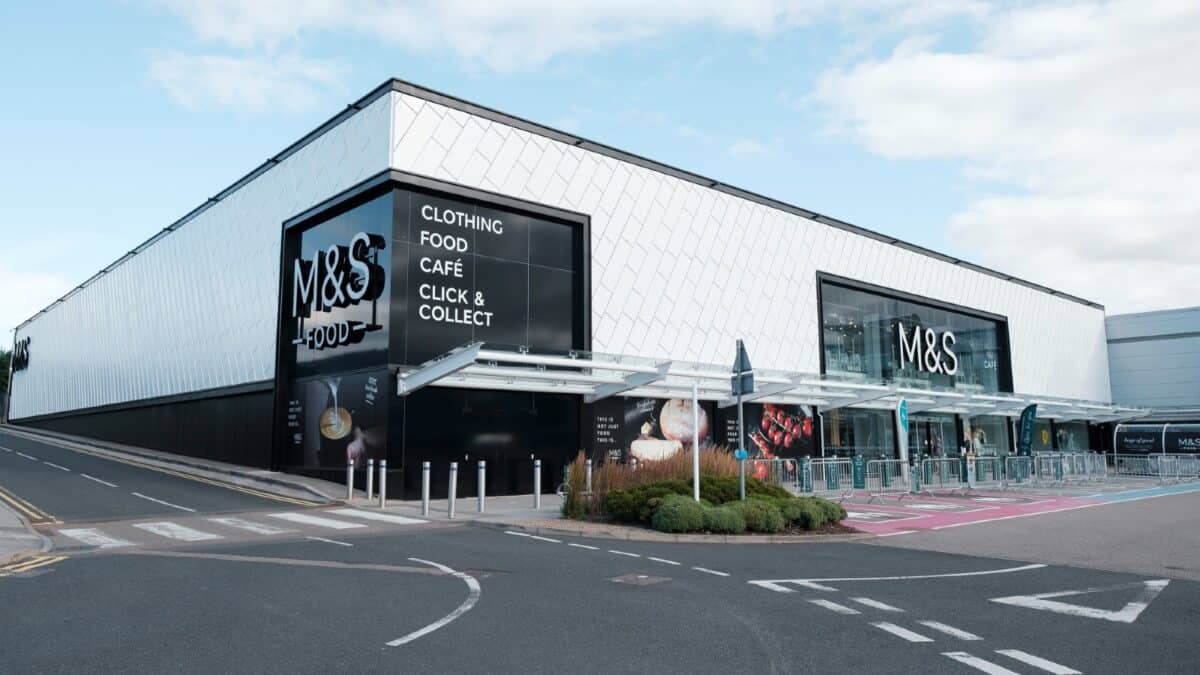
But the growth in food revenues is impressive. Marks is much more visible than it once was with standalone food shops. That strategy appears to be delivering the goods, based on the Christmas trading update.
There is a lot more white space here too, reflected in the company’s plan to expand its network of food shops.
That could help add sales in years to come, improving economies of scale, and getting more benefit from Marks’ trusted and widely known brand.
I don’t like the price!
Still, although I would be happy to invest in Marks and Spencer as a business, is the current share price attractive enough for me to do so?
Last year’s earnings were skewed by the one-off costs of the cyber attack. But looking back to the year before that, Marks reported a net profit of £431m.
In the context of a current market capitalisation of £7.4bn, that would equate to a price-to-earnings ratio of around 17. That is based on 2024 earnings that were the company’s best in recent years.
Even that valuation does not look especially attractive to me, though, given the risks Marks faces from a highly competitive food retail environment and higher staffing costs.
The growth story has pushed the Marks and Spencer share price up. If the business performs well this year, I think it may go higher.
But at the current price, I will not be investing.