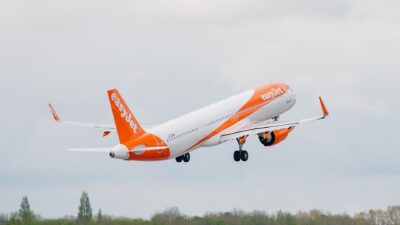
I’ve kept a close eye on easyJet (LSE: EZJ) shares for the last 18 months because I think it’s got serious recovery potential.
The FTSE 100 budget carrier has failed to benefit from the post-pandemic flights recovery, in contrast to International Consolidated Airlines Group. I bought IAG in April, straight after Donald Trump paused his ‘liberation day’ tariffs, and I’m up 60% since. Could easyJet now follow the same trajectory?
FTSE 100 underperformers
easyJet also took part in April’s relief rally, but wasn’t able to sustain it. The shares are down 11% over 12 months and 28% over five years, a real disappointment for long-term investors.
While IAG has exposure to transatlantic routes via British Airways, easyJet is focused on Europe, where the cost-of-living crisis and intense competition from other low-cost carriers like Ryanair and Wizz Air have squeezed fares and profit margins.
Strikes, staffing challenges, airport disruptions and fuel price volatility can all hit performance, at any time. Revenue growth has been bumpy, despite its fast-growing Holidays operation.
Low valuation tempts
The shares have jumped 7.5% in the last week as the prospect of interest rate cuts revives the FTSE 100 across the board. Despite that, the easyJet share price still looks brilliant value with a price-to-earnings ratio (P/E) of just 7.7.
On the other hand, it’s looked cheap for ages, and that hasn’t helped. The UK economy is still struggling, unemployment is rising and younger people have less to spend the jobs market tightens.
On the plus side, the falling oil price and easyJet’s investment in a more fuel-efficient Airbus fleet should boost margins. I think it’s worth considering with a long-term view, but given wider economic headwinds, investors must expect more turbulence.
Long-term patience required
I haven’t just watched JD Sports Fashion (LSE: JD), I’ve bought its shares repeatedly, averaging down on every dip, while hoping that one day they’d fly back into favour.
Shares in the FTSE 100 athleisurewear specialist have also been lifted by a more positive attitude towards UK recovery stocks, up 7.25% in the last week. But the shares are still down 12% over 12 months and a brutal 50% over five years.
Today, the JD Sports share price looks brilliant value with a P/E of 6.8. But like easyJet, it’s looked that way for some time, without kicking on.
First, sales have to recover, and that isn’t easy while consumers struggle and its youthful customer base finds things particularly hard. Employer’s National Insurance and inflation-busting Minimum Wage hikes have squeezed margins.
Crucially, JD Sports has suffered two disappointing Christmas trading periods in a row. Can we really say economic conditions are better this year? I’m afraid not.
I still think it’s worth considering with a long-term view, but again, patience is required. Interest rate cuts may help, but we have to remember why the Bank of England is making them. The UK is on the edge of recession, and the US isn’t exactly booming.
Both easyJet and JD Sports are trading at eye-popping valuations. They’re cheap for a reason though. I expect both to come good, but can’t say when.