Unless we have a lot of money, the strategy for earning a second income typically starts by building wealth.
So if someone has £20,000 set aside, one of the most effective ways to put that money to work is by opening a Stocks and Shares ISA.
This type of account allows investments to grow free from capital gains and dividend tax, meaning more of the returns stay invested over the long term.
Once the account is open, the next step is consistency. The investor may wish to drip feed that £20,000 into investments before making regular contributions from their earnings.
By contributing regularly, even in relatively small amounts, investors benefit from pound-cost averaging — buying shares or fund units at different prices over time, rather than trying to predict market highs and lows.
This helps smooth out volatility and reduces the risk of investing a large lump sum at the wrong moment.
Investing wisely
The next step is choosing investments wisely. That often means building a diversified portfolio, spread across different sectors and geographies, to balance risk and opportunity.
Rather than chasing short-term fads, the focus should be on quality businesses or broad index funds that have the potential to compound wealth steadily over many years.
And compounding is where the real magic happens. This is where reinvested returns and steady growth build upon themselves, accelerating returns as time passes.
With discipline, patience, and a long-term outlook, even modest regular contributions on top of the initial savings can snowball into a significant portfolio.
Running some maths
Ok, let’s imagine someone invests £20,000 and then elects to contribute £500 a month into their ISA. Well, assuming a (not guaranteed) annualised return of 9% — that’s somewhere between long-term UK and US returns.
If these returns were achieved annually over 20 years, the end figure would be £454,000. And after 30 years, that figure would have reached £1.2m.
After 20 years, the portfolio could deliver a £22,500 second income, while waiting 30 years would deliver £60,000. What’s more, doing this in an ISA would make this entirely tax free.
Please note that tax treatment depends on the individual circumstances of each client and may be subject to change in future. The content in this article is provided for information purposes only. It is not intended to be, neither does it constitute, any form of tax advice. Readers are responsible for carrying out their own due diligence and for obtaining professional advice before making any investment decisions.
Where to invest?
When following this strategy, an investor may wish to invest in a variety of assets, including funds, investment trusts and stocks. My preference is to invest in one or two stocks a month as part of an effort to build a diversified and successful portfolio.
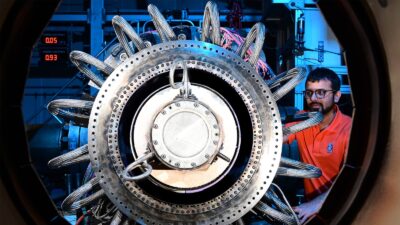
One stock I believe investors should consider is Melrose Industries (LSE:MRO). Melrose has been reshaped into a pureplay aerospace business after divesting its automotive arm.
The company is benefitting from strong demand in both defence and civil aviation, with adjusted earnings per share rising 30% in H1 2025 to 15.1p.
Management’s targeting earnings growth of more than 20% annually through 2029, supported by long-term contracts and sole-supplier positions on around 70% of sales.
At a forward price-to-earnings of 15.3 and a price-to-earnings-to-growth (PEG) ratio of 0.73, the stock looks inexpensive relative to peers like Rolls-Royce and GE.
However, risks include its £1.4bn net debt and the aerospace sector’s sensitivity to supply chain pressures or cyclical downturns. Still, I believe Melrose offers growth at a reasonable price.