
Here’s how you could target a second income for retirement with a SIPP!

Discover how a Self-Invested Personal Pension (SIPP) can build long-term wealth — and a top fund I’ve bought for my own portfolio.

| More on:

The content of this article was relevant at the time of publishing. Circumstances change continuously and caution should therefore be exercised when relying upon any content contained within this article.

You’re reading a free article with opinions that may differ from The Motley Fool’s Premium Investing Services. Become a Motley Fool member today to get instant access to our top analyst recommendations, in-depth research, investing resources, and more. Learn More.

A senior man and his wife holding hands walking up a hill on a footpath looking away from the camera at the view. The fishing village of Polperro is behind them.

Image source: Getty Images

For me, the best way to target a sizeable passive income in retirement is with a Self-Invested Personal Pension (SIPP). I’m not looking to draw down any money before the age of 57, so I don’t have to worry about any early withdrawal penalties.

I also get to enjoy a generous annual allowance that towers above that of the Stocks and Shares ISA. This variable figure is equivalent to an individual’s yearly income, up to a maximum of £60,000.

Big benefits

The main advantages of using a SIPP to build long-term wealth are twofold. Like a Stocks and Shares ISA, investors don’t pay a penny in tax on capital gains and dividend income. This frees up more cash for investment, enhancing the compounding effect and building wealth faster.

In addition to this, individuals receive extra money to invest in the form of tax relief. This is a luxury that ISA investors don’t get to enjoy, and is set at the following rates:

  • 20% for basic-rate taxpayers.
  • 40% for higher-rate taxpayers.
  • 45% for additional rate taxpayers.


Please note that tax treatment depends on the individual circumstances of each client and may be subject to change in future. The content in this article is provided for information purposes only. It is not intended to be, neither does it constitute, any form of tax advice. Readers are responsible for carrying out their own due diligence and for obtaining professional advice before making any investment decisions.

Targeting a £1m+ portfolio

Let’s see how this works in practice. We’ll use the example of Steve, a higher-rate taxpayer who has £500 of his own cash to invest each month in a portfolio of UK and international shares.

He receives 20% basic-rate tax relief at source, which automatically increases his monthly contribution to £625. Steve can also claim another 20% through his tax return, adding another £125 and taking his total monthly contribution to £750.

Now let’s say Steve invests for 30 years and achieves an average annual return of 8%. At this rate he’d grow his retirement pot to more than £1.1m.
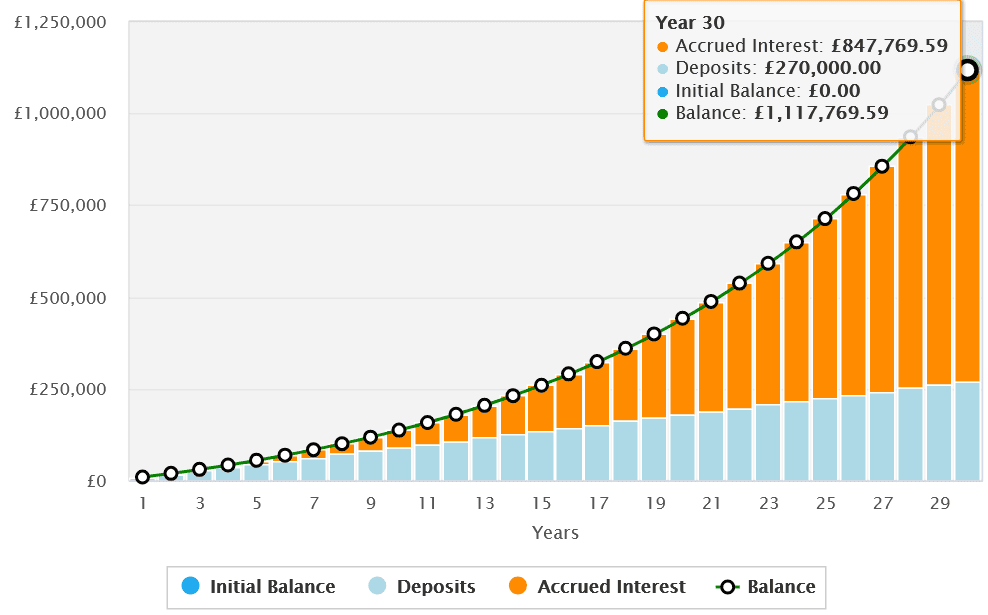
Targeting a second income in retirement with a SIPP
Source: thecalculatorsite.com

Without this tax relief, Steve’s retirement fund would be far lower, at £745,179.

On the downside, SIPP investors do have to pay tax when they draw down cash, unlike ISA users. However, they can take up to 25% of their pot tax-free at retirement. Combined with that generous tax relief, this can still leave investors in a stronger position overall.

Harnessing US shares

Another advantage is that investors can choose from a wide variety of UK and overseas stocks, investment trusts and funds in their SIPP to grow their wealth.

The HSBC S&P 500 ETF (LSE:HSPX) is one such asset I hold in my own portfolio. Over the last decade it’s delivered an average annual return of 13.3%. This is thanks in part to its large contingent of high-growth tech stocks like Nvidia, Microsoft, Apple and Amazon:
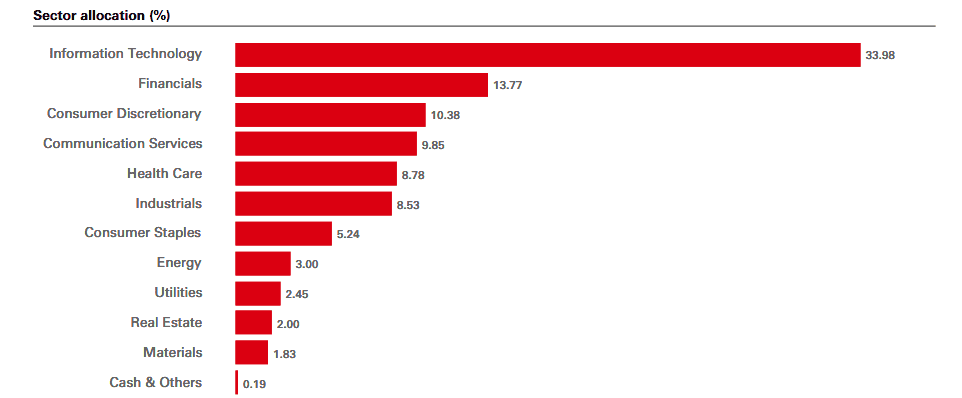
Make-up of the HSBC S&P 500 ETF
Source: HSBC

As you can see, though, it also provides wide exposure to a variety of different industries, allowing investors to harness the wealth-growing power of the US stock market. Such diversification also allows investors to effectively spread risk and enjoy a smoother return across the economic cycle.

Rotation out of US shares has impacted the fund’s performance more recently. While still a risk, I believe that on balance it will — along with my other SIPP holdings — significantly boost my chances of making a large retirement income. It’s one to consider.


Royston Wild has positions in Hsbc ETFs Public - Hsbc S&P 500 Ucits ETF. The Motley Fool UK has recommended Amazon, Apple, Microsoft, and Nvidia. Views expressed on the companies mentioned in this article are those of the writer and therefore may differ from the official recommendations we make in our subscription services such as Share Advisor, Hidden Winners and Pro. Here at The Motley Fool we believe that considering a diverse range of insights makes us better investors.

More on Investing Articles

Man writing 'now' having crossed out 'later', 'tomorrow' and 'next week'
Investing Articles

The best time to buy stocks? It might be right now

Short-term issues that delay long-term trends create opportunities to buy stocks. And that could be happening right now with a…

Read more »

Queen Street, one of Cardiff's main shopping streets, busy with Saturday shoppers.
Investing Articles

Here’s why Next stock rose 5% and topped the FTSE 100 today

Next was the leading FTSE 100 stock today, rising 5%. Our writer takes a look at why and asks if…

Read more »

Renewable energies concept collage
Investing Articles

Up 458% in a year, could the Ceres Power share price go even higher?

Christopher Ruane reviews some highs and lows of the Ceres Power share price over the years and wonders whether the…

Read more »

Rolls-Royce's Pearl 10X engine series
Investing Articles

Are the glory days over for Rolls-Royce shares?

Rolls-Royce shares have soared in recent years. Lately, though, they have taken a tumble. Could there be worse still to…

Read more »

Group of friends meet up in a pub
Investing Articles

Are ‘66% off’ Diageo shares a once-in-a-decade opportunity?

Diageo shares have taken another hit in the early weeks of 2026. Are we looking at a massive bargain or…

Read more »

Investing Articles

Meet the UK stock under £1.50 smashing Rolls-Royce shares over the past year

While Rolls-Royce shares get all the attention, this under-the-radar trust has quietly made investors a fortune. But is it still…

Read more »

UK financial background: share prices and stock graph overlaid on an image of the Union Jack
Investing Articles

Down 19%, the red lights are flashing for Barclays shares!

Barclays shares have fallen almost a fifth in value as the Middle East war has intensified. Royston Wild argues that…

Read more »

Aviva logo on glass meeting room door
Investing Articles

After falling another 5%, are Aviva shares too cheap to ignore?

£10,000 invested in Aviva shares five years ago would have grown 50% by now. But what might the future hold,…

Read more »