An extra £2,000 of tax-free passive income could make a nice addition to anyobody’s year-end budget. That’s the beauty of investing via a Stocks and Shares ISA — no capital gains tax is levied on returns and we can add up £20k to the ISA annually.
Please note that tax treatment depends on the individual circumstances of each client and may be subject to change in future. The content in this article is provided for information purposes only. It is not intended to be, neither does it constitute, any form of tax advice. Readers are responsible for carrying out their own due diligence and for obtaining professional advice before making any investment decisions.
But to secure £2k of annual income from a £20k ISA pot, an investor needs to achieve average returns of 10% per year. That’s a hard ask, considering the FTSE 100 has returned less than 7% on average since its creation. That said, the S&P 500 and the MSCI World index have returned approximately 10% a year.
Investing in one of these index trackers could deliver 10% gains a year — but shares would eventually need to be sold to enjoy the profits. A better way may be to invest in high-yielding dividend stocks. The dividends received could be reinvested to grow the pot, or withdrawn as income — without having to reduce any holdings. That’s true passive income!
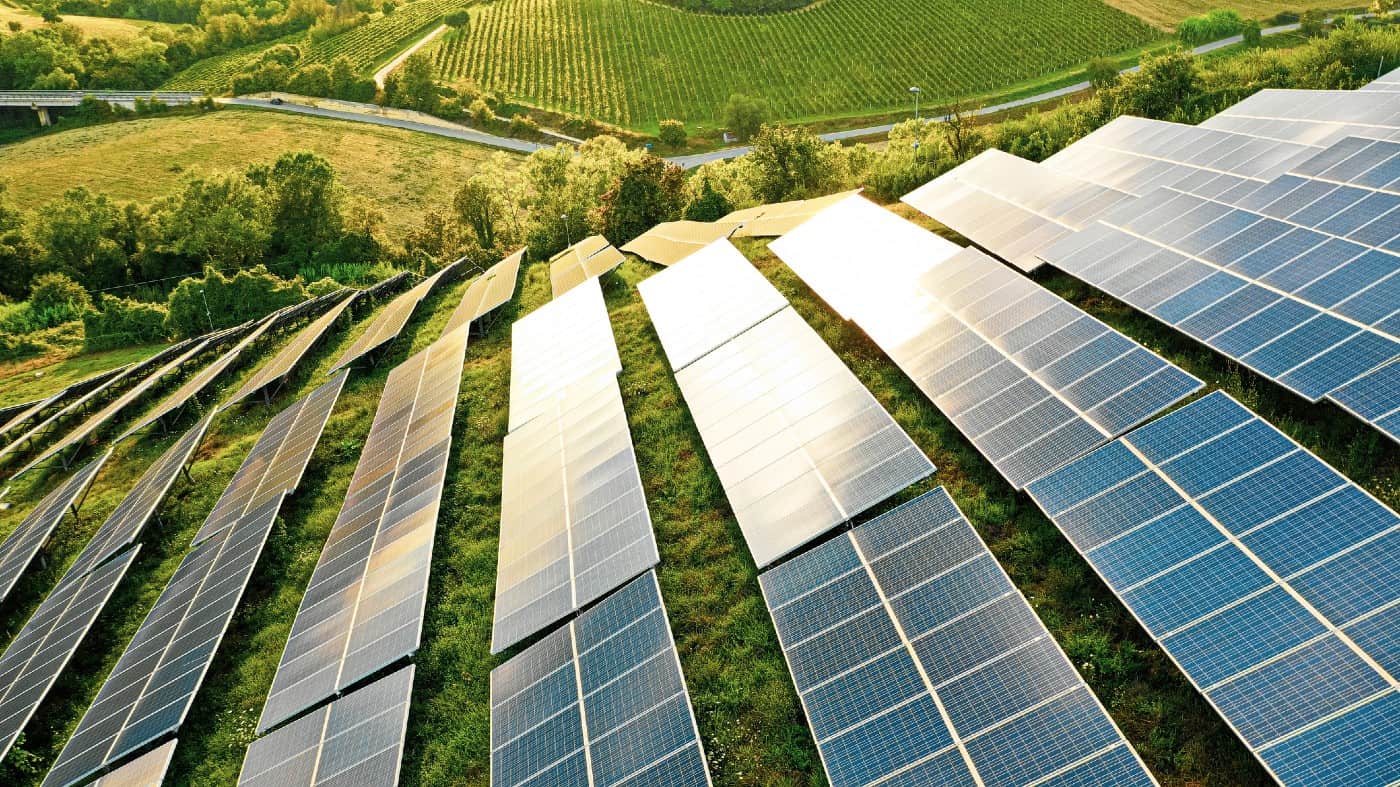
I’ve identified two FTSE 250 solar energy investment trusts to consider that have a 10-year history of uninterrupted dividend growth. Not only that, their yields are currently above 10%.
But as ever, there are some concerns to consider. Let’s take a look.
Foresight Solar Fund
Foresight Solar Fund (LSE: FSFL) operates approximately 61 solar and battery storage assets with a combined capacity of around 1.1 gigawatts (GW). They’re primarily located in the UK, with some international exposure. It can allocate up to 10% of its gross asset value (GAV) to standalone energy storage systems, helping enhance grid stability.
In the past 12 months, its yield has fluctuated between 8% and 12%, with dividends increasing at a rate of 3% a year since 2015. This illustrates a strong dividend policy and dedication to shareholder returns.
However, past performance is no indication of future results, and high yields increase the risk of dividend cuts. Additionally, the fund is sensitive to fluctuations in electricity prices and interest rate changes, both of which could impact its revenue.
Next Energy Solar Fund
Next Energy Solar Fund (LSE: NESF) is another investment trust specialising in utility-scale solar energy and energy storage assets. It owns 101 operational solar and energy storage assets worth £1bn, with a combined installed capacity of 934 megawatts (MW). The fund can invest up to 30% of its GAV in OECD countries outside the UK, adding to revenue diversification.
Its yield has ranged between 9.8% and 13.8% in the past 12 months, with dividends growing at a rate of 4.8% since 2015.
Like Foresight, changing electricity prices or interest rates could affect revenues — although long-term contracts and subsidies help to mitigate this risk. It also has quite a high debt gearing of 47.2%, which, while still within an acceptable range, could be risky if it increases.
Things to think about
While these yields are impressive, there’s no guarantee they would remain above 10%. The best approach would be to consider diversifying these stocks in a portfolio with a high-growth MSCI or S&P 500 index fund. This would make it more stable and less sensitive to interest rate changes.
Overall, it’s unlikely to achieve a consistent average return of 10% every year. A stable portfolio returning 7% to 8% is more realistic, which, if built up over time, could soon reach a level that pays £2k in annual dividends. And adding more to an ISA each year should mean that the income amount rises each year too.