3 penny share myths busted!

Are penny shares the best thing since sliced bread, or are they evil things to be shunned? The truth lies between the extremes.

| More on:

The content of this article was relevant at the time of publishing. Circumstances change continuously and caution should therefore be exercised when relying upon any content contained within this article.

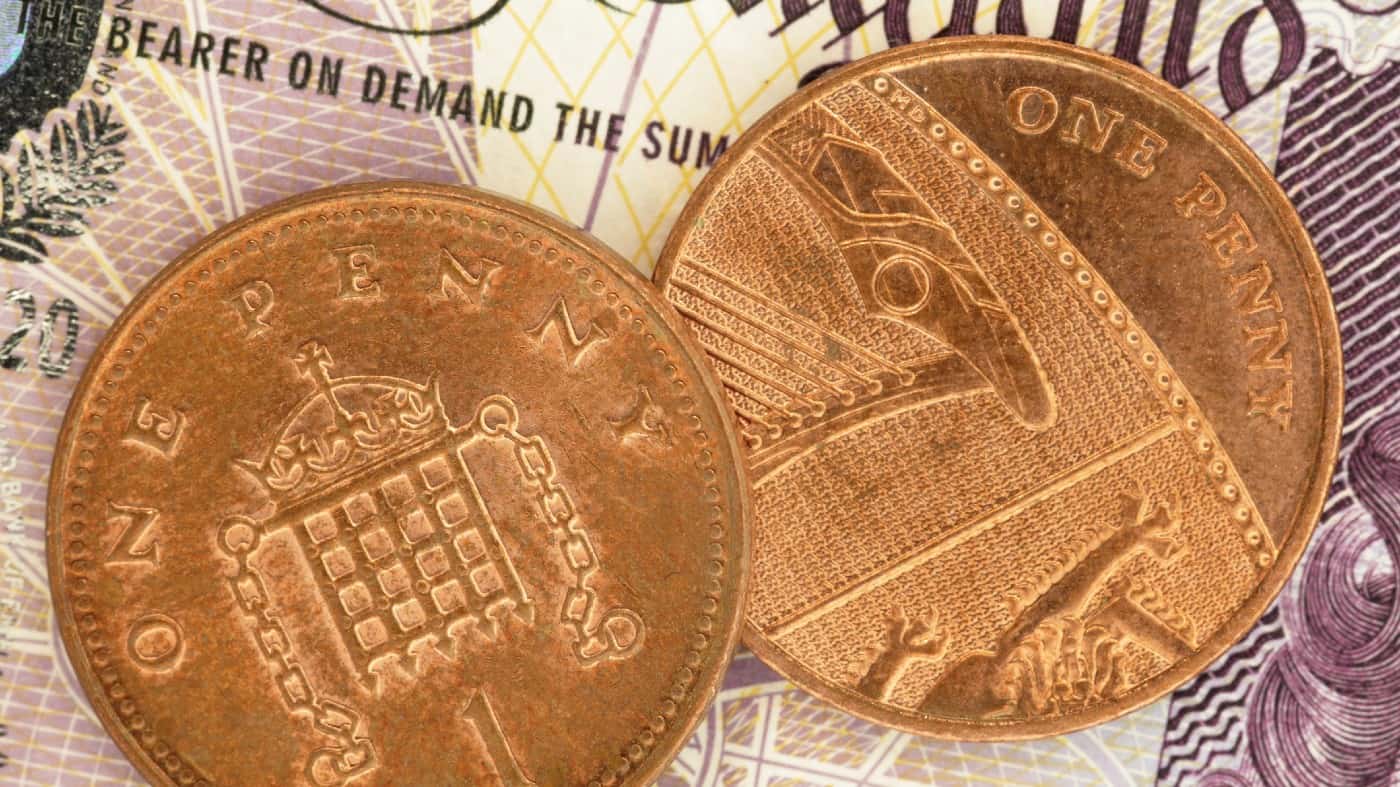
British Pennies on a Pound Note

Image source: Getty Images

You’re reading a free article with opinions that may differ from The Motley Fool’s Premium Investing Services. Become a Motley Fool member today to get instant access to our top analyst recommendations, in-depth research, investing resources, and more. Learn More.

When I started my first job I was invited to join a penny share investment group. When I asked why they only went for penny shares, the answer was that they obviously have far greater potential than shares that have already risen. I didn’t join.

Myth 1: biggest gains

It might seem like intuitive sense that a share priced at a few pennies has a lot more profit potential than one priced in pounds. But a bit of thought can show that’s nonsense. I see a good example in Aston Martin Lagonda (LSE: AML).

It’s not technically a penny stock as it has a market capitalisation of £676m — and in the UK, a penny stock is usually taken to mean market cap of less than £100m. But the 67p share price is well under the £1 limit, and this myth is about share prices.

One way to look at Aston Martin is as a low-priced stock with big potential future gains. Another way is as a company that had a high-flying IPO but whose business just didn’t cut it and the shares collapsed. The share price chart shows that clearly.

If Aston Martin were to have a 1-for-10 share consolidation tomorrow, the shares would be worth 670p and there would be a tenth the number in circulation. It wouldn’t be a penny stock any more. But the company wouldn’t have changed in the slightest. And its potential for gains and losses would be completely unchanged.

Myth 2: lowest losses

The other side of that coin is, in my opinon, an even more dangerous myth. With the share price so low, it goes, there’s a lot less to lose. If we buy a share for a few pennies we only have a few pennies to lose. But a share up in the pounds could lose us pounds.

And, well, on one level that’s true. If we only buy one share, we only stand to lose the price of one share. But who does that?

We don’t choose a set number of shares and then see which are the cheapest. No, we choose the amount of money we want to invest. Invest £1,000 and our biggest potential loss is £1,000, no matter what the share price.

I’m reminded of a tiny oil stock whose shares 10 years ago were worth about 5p. Today we’re looking at 0.015p. Less to lose? That looks like a 99.7% wipeout to me.

Myth 3: avoid like the plague

With those two myths busted, maybe the bright thing to do is avoid penny shares altogether? I’d say for those who haven’t really got their heads round share prices and valuations yet, that might be a good stop-gap idea.

But when we know how to avoid the hype and look at the actual underlying company, avoiding penny shares could mean we miss out on some great opportunities.

The key point is to remember what we’re buying and what we’re not buying. We’re not buying a share price, penny or otherwise. We’re buying a part-ownership of a company. And we should evaluate it the same way as any other company, no matter the share price.


Alan Oscroft has no position in any of the shares mentioned. The Motley Fool UK has no position in any of the shares mentioned. Views expressed on the companies mentioned in this article are those of the writer and therefore may differ from the official recommendations we make in our subscription services such as Share Advisor, Hidden Winners and Pro. Here at The Motley Fool we believe that considering a diverse range of insights makes us better investors.

More on Investing Articles

Warren Buffett at a Berkshire Hathaway AGM
Investing Articles

Can someone invest like Warren Buffett with a spare £500?

Christopher Ruane explains why an investor without the resources of billionaire Warren Buffett could still learn from his stock market…

Read more »

Investing Articles

Can these 2 incredible FTSE 250 dividend stocks fly even higher in 2026?

Mark Hartley examines the potential in two FTSE 250 shares that have had an excellent year and considers what 2026…

Read more »

Thoughtful man using his phone while riding on a train and looking through the window
Investing Articles

Is 45 too late to start investing?

Investing at different life stages can come with its own challenges -- and rewards. Our writer considers why a 45-year-old…

Read more »

Hand of person putting wood cube block with word VALUE on wooden table
Investing Articles

UK shares look cheap — but the market might be about to take notice

UK shares have traded at a persistent discount to their US counterparts. This can create huge opportunities, but investors need…

Read more »

Investing Articles

This FTSE 100 growth machine is showing positive signs for a 2026 recovery

FTSE 100 distributor Bunzl is already the second-largest holding in Stephen Wright’s Stocks and Shares ISA. What should his next…

Read more »

Investing Articles

I asked ChatGPT for the best FTSE 100 stocks to buy for passive income in 2026 and it said…

Paul Summers wanted to learn which dividend stocks an AI bot thinks might be worth buying for 2026. Its response…

Read more »

ISA Individual Savings Account
Investing Articles

Stop missing out! A Stocks and Shares ISA could help you retire early

Investors who don't use a Stocks and Shares ISA get all the risks that come with investing but with less…

Read more »

Investing Articles

Will Greggs shares crash again in 2026?

After a horrible 2025, Paul Summers takes a look at whether Greggs shares could sink even further in price next…

Read more »