Could the Rolls-Royce share price hit £6 – or even £7?

Our writer explores some potential levers that could push the Rolls-Royce share price to £6, £7, or maybe even higher — and whether he should invest.

| More on:

The content of this article was relevant at the time of publishing. Circumstances change continuously and caution should therefore be exercised when relying upon any content contained within this article.

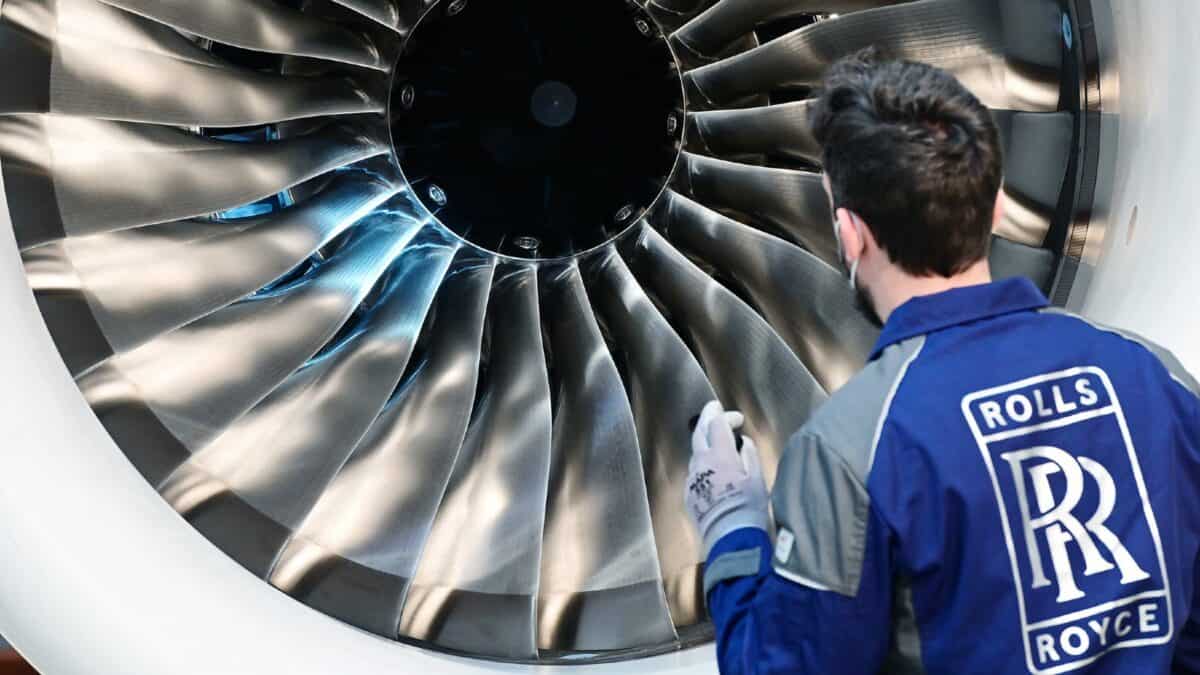
Rolls-Royce's Pearl 10X engine series

Image source: Rolls-Royce plc

You’re reading a free article with opinions that may differ from The Motley Fool’s Premium Investing Services. Become a Motley Fool member today to get instant access to our top analyst recommendations, in-depth research, investing resources, and more. Learn More.

The performance of Rolls-Royce (LSE: RR) over the past several years has been simply phenomenal. The Rolls-Royce share price, under 40p in 2020, has recently been close to £6.

It has now fallen back slightly to trade at around £5.50. But I reckon it could get back up to and pass the £6 mark. In fact, I would not be surprised to see it go past £7 in 2025.

Momentum and fundamentals

A couple of different things affect share prices, depending on the situation.

One of them is the fundamental, underlying performance of the business. I will discuss Rolls’ fundamentals in just a moment.

But momentum can also be important.

As investors (and perhaps speculators) who fear missing out, they keep piling into a hot share, pushing it upwards. That can last a long time but equally can suddenly go into reverse.

Momentum largely ignores fundamentals on the way up – but the same can be true on the way down, too.

Even a strong business can see its share price fall in the short to medium term if enough investors fall out of love with it (or simply opt to cash in their gains to spend on something else).

I like the look of the business, if things go smoothly

So, I think momentum alone could push the shares to £6. That may even be true up to £7, although that will be harder.

But as a believer in long-term investing, not a trader, my interest is not in momentum but rather in the fundamentals that ought to underpin the Rolls-Royce share price over the long run.

At £6, the prospective price-to-earnings ratio would be nearly 22, and at £7, over 25. Those look high to me.

However, that is based on the company’s current earnings. But imagine Rolls can double its earnings.

That may sound ambitious. But at the half-year point, basic earnings per share were 83% higher than in the same six months last year.

Not only that, but Rolls is still only on the road to meeting its ambitious medium-term financial targets. If it manages to do that and earnings rise accordingly, I think £7 would be a reasonable valuation for the share.

I’m not ready to board!

Despite that – a 27% potential jump from the current Rolls-Royce share price – I will not be buying.

Why not?

The targets are ambitious and Rolls has a long history of mixed performance. Some of that is within the company’s control. But some key elements are not.

For example, demand for civil aviation engine sales (and, to a lesser extent, servicing) can plummet when people stop flying en masse, for example because of terrorist fears or pandemic-related travel restrictions.

I expect such demand shocks to happen again at some point. They lie outside the company’s control. Maybe its nuclear power and defence businesses will help absorb the shock, but civil aviation is core to the company.

I do not think the current share price, let alone a higher one, offers me sufficient margin of safety to reflect that risk properly.


C Ruane has no position in any of the shares mentioned. The Motley Fool UK has recommended Rolls-Royce Plc. Views expressed on the companies mentioned in this article are those of the writer and therefore may differ from the official recommendations we make in our subscription services such as Share Advisor, Hidden Winners and Pro. Here at The Motley Fool we believe that considering a diverse range of insights makes us better investors.

More on Investing Articles

Young Caucasian man making doubtful face at camera
Dividend Shares

Will the Diageo share price crash again in 2026?

The Diageo share price has crashed 35.6% over one year, making it one of the FTSE 100's worst performers in…

Read more »

Investing Articles

Is Alphabet still one of the best shares to buy heading into 2026?

The best time to buy shares is when other investors are seeing risks. Is that the case with Google’s parent…

Read more »

Investing Articles

Could the Barclays share price be the FTSE 100’s big winner in 2026?

With OpenAI and SpaceX considering listing on the stock market, could investment banking revenues push the Barclays share price higher…

Read more »

Investing Articles

Will the Nvidia share price crash in 2026? Here are the risks investors can’t ignore

Is Nvidia’s share price in danger in 2026? Stephen Wright outlines the risks – and why some might not be…

Read more »

Middle-aged white man pulling an aggrieved face while looking at a screen
Growth Shares

I asked ChatGPT how much £10,000 invested in Lloyds shares 5 years ago is worth today? But it wasn’t very helpful…

Although often impressive, artificial intelligence has its flaws. James Beard found this out when he used it to try and…

Read more »

Portrait of pensive bearded senior looking on screen of laptop sitting at table with coffee cup.
Investing Articles

Did ChatGPT give me the best FTSE stocks to buy 1 year ago?

ChatGPT can do lots of great stuff, but is it actually any good at identifying winning stocks from the FTSE…

Read more »

Surprised Black girl holding teddy bear toy on Christmas
Investing Articles

Who will be next year’s FTSE 100 Christmas cracker?

As we approach Christmas 2025, our writer identifies the FTSE 100’s star performer this year. But who will be number…

Read more »

Businessman with tablet, waiting at the train station platform
Investing Articles

I asked ChatGPT for an 8%-yielding passive income portfolio of dividend shares and it said…

Mark Hartley tested artificial intelligence to see if it understood how to build an income portfolio from dividend shares. He…

Read more »