Could the Barclays share price double by the end of 2026?

Our writer looks at whether the Barclays share price reflects the intrinsic value of the bank. And considers how it might perform over the next three years.

| More on:

The content of this article was relevant at the time of publishing. Circumstances change continuously and caution should therefore be exercised when relying upon any content contained within this article.

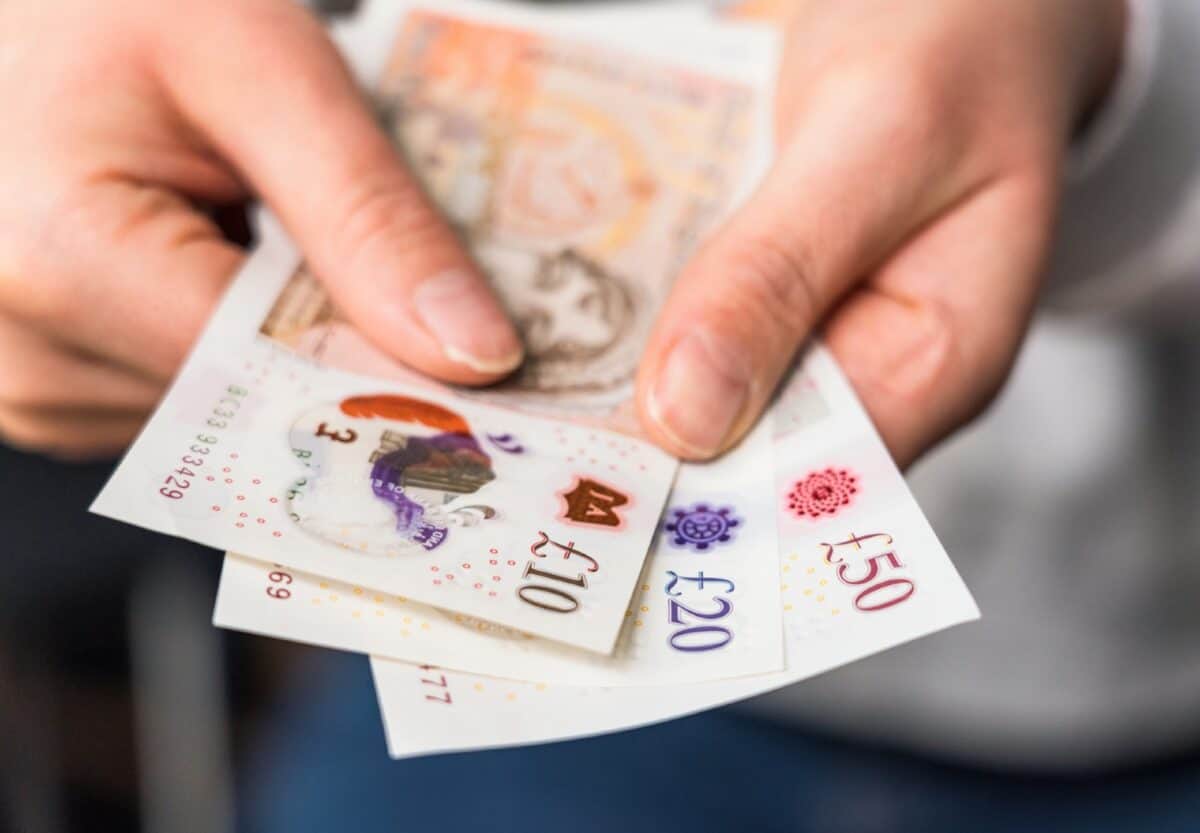
Close-up of a woman holding modern polymer ten, twenty and fifty pound notes.

Image source: Getty Images

You’re reading a free article with opinions that may differ from The Motley Fool’s Premium Investing Services. Become a Motley Fool member today to get instant access to our top analyst recommendations, in-depth research, investing resources, and more. Learn More.

The Barclays (LSE:BARC) share price has performed well lately. Since April 2023, it’s increased by 28%. But it’s still 12% below its January 2022 level. And its market cap is around 60% lower than 10 years ago.

On paper, it looks like a bit of a bargain.

Using its balance sheet at 31 December 2023, its price-to-book (P/B) ratio is 0.39. In other words, if it sold all its assets, and used the proceeds to clear its liabilities, there would be 476p a share left over to return to shareholders. That’s more than 2.5 times the price at which its stock currently changes hands.

Its status as a ‘cheap stock’ is further enhanced by a comparison with other FTSE 100 retail banks. Their P/B ratios — NatWest Group (0.63), Lloyds (0.7) and HSBC (0.8) — are all considerably higher.

Devil in the detail

But after delving a little deeper, it’s clear to me why it trades at a discount to its peers.

Barclays’ return on tangible equity (RoTE) — a measure of how efficiently it uses its assets — lags behind the others. In 2023, excluding restructuring costs, it was 10.6%. For the same period, its rivals — HSBC (14.6%), Lloyds (15.8%) and NatWest Group (17.8%) — all did better.

Fortunately for shareholders, Barclays has acknowledged that it has a problem.

The bank’s CEO, CS Venkatakrishnan, told analysts in February that he has a “vision of a better run, more strongly performing, higher returning bank”.

Central to his plan is a target RoTE of at least 12%, by the end of 2026.

If the bank had achieved this in 2023, its post-tax profit would have been £5.7bn higher. That’s over twice its reported figure of £5.3bn.

Its shares currently trade on a multiple of 5.2 times its 2023 earnings. On this basis, if it could achieve annual profits of £11bn, its market cap would be £57.2bn. That’s over twice what it is today.

Therefore, if Barclays can successfully deliver its improvement plan on time, I think there’s a good chance that its share price could double before the end of 2026.

Big ideas

However, it’s always easier to prepare a turnaround plan than to implement one.

To improve its RoTE, the bank wants to invest more in its most profitable divisions.

It also intends to exit the retail market in Germany and Italy, and focus exclusively on the UK. To achieve further efficiencies, it plans to streamline its operations by consolidating into three business units.

And more redundancies are planned as it seeks to bring its cost-to-income ratio down from 63% to the “high fifties”. For comparison, Lloyds’ was 54.7% in 2023.

But there are risks. Barclays has a history of breaking all sorts of rules and regulations, which has seen it incur an eye-watering £16bn of litigation costs over the past decade. It’s also likely to see its margins squeezed as most economists seem to think that interest rates have now peaked, and that they could soon be on their way down. Plus share prices don’t always follow profit figures.

Yet if I didn’t already have exposure to the sector, I’d be happy to buy. In fact, once I’ve received my special dividend from HSBC — following the sale of its Canadian business — I’m going to seriously consider selling and buying Barclays shares instead.


HSBC Holdings is an advertising partner of The Ascent, a Motley Fool company. James Beard has positions in HSBC Holdings and Lloyds Banking Group Plc. The Motley Fool UK has recommended Barclays Plc, HSBC Holdings, and Lloyds Banking Group Plc. Views expressed on the companies mentioned in this article are those of the writer and therefore may differ from the official recommendations we make in our subscription services such as Share Advisor, Hidden Winners and Pro. Here at The Motley Fool we believe that considering a diverse range of insights makes us better investors.

More on Investing Articles

Smiling white woman holding iPhone with Airpods in ear
Investing Articles

Prediction: in 12 months the surging Aviva share price and dividend could turn £10,000 into…

Aviva's share price has beaten the broader FTSE 100 over the last year. But can the financial services giant keep…

Read more »

Portrait of elderly man wearing white denim shirt and glasses looking up with hand on chin. Thoughtful senior entrepreneur, studio shot against grey background.
Dividend Shares

I love FTSE 100 dividend shares, but do I buy this FTSE 250 loser?

Over the past year, the UK's FTSE 100 has thrashed the once-mighty US S&P 500 index. With value investing back…

Read more »

Investing Articles

How much do you need in an ISA to target a £2,000 monthly second income?

Harvey Jones crunches the numbers to see how much investors need in a Stocks and Shares ISA to generate a…

Read more »

Passive income text with pin graph chart on business table
Investing Articles

Should investors consider Legal & General shares for passive income?

As many investors are chasing their passive income dreams, our writer Ken Hall evaluates whether Legal & General could help…

Read more »

ISA coins
Investing Articles

How to transform an empty Stocks and Shares ISA into a £15,000 second income

Ben McPoland explains how a UK dividend portfolio can be built from the ground up inside a Stocks and Shares…

Read more »

Investing Articles

I asked ChatGPT if it’s better buy high-yielding UK stocks in an ISA or SIPP and it said…

Harvey Jones loves his SIPP, but he thinks a Stocks and Shares ISA is a pretty good way to invest…

Read more »

DIVIDEND YIELD text written on a notebook with chart
Investing Articles

How much do you need to invest in dividend shares to earn £1,500 a year in passive income?

As the stock market tries to get to grips with AI, could dividend shares offer investors a chance to earn…

Read more »

Dividend Shares

4 UK shares to consider buying with an average dividend yield of 10.64%

Jon Smith points out several UK shares from different sectors that have high yields, but could represent a good reward…

Read more »