Will NatWest shares be worth buying when the UK government offloads its stake this summer?

The UK government’s planning to sell some of the NatWest shares it bought in the Global Financial Crisis. Will this be a great investment opportunity?

| More on:

The content of this article was relevant at the time of publishing. Circumstances change continuously and caution should therefore be exercised when relying upon any content contained within this article.

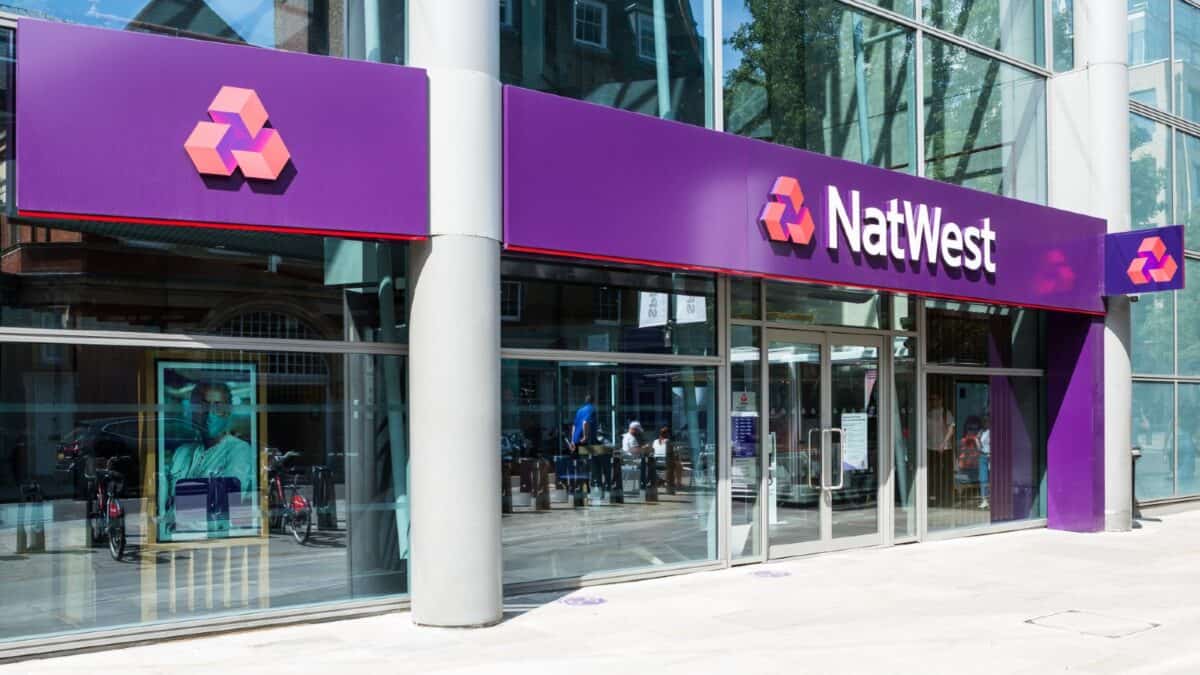
Branch of NatWest bank

Image source: NatWest Group plc

You’re reading a free article with opinions that may differ from The Motley Fool’s Premium Investing Services. Become a Motley Fool member today to get instant access to our top analyst recommendations, in-depth research, investing resources, and more. Learn More.

In March’s budget, chancellor Jeremy Hunt announced that the UK government plans to sell some of its shares in NatWest (LSE: NWG) – one of Britain’s largest banks – directly to retail investors. This sell-off could take place as early as June.

So what do we know about this government sale? And will the shares be worth buying for my portfolio?

Why the government’s selling

In an effort to support the financial services sector during the Global Financial Crisis of 2008/2009, the UK government acquired an 84% shareholding in the Royal Bank of Scotland (now NatWest Group).

However, it was never the government’s intention to be a permanent shareholder, and in recent years, it has been selling down its holding to institutional investors and the bank itself.

Looking ahead, it plans to offload more NatWest shares in the near future in a ‘retail sale’ to individual investors.

The government believes that selling to individual investors could help to promote retail investing in the UK and also help to re-invigorate the country’s capital markets through a landmark transaction.

It’s worth noting that the date of the retail sale has not yet been confirmed. However, guidance on the gov.uk website says: “The sale could take place this summer at the earliest, subject to market conditions being supportive and achieving value for money”.

How much will the shares cost?

As for how much the shares will cost, this is where things get a little vague. Hunt has said that any sale would need to achieve “full value for money“.

I think what he means here is that he’d like the UK stock market to be at a high level when the sale occurs so the government can get as much as possible for the shares.

I imagine the shares will have to be offered at some kind of discount to the market price however. Otherwise there would be little incentive to participate in the retail sale (we could just buy them directly in the market).

Worth buying?

Let’s assume for now however, that it won’t be possible to make a ton of money selling the shares in the market immediately after buying them in the retail sale (either the discount is small or the share price falls after the sale).

So is there long-term investment potential here? That’s hard to say.

On the plus side, the bank stock looks relatively cheap today (currently its P/E ratio is just 7.2) and it has a decent dividend yield (about 5.7%). The company’s also buying back a lot of stock, which is boosting earnings per share.

On the downside, NatWest is very much a UK-focused bank. And the UK isn’t really a growth market when it comes to banking these days. The industry’s also being disrupted rapidly by innovative FinTech companies.

Weighing up the pros and cons, I probably won’t be interested in buying NatWest shares in the retail sale. All things considered, I think there are likely to be better opportunities for my money this year.


Edward Sheldon has no position in any of the shares mentioned. The Motley Fool UK has no position in any of the shares mentioned. Views expressed on the companies mentioned in this article are those of the writer and therefore may differ from the official recommendations we make in our subscription services such as Share Advisor, Hidden Winners and Pro. Here at The Motley Fool we believe that considering a diverse range of insights makes us better investors.

More on Investing Articles

Investing Articles

Will the S&P 500 crash in 2026?

The S&P 500 delivered impressive gains in 2025, but valuations are now running high. Are US stocks stretched to breaking…

Read more »

Teenage boy is walking back from the shop with his grandparent. He is carrying the shopping bag and they are linking arms.
Investing Articles

How much do you need in a SIPP to generate a brilliant second income of £2,000 a month?

Harvey Jones crunches the numbers to show how investors can generate a high and rising passive income from a portfolio…

Read more »

Investing Articles

Will Lloyds shares rise 76% again in 2026?

What needs to go right for Lloyds shares to post another 76% rise? Our Foolish author dives into what might…

Read more »

Investing Articles

How much passive income will I get from investing £10,000 in an ISA for 10 years?

Harvey Jones shows how he plans to boost the amount of passive income he gets when he retires, from FTSE…

Read more »

Investing Articles

Down 34% in 2025 — but could this be one of the UK’s top growth stocks for 2026?

With clarity over research funding on the horizon, could Judges Scientific be one of the UK’s best growth stocks to…

Read more »

piggy bank, searching with binoculars
Investing Articles

Can the rampant Barclays share price beat Lloyds in 2026?

Harvey Jones says the Barclays share price was neck and neck with Lloyds over the last year, and checks out…

Read more »

Investing Articles

Here’s how Rolls-Royce shares could hit £25 in 2026

If Rolls-Royce shares continue their recent performance, then £25 might be on the cards for 2026. Let's take a look…

Read more »

Departure & Arrival sign, representing selling and buying in a portfolio
Investing Articles

Prediction: in 2026 the red-hot Rolls-Royce share price could turn £10,000 into…

Harvey Jones can't believe how rapidlly the Rolls-Royce share price has climbed. Now he looks at the FTSE 100 growth…

Read more »