We have some exciting news to share! The Motley Fool UK has now become an independent, UK-owned company, led by our long-serving UK management team — Mark Rogers, Chris Nials and Heather Adlington. In practical terms, it’s the same team you know, now fully focused on serving our UK readers and members.

Just as importantly, our approach remains unchanged: long-term, jargon-free, and on your side. We’ll be introducing a new name and brand over the coming weeks — we're very excited to share it with you and embark on this new chapter together!

How to invest £5k in income shares to target a £300 annual dividend

Zaven Boyrazian explains some key tactics to find and analyse income shares when looking to bolster annual dividend portfolio profits.

The content of this article was relevant at the time of publishing. Circumstances change continuously and caution should therefore be exercised when relying upon any content contained within this article.

You’re reading a free article with opinions that may differ from The Motley Fool’s Premium Investing Services. Become a Motley Fool member today to get instant access to our top analyst recommendations, in-depth research, investing resources, and more. Learn More.

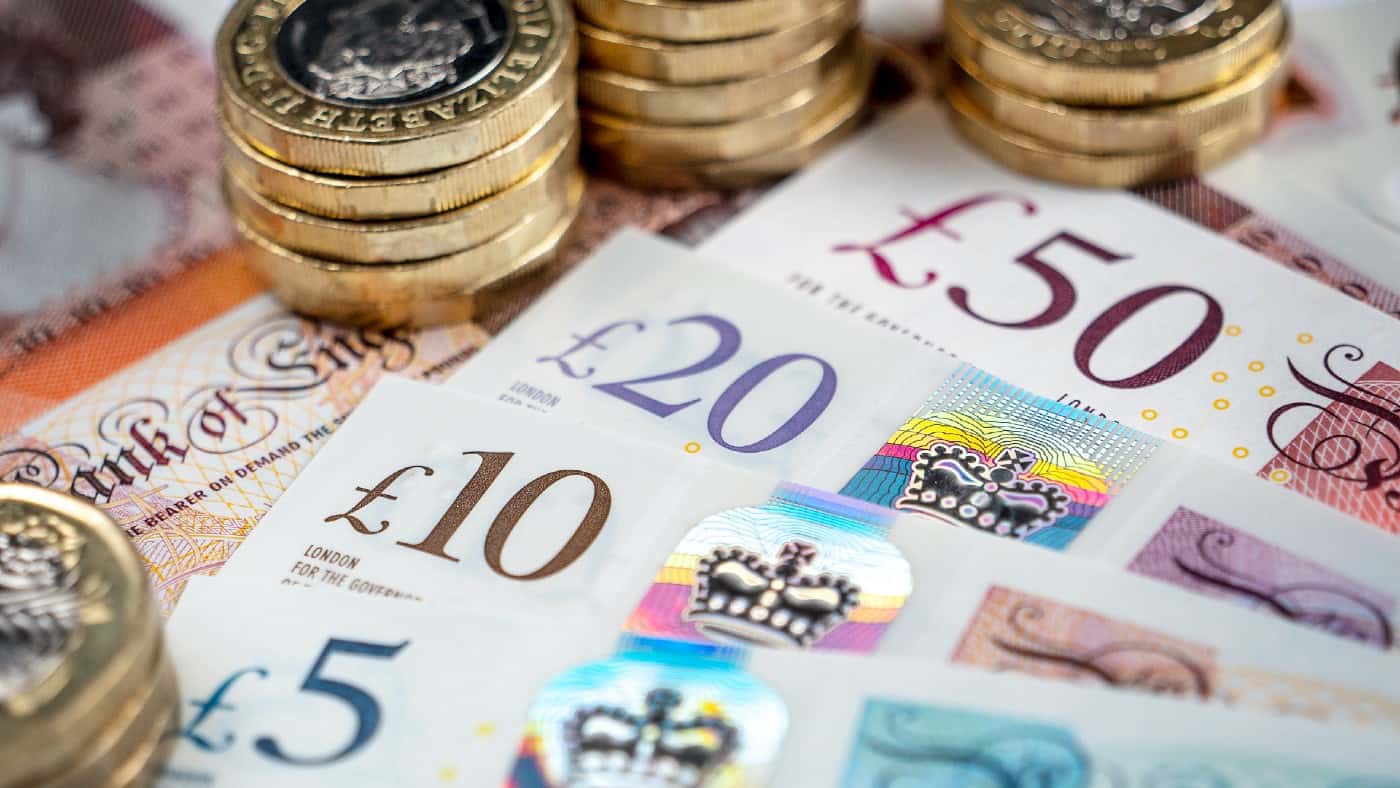
Close-up of British bank notes

Image source: Getty Images

Buying income shares in 2024 might be one of the smartest moves investors can make. The boosted dividend yields created by the recent stock market correction offer investors a rare opportunity to snap up some chunky passive income.

So if I had £5,000 to spare today, here’s how I’d expect to start earning a £300 annual dividend.

Quality over quantity

Looking across the FTSE 350, there are more than 60 companies offering a yield of 6%. Diversifying my capital across these businesses to lock in such a yield would provide a passive income stream of £300 a year. And considering some shares are even offering yields as high as 10%, I could potentially boost this to £500!

Unfortunately, investing is rarely this simple. Stocks that offer a sizable payout can be a terrific source of income. But that’s often an exception rather than the rule. That’s because dividend yields are primarily influenced by movements in share price rather than management bolstering shareholder rewards. As such, whenever a company’s market capitalisation tumbles, the yield goes up.

Sometimes rapid downturns in valuation are unjustified, especially during a stock market correction when nerves and emotions are running high. But usually, such drastic reactions are triggered by challenging or even thesis-breaking problems.

As such, an investor may end up investing in a 6% yielding stock only to see management cut dividends to preserve capital a few weeks later. Therefore, when it comes to building a passive income in the stock market, the quality of a yield is far more important than its size.

Earnings versus free cash flow

A popular metric to judge the health of a firm’s dividend is the payout ratio. By comparing the amount of dividends paid as a proportion of net income, investors can quickly see how much earnings are being redistributed. A larger value suggests less sustainability, especially if the company’s ops were to be disrupted.

However, relying on net income can be wildly misleading. That’s because companies often report one-time gains or paper profits that can make a dividend look more affordable than it actually is. An example of the latter would be changes in the valuations of properties for a real estate investment trust (REIT).

When property prices were rising, REITs were reporting staggering earnings despite most of it not actually resulting in cash in the bank. Today, the opposite is happening. REITs are recognising massive losses due to the fall in property prices despite rental income rising.

To avoid this misleading trait, I prefer to use free cash flow instead of net income when calculating the payout ratio. That way, I’m comparing dividends paid to the actual excess cash generated by a business.


Views expressed on the companies mentioned in this article are those of the writer and therefore may differ from the official recommendations we make in our subscription services such as Share Advisor, Hidden Winners and Pro. Here at The Motley Fool we believe that considering a diverse range of insights makes us better investors.

More on Investing Articles

Close-up of a woman holding modern polymer ten, twenty and fifty pound notes.
Investing Articles

Some pros and cons of buying dividend shares for passive income

Dividend shares can seem appealing, but they also carry risks. Christopher Ruane looks at what passive income potential -- and…

Read more »

Housing development near Dunstable, UK
Investing Articles

Down 73%, Vistry’s the worst-performing FTSE 250 share in my portfolio. Time to sell?

Mark Hartley outlines how UK housing market woes have driven down the price of one his core FTSE 250 holdings,…

Read more »

Aerial shot showing an aircraft shadow flying over an idyllic beach
Investing Articles

Just how cheap could IAG shares get this summer?

If the world runs out of jet fuel this summer then IAG shares could take a beating, says Harvey Jones.…

Read more »

Night Takeoff Of The American Space Shuttle
Investing Articles

Up 130% in 2026, can FTSE space stock Filtronic continue to soar?

Edward Sheldon thought that FTSE share Filtronic would do well in 2026. He wasn’t expecting it to shoot up 130%…

Read more »

British flag, Big Ben, Houses of Parliament and British flag composition
Investing Articles

Are investors still using an outdated playbook to value Lloyds shares?

Andrew Mackie looks beyond the standard rate-sensitive narrative around Lloyds shares to question whether we're missing a more resilient earnings…

Read more »

Hydrogen testing at DLR Cologne
Investing Articles

Is £15 the next stop for the Rolls-Royce share price?

Where will the Rolls-Royce share price go from here? Is a £15 price target for the next 12 months totally…

Read more »

Two female adult friends walking through the city streets at Christmas. They are talking and smiling as they do some Christmas shopping.
Investing Articles

How much is £7,620 saved in a Cash ISA a decade ago worth today?

Cash ISA savers have received an average of 4% over the last decade, but Harvey Jones says the average Stocks…

Read more »

Close-up as a woman counts out modern British banknotes.
Investing Articles

702 shares in this FTSE 100 stalwart earn a £100 a month second income

Unilever shares come with an unusually high dividend yield. Should investors looking for a second income grab the opportunity with…

Read more »