Interest rates are 5%. Should I dump dividend stocks and put money into savings accounts?

Now that interest rates are higher, investors can obtain relatively attractive returns from savings accounts. So is it game-over for dividend stocks?

The content of this article was relevant at the time of publishing. Circumstances change continuously and caution should therefore be exercised when relying upon any content contained within this article.

Close-up of British bank notes

Image source: Getty Images

You’re reading a free article with opinions that may differ from The Motley Fool’s Premium Investing Services. Become a Motley Fool member today to get instant access to our top analyst recommendations, in-depth research, investing resources, and more. Learn More.

The recent increase in interest rates has been a bit of a game-changer for income investors. All of a sudden, it’s possible to generate relatively healthy levels of interest from savings accounts.

Should I dump my dividend stocks and stick my money in the bank now that interest rates are higher? Let’s discuss.

Cash savings are lower-risk

There’s no doubt that savings accounts have some advantages over dividend stocks.

For starters, cash savings are lower risk. With stocks, capital is at risk. With savings accounts however, it’s not (assuming the institution is regulated by the Financial Conduct Authority and savings are covered by the Financial Services Compensation Scheme).

Secondly, they typically offer much faster access to money. To sell a stock and obtain the proceeds of the sale, it can take days. With a savings account however, funds can often be accessed in minutes.

Dividend stocks are better for building long-term wealth

Yet as a long-term wealth-creation tool, savings accounts have nothing on dividend stocks.

One of the biggest advantages of dividend shares is that they offer two potential sources of return. There are the dividends. And then there are the potential capital gains. Over the long term, this combination can provide much higher returns than cash savings can deliver.

Unilever shares are a good example here. Over the last 10 years, they have offered a dividend yield of around 3-4% per year. However, over this time horizon, they have also provided a capital gain of around 45%. So the overall returns have been far higher than the returns from cash.

Another advantage of dividend stocks is that many regularly increase their payouts. So investors often receive a rising level of income over time.

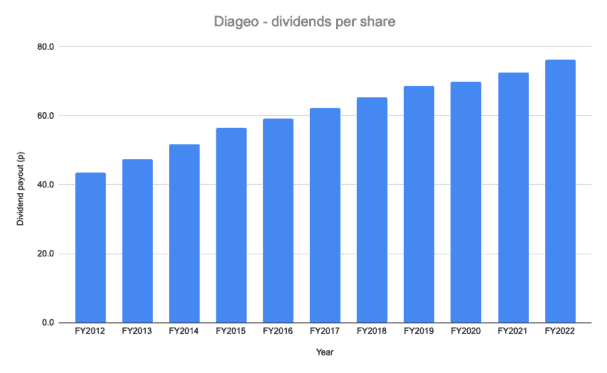
Johnnie Walker owner Diageo is a good example of a company with a strong dividend growth track record. It has registered more than 20 consecutive annual dividend increases now. This means that anyone who has held the stock for the long term has received a growing income stream.
Shares can help investors beat inflation

Given this combination of capital gains and rising income, returns from dividend stocks are often higher than inflation. As a result, they help investors build wealth in real (after inflation) terms.

By contrast, interest on savings accounts is often less than inflation. This is the case today. Even picking up 4% interest right now, investors are still essentially going backwards in real terms because inflation is running at over 8%.

I’m holding on to my stocks

So while I’m enjoying the extra income my cash savings are generating right now, I won’t be dumping my dividend stocks any time soon.

When it comes to building long-term wealth, stocks are far superior to savings accounts, to my mind.


Edward Sheldon has positions in Diageo Plc and Unilever Plc. The Motley Fool UK has recommended Diageo Plc and Unilever Plc. Views expressed on the companies mentioned in this article are those of the writer and therefore may differ from the official recommendations we make in our subscription services such as Share Advisor, Hidden Winners and Pro. Here at The Motley Fool we believe that considering a diverse range of insights makes us better investors.

More on Investing Articles

Three signposts pointing in different directions, with 'Buy' 'Sell' and 'Hold' on
Investing Articles

Could these 3 FTSE 100 shares soar in 2026?

Our writer identifies a trio of FTSE 100 shares he thinks might potentially have more petrol in the tank as…

Read more »

Pakistani multi generation family sitting around a table in a garden in Middlesbourgh, North East of England.
Dividend Shares

How much do you need in a FTSE 250 dividend portfolio to make £14.2k of annual income?

Jon Smith explains three main factors that go into building a strong FTSE 250 dividend portfolio to help income investors…

Read more »

Tesla building with tesla logo and two teslas in front
Investing Articles

275 times earnings! Am I the only person who thinks Tesla’s stock price is over-inflated?

Using conventional measures, James Beard reckons the Tesla stock price is expensive. Here, he considers why so many people appear…

Read more »

Investing Articles

Here’s what I think investors in Nvidia stock can look forward to in 2026

Nvidia stock has delivered solid returns for investors in 2025. But it could head even higher in 2026, driven by…

Read more »

Investing Articles

Here are my top US stocks to consider buying in 2026

The US remains the most popular market for investors looking for stocks to buy. In a crowded market, where does…

Read more »

Investing Articles

£20,000 in excess savings? Here’s how to try and turn that into a second income in 2026

Stephen Wright outlines an opportunity for investors with £20,000 in excess cash to target a £1,450 a year second income…

Read more »

DIVIDEND YIELD text written on a notebook with chart
Investing Articles

Is a 9% yield from one of the UK’s most reliable dividend shares too good to be true?

Taylor Wimpey’s recent dividend record has been outstanding, but investors thinking of buying shares need to take a careful look…

Read more »

Snowing on Jubilee Gardens in London at dusk
Value Shares

Is it time to consider buying this FTSE 250 Christmas turkey?

With its share price falling by more than half since December 2024, James Beard considers the prospects for the worst-performing…

Read more »