The Footsie hits an all-time high — but don’t celebrate

The FTSE 100 has hit an all-time high of 7,902. But appearances are deceptive. The sagging pound does a lot to explain the recent rise. In dollar terms, it’s a non-event. The real story is the Footsie’s lacklustre longer-term growth.

The content of this article was relevant at the time of publishing. Circumstances change continuously and caution should therefore be exercised when relying upon any content contained within this article.

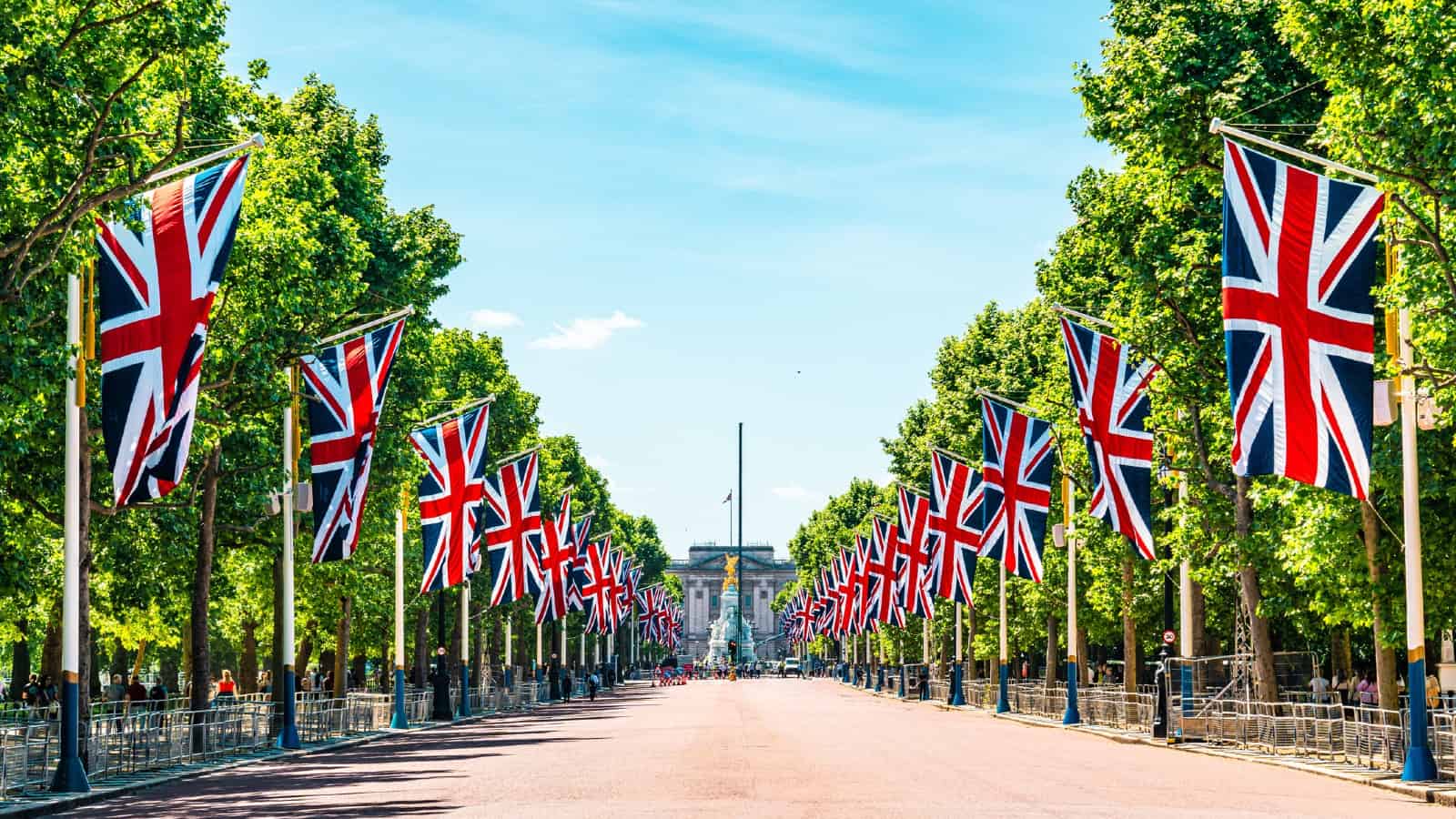
The Mall in Westminster, leading to Buckingham Palace

Image source: Getty Images

You’re reading a free article with opinions that may differ from The Motley Fool’s Premium Investing Services. Become a Motley Fool member today to get instant access to our top analyst recommendations, in-depth research, investing resources, and more. Learn More.

The Footsie has been on something of a tear, recently.
 
Having danced around the 7,600 level for most of the past year, it’s rocketed upwards since the New Year, and on 3 February closed at 7,902.
 
Predictably, given the circumstances, there was a bit of media hoopla — including from some who should really have known better.

The circumstances in question? 7,902 was an all-time high, a 36-year record in a series of trading days that stretches right back to 3 January 1984, when the FTSE 100 was first created.

Hold the fireworks

So, should we all be celebrating? Are the good times set to roll?
 
Er, no. Friday’s record close was quite predictable: the Footsie has risen inexorably since its creation, helped along by inflation and rising corporate earnings, and was bound to hit 7,902 sooner or later one day.
 
That the day in question was last Friday is nothing really remarkable.
 
Worse, in real terms, the apparent risen in recent times isn’t really much of a rise at all. The pound is down 11% over the past year, and it had fallen 2.75% in the three days prior to last Friday.
 
So given that the London-listed shares are (or course) quoted in pounds, yet the Footsie is stuffed with global giants with high overseas earnings — think HSBC, Shell, GSK, Unilever, BP, Diageo, and British American Tobacco — we shouldn’t be too surprised. In dollar terms, the Footsie was largely flatlining.
Don’t forget, too, that recent events have conspired favourably for several of those companies. Rising oil prices have boosted the share prices of Shell and BP, for instance. HSBC’s earnings are predicted to rise due to higher interest rates, fuelling a 34% increase in its share price since last November.

In short, a certain inevitability was baked into Friday’s 7,902. And to state the obvious, a certain inevitability is baked into any figures you subsequently see that are higher than 7,902. They will come.

The fuller picture

So what does all this mean for investors? Precious little, I’m afraid — despite the media hoopla.
 
It’s almost five years since the Footsie’s previous peak, in May 2018. Friday’s record close, to put it in context, is an increase of just 1.6% on that May 2018 figure. Hardly cause for celebration.
 
The FTSE 250 index, less dominated by global behemoths straddling a handful of industries — and therefore more representative of the fortunes of the UK economy — is still 2.6% below its own 2018 peak.
 
More tellingly, observes the Association of Investment Companies, it is some 15% below the all‑time high it set in 2021, before the Russian invasion of Ukraine, and the onset of recession fears.

Go west. Go east. Who cares? Just go.

In fact, one of the most interesting observations I’ve seen comes from the Financial Times, which points out that the Footsie is up just 14% from its dotcom high in 1999 — while America’s S&P 500 has risen by more than two and a half times since then.

Meanwhile, The Economist notes that the value of the entire FTSE 100 – all of it – is around the same as that of Apple.

I know which growth record I prefer. And while the comforting appeal of the Footsie can’t be denied — all those household names, a familiar governance and taxation framework, and no currency complications — it is equally undeniable that a dollop of overseas shares in a portfolio provides welcome diversification, and different growth opportunities.

I’ve said it before, and I’ll say it again: Asia, Europe, North America — don’t crimp your wealth-building strategies by solely sticking to the UK. And particularly not solely the highly concentrated FTSE 100, all-time high or not.

Malcolm owns shares in HSBC, Shell, GSK, Unilever, and BP. HSBC Holdings is an advertising partner of The Ascent, a Motley Fool company. The Motley Fool UK has recommended Apple, British American Tobacco P.l.c., Diageo Plc, GSK, HSBC Holdings, and Unilever Plc. Views expressed on the companies mentioned in this article are those of the writer and therefore may differ from the official recommendations we make in our subscription services such as Share Advisor, Hidden Winners and Pro. Here at The Motley Fool we believe that considering a diverse range of insights makes us better investors.

More on Investing Articles

Young Caucasian man making doubtful face at camera
Investing Articles

Time to start preparing for a stock market crash?

2025's been an uneven year on stock markets. This writer is not trying to time the next stock market crash…

Read more »

Santa Clara offices of NVIDIA
Investing Articles

Nvidia stock’s had a great 2025. Can it keep going?

Christopher Ruane sees an argument for Nvidia stock's positive momentum to continue -- and another for the share price to…

Read more »

Close-up of a woman holding modern polymer ten, twenty and fifty pound notes.
Investing Articles

£20,000 in savings? Here’s how someone could aim to turn that into a £10,958 annual second income!

Earning a second income doesn't necessarily mean doing more work. Christopher Ruane highlights one long-term approach based on owning dividend…

Read more »

Road 2025 to 2032 new year direction concept
Investing Articles

My favourite FTSE value stock falls another 6% on today’s results – should I buy more?

Harvey Jones highlights a FTSE 100 value stock that he used to consider boring, but has been surprisingly volatile lately.…

Read more »

UK supporters with flag
Investing Articles

See what £10,000 invested in the FTSE 100 at the start of 2025 is worth today…

Harvey Jones is thrilled by the stunning performance of the FTSE 100, but says he's having a lot more fun…

Read more »

Investing Articles

Prediction: here’s where the latest forecasts show the Vodafone share price going next

With the Vodafone turnaround strategy progressing, strong cash flow forecasts could be the key share price driver for the next…

Read more »

Front view of a young couple walking down terraced Street in Whitley Bay in the north-east of England they are heading into the town centre and deciding which shops to go to they are also holding hands and carrying bags over their shoulders.
Investing Articles

How much do you need in a SIPP or ISA to aim for a £2,500 monthly pension income?

Harvey Jones says many investors overlook the value of a SIPP in building a second income for later life, and…

Read more »

Friends at the bay near the village of Diabaig on the side of Loch Torridon in Wester Ross, Scotland. They are taking a break from their bike ride to relax and chat. They are laughing together.
Investing Articles

Can you turn your Stocks and Shares ISA into a lean, mean passive income machine?

Harvey Jones shows investors how they can use their Stocks and Shares ISA to generate high, rising and reliable dividends…

Read more »