This one Ben Graham investment principle could make you richer

Legendary investor Warren Buffett applies a key principle he learnt from Ben Graham. Our writer explains why he thinks it can help him get richer.

The content of this article was relevant at the time of publishing. Circumstances change continuously and caution should therefore be exercised when relying upon any content contained within this article.

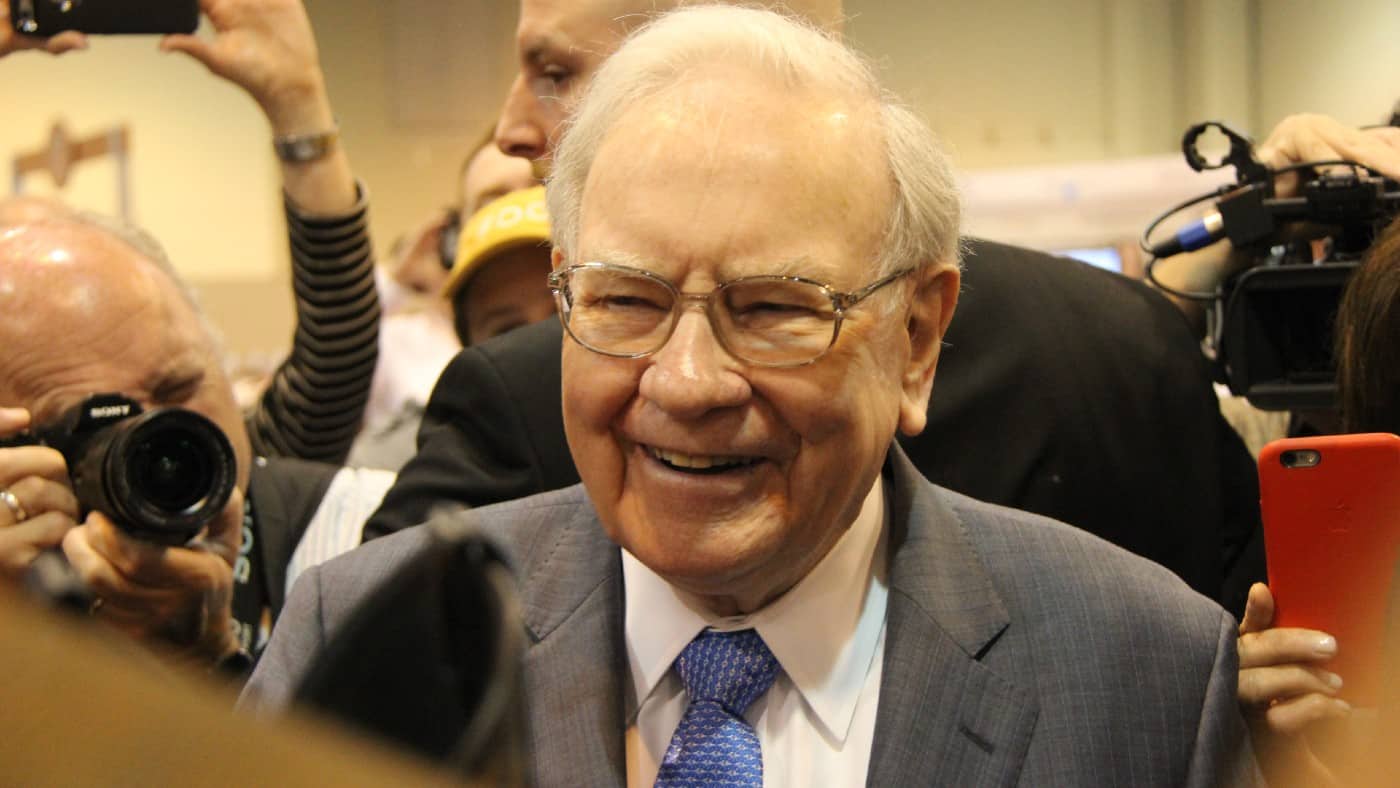
Warren Buffett at a Berkshire Hathaway AGM

Image source: The Motley Fool

You’re reading a free article with opinions that may differ from The Motley Fool’s Premium Investing Services. Become a Motley Fool member today to get instant access to our top analyst recommendations, in-depth research, investing resources, and more. Learn More.

Legendary investor Warren Buffett attracts a lot of admiration for his market wisdom. But Buffett himself frequently says he learnt his key investing lessons from someone else. That person was investment guru Ben Graham, who taught Buffett and wrote The Intelligent Investor. “All of the important ideas in investing really are in that book,” says Buffett.

Like the Sage of Omaha, I follow many of Graham’s principles when investing. I think one of those could help make me richer over time, despite its apparent simplicity.

Making gains versus avoiding losses

Many people assume that successful investing is all about making money. I do not disagree that generating money matters – but I think that only tells one half of the story. For me, successful investing is about not losing money, as well as making it. After all, it can be harder to make up for a loss than it is to incur it in the first place. If I invest £1,000 in shares, for example, and they lose 50% of their value, they then need to jump 100% just for me to get back to even.

That helps explain why Graham emphasises the principle of always investing with a margin of safety.

The idea is exactly as it sounds. Rather than investing in companies that seem quite good and could help me turn a profit, I hold fire and wait to find great companies whose valuation is so attractive it offers me a margin of safety. That does not mean every investment will work out well, of course. But by focusing on what I think are great opportunities rather than merely good ones, hopefully I am less likely to make big, costly mistakes.

Warren Buffett on the margin of safety

Buffett recognises the margin of safety as one of the three core concepts in The Intelligent Investor.

Speaking to shareholders of his company Berkshire Hathaway, he explained the idea like this: “Don’t try and drive a 9,800 lb truck over a bridge that says its capacity is 10,000 lbs”.

In other words, Warren Buffett thinks that there is no point in sailing close to the wind when it comes to choosing shares to buy. He is not looking for situations where he can make a fairly modest profit if lots of things go right. Instead, he is trying to find shares that might lead to him making a big profit even if things go worse than hoped.

My take on Ben Graham

I am doing the same. I think always aiming to have a margin of safety might help me avoid some tempting but risky investments that could end up losing me money hand over fist.

Success as an investor is partly about finding rewarding shares to buy. But a key part of it is also trying to avoid losing money by steering clear of investments that do not meet my risk profile. A lot of investors are in too much of a hurry to try and build their wealth, forgetting that important principle. But I think Ben Graham’s emphasis on a margin of safety could boost my investing returns and therefore my wealth, just as it has for Buffett.


C Ruane has no position in any of the shares mentioned. The Motley Fool UK has no position in any of the shares mentioned. Views expressed on the companies mentioned in this article are those of the writer and therefore may differ from the official recommendations we make in our subscription services such as Share Advisor, Hidden Winners and Pro. Here at The Motley Fool we believe that considering a diverse range of insights makes us better investors.

More on Investing Articles

Young Caucasian man making doubtful face at camera
Dividend Shares

Will the Diageo share price crash again in 2026?

The Diageo share price has crashed 35.6% over one year, making it one of the FTSE 100's worst performers in…

Read more »

Investing Articles

Is Alphabet still one of the best shares to buy heading into 2026?

The best time to buy shares is when other investors are seeing risks. Is that the case with Google’s parent…

Read more »

Investing Articles

Could the Barclays share price be the FTSE 100’s big winner in 2026?

With OpenAI and SpaceX considering listing on the stock market, could investment banking revenues push the Barclays share price higher…

Read more »

Investing Articles

Will the Nvidia share price crash in 2026? Here are the risks investors can’t ignore

Is Nvidia’s share price in danger in 2026? Stephen Wright outlines the risks – and why some might not be…

Read more »

Middle-aged white man pulling an aggrieved face while looking at a screen
Growth Shares

I asked ChatGPT how much £10,000 invested in Lloyds shares 5 years ago is worth today? But it wasn’t very helpful…

Although often impressive, artificial intelligence has its flaws. James Beard found this out when he used it to try and…

Read more »

Portrait of pensive bearded senior looking on screen of laptop sitting at table with coffee cup.
Investing Articles

Did ChatGPT give me the best FTSE stocks to buy 1 year ago?

ChatGPT can do lots of great stuff, but is it actually any good at identifying winning stocks from the FTSE…

Read more »

Surprised Black girl holding teddy bear toy on Christmas
Investing Articles

Who will be next year’s FTSE 100 Christmas cracker?

As we approach Christmas 2025, our writer identifies the FTSE 100’s star performer this year. But who will be number…

Read more »

Businessman with tablet, waiting at the train station platform
Investing Articles

I asked ChatGPT for an 8%-yielding passive income portfolio of dividend shares and it said…

Mark Hartley tested artificial intelligence to see if it understood how to build an income portfolio from dividend shares. He…

Read more »