What do falling share prices mean for an investor?

Are falling share prices important when it comes to investments? Our writer definitely thinks so. Here he explains why with a simple example.

The content of this article was relevant at the time of publishing. Circumstances change continuously and caution should therefore be exercised when relying upon any content contained within this article.

You’re reading a free article with opinions that may differ from The Motley Fool’s Premium Investing Services. Become a Motley Fool member today to get instant access to our top analyst recommendations, in-depth research, investing resources, and more. Learn More.

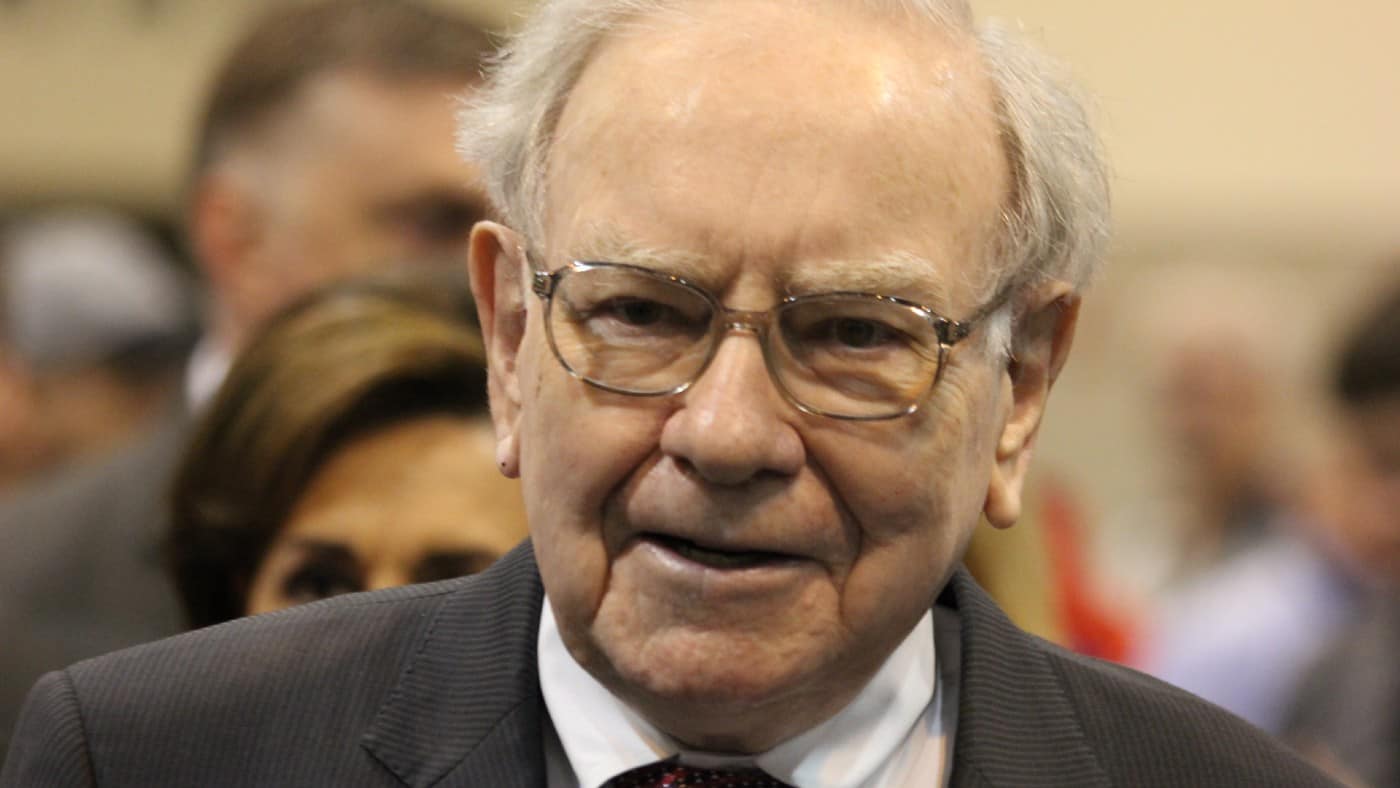
Warren Buffett at a Berkshire Hathaway AGM

Image source: The Motley Fool

Imagine I buy two shares one after the other. One goes down 50%. I sell it, then use the proceeds to buy a different share, which goes up 50%. How much of my original money do I have left? The answer is 75%. That is the power of falling share prices. It would be the same the other way around too – if my first share went up 50% and I reinvested the proceeds in a share that fell 50%, I would have 75% of my original money left over.

That may seem odd. One share rose by the same amount as the other fell. But the movements did not cancel each other out. That is a critical lesson for investors.

Warren Buffett on losing money

The famous and very successful investor and Berkshire Hathaway chairman Warren Buffett says that the first rule of investing is never to lose money and the second rule is never to forget the first rule.

That sounds so blindingly obvious I think many people do not even realise what a powerful piece of investing wisdom it really is. As my example above shows, two investments that move equal amounts in opposite directions do not simply cancel each other out.

Falling share prices and losing money

But another part of Buffett’s investing approach is also helpful here. He imagines the stock market as a person called Mr. Market. Every day, Mr. Market offers to buy your shares at a certain price, or sell you more shares at that price.

The brilliance of this Mr. Market analogy is that it underlines how voluntary selling shares is. If I do not want to sell my shares, I do not have to (in most situations, although, sometimes a takeover bid may be different). So falling share prices can mean my portfolio is worth less on paper. But I have not actually lost money unless I sell shares at that level.

Sometimes, it may make sense to do so. If a share price is falling because a business’s fundamental prospects have changed, it might be less painful for me as an investor to sell my holding and swallow the loss. But in many cases, if I still believe in the investment case for the business, I will keep the shares as part of my long-term investing philosophy. Until I sell, falling share prices are only a paper loss.

Thinking about how to buy shares

That helps explain why I look at the possible downside of shares I could buy, not just the potential upside.

Of course I am looking to invest in companies that can do well and make me money. Falling share prices could offer me an opportunity to buy them more cheaply than before. But even more important than that to building long-term wealth is avoiding companies that will cause me to lose a lot of the money I invest. That may sound obvious, but it is a lynchpin of Buffett’s approach to investing.

Christopher Ruane has no position in any of the shares mentioned. The Motley Fool UK has no position in any of the shares mentioned. Views expressed on the companies mentioned in this article are those of the writer and therefore may differ from the official recommendations we make in our subscription services such as Share Advisor, Hidden Winners and Pro. Here at The Motley Fool we believe that considering a diverse range of insights makes us better investors.

More on Investing Articles

Two white male workmen working on site at an oil rig
Investing Articles

As oil prices soar, is it time to buy Shell shares?

Christopher Ruane weighs some pros and cons of adding Shell shares to his ISA -- and explains why the oil…

Read more »

Man hanging in the balance over a log at seaside in Scotland
Investing Articles

How much do you need in an ISA for £6,751 passive income a year in 2046?

Let's say an investor wanted a passive income in 20 years' time. How much cash would need be built up…

Read more »

Smiling black woman showing e-ticket on smartphone to white male attendant at airport
Investing Articles

Why isn’t the IAG share price crashing?

Harvey Jones expected the IAG share price to take an absolute beating during current Middle East hostilities. So why is…

Read more »

piggy bank, searching with binoculars
Growth Shares

1 UK share I’d consider buying and 1 I’d run away from on this market dip

In light of the recent stock market dip, Jon Smith outlines the various potential outcomes for a couple of different…

Read more »

Burst your bubble thumbtack and balloon background
Investing Articles

AI may look like a bubble. But what about Rolls-Royce shares?

Bubble talk has been centred on some AI stocks lately. But Christopher Ruane sees risks to Rolls-Royce shares in the…

Read more »

Black woman using smartphone at home, watching stock charts.
Investing Articles

Will the BAE Systems share price soar 13% by this time next year?

BAE Systems' share price continues to surge as the Middle East crisis worsens. Royston Wild asks if the FTSE 100…

Read more »

Portrait of pensive bearded senior looking on screen of laptop sitting at table with coffee cup.
Investing Articles

Is this a once-in-a-decade chance to bag a 9.9% yield from Taylor Wimpey shares?

Taylor Wimpey shares have been hit by a volatile share price and cuts to the dividend. Harvey Jones holds the…

Read more »

Chalkboard representation of risk versus reward on a pair of scales
Investing Articles

Way up – or way down? This FTSE 250 share could go either way

Can this FTSE 250 share turn its fortunes around? Or has its day passed? Our writer looks at both sides…

Read more »