The investment trust I’m buying for stock market crash protection

This Fool explains why he believes this investment trust is perfectly positioned to provide protection in the event of a stock market crash.

| More on:

The content of this article was relevant at the time of publishing. Circumstances change continuously and caution should therefore be exercised when relying upon any content contained within this article.

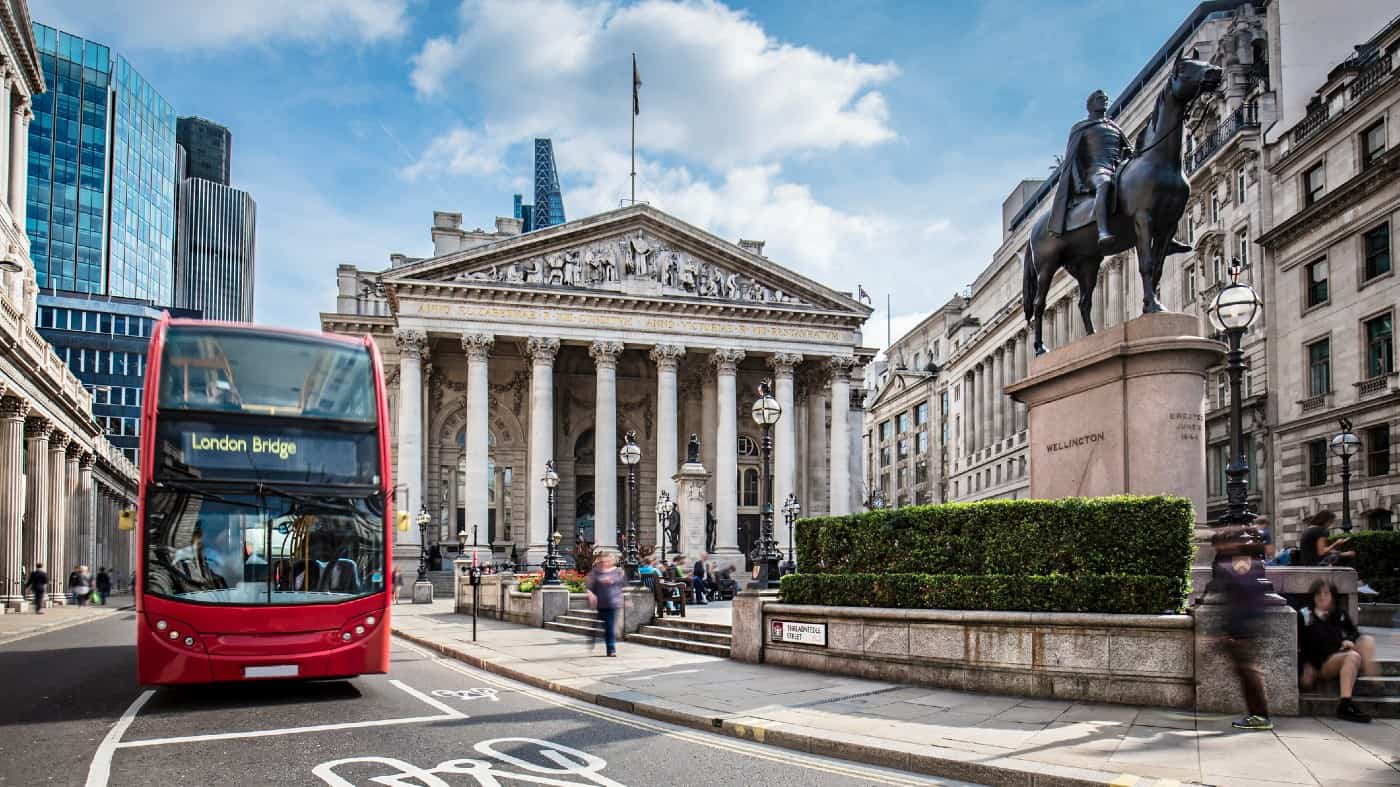
Bus waiting in front of the London Stock Exchange on a sunny day.

Image source: Getty Images

You’re reading a free article with opinions that may differ from The Motley Fool’s Premium Investing Services. Become a Motley Fool member today to get instant access to our top analyst recommendations, in-depth research, investing resources, and more. Learn More.

With economic uncertainty building, the risks of a stock market crash are growing. However, as a long-term investor, I am not interested in guessing when the market could fall in value. 

Instead, I am spending my time trying to find investments that can perform well in any market environment. And there is one investment trust I have been buying recently. I believe it has all of the qualities required to weather a stock market crash and potentially even emerge stronger on the other side. 

Preserving wealth

Capital Gearing Trust (LSE: CGT) has two main aims. To preserve shareholders real wealth and achieve absolute total returns over the medium to long term. 

It has an excellent track record. The trust has achieved an average annual return of around 8% over the past couple of decades, with much less volatility than the rest of the market.

Of course, investors should never use past performance to guide future potential. Nevertheless, I think this track record shows the investment trust has achieved what it set out to do, proving that management has shareholders’ best interest in mind. 

The investment trust has relatively little exposure to the equity markets. Around 17% of the portfolio was invested in equities at the end of December, with a further 18% invested in property stocks and other property assets.

Index-linked government bonds accounted for 34% of assets, and the investment trust also owned a small position in gold. 

I have been buying shares in the investment trust because I believe this diversified approach will protect my portfolio in the event of a stock market crash.

Investment trust risks

There are a couple of negatives to using this approach. The firm charges an annual management fee of around 0.9%, including all costs, for a start. If I managed a portfolio of equities by myself, the cost would be minimal.

At the same time, the trust’s exposure to bonds and property suggests it will underperform some sections of the equity market, which have the potential to achieve higher returns in the long run. For example, a portfolio of property assets may underperform a high-growth technology business with market-leading profit margins. 

Crash protection

Still, I am not buying this investment trust to build exposure to fast-growing sectors. I am buying the shares to protect my portfolio from a stock market crash.

And I think the company can do just that. Its defensive asset allocation allows me to build exposure to assets such as preference shares. These may not be accessible to the average investor. The trust also has significant international exposure.

The second-largest individual holding in the portfolio is Vonovia, Germany’s leading nationwide residential real estate company. 

Considering this diversification, I am more than happy to pay the extra charge for investing in the market through Capital Gearing. 

Rupert Hargreaves owns Capital Gearing Trust. The Motley Fool UK has no position in any of the shares mentioned. Views expressed on the companies mentioned in this article are those of the writer and therefore may differ from the official recommendations we make in our subscription services such as Share Advisor, Hidden Winners and Pro. Here at The Motley Fool we believe that considering a diverse range of insights makes us better investors.

More on Investing Articles

Departure & Arrival sign, representing selling and buying in a portfolio
Investing Articles

Prediction: in 2026 the red-hot Rolls-Royce share price could turn £10,000 into…

Harvey Jones can't believe how rapidlly the Rolls-Royce share price has climbed. Now he looks at the FTSE 100 growth…

Read more »

Businessman hand stacking up arrow on wooden block cubes
Investing Articles

Prediction: Tesco shares could soon climb another 17%

After a strong run for Tesco shares, analysts are optimistic for the start of 2026. Well, most of them are,…

Read more »

UK coloured flags waving above large crowd on a stadium sport match.
Investing Articles

Prediction: the Vodafone share price could soar 40% in 2026

Despite a great 2025, the Vodafone share price is still down 20% over five years. The latest predictions suggest more…

Read more »

Santa Clara offices of NVIDIA
Investing Articles

By January 2027, £1,000 invested in Nvidia shares could turn into…

What could £1,000 in Nvidia shares do by 2027? Our Foolish author explores three potential scenarios for the artificial intelligence…

Read more »

Investing Articles

How to target a stunning £1,000 weekly passive income for retirement, starting in 2026

It's a brand new year and Harvey Jones says this is the ideal time to accelerate plans to build a…

Read more »

Investing Articles

I asked ChatGPT to name 3 epic growth stocks to buy in 2026 and it said…

Harvey Jones is looking to inject some excitement into his portfolio this year and wondered if ChatGPT could suggest some…

Read more »

Businessman using pen drawing line for increasing arrow from 2024 to 2025
Investing Articles

What £10,000 invested in Babcock’s and BAE Systems’ shares 1 year ago is worth today…

Harvey Jones says BAE Systems' shares have been going great guns while fellow FTSE 100 defence stock Babcock has shot…

Read more »

One English pound placed on a graph to represent an economic down turn
Investing Articles

Lloyds’ share price near £1: has the easy money already been made?

With the Lloyds share price struggling to break above £1, Mark Hartley questions whether its years-long rally has come to…

Read more »