Why I just sold my holding in Neil Woodford’s Equity Income Fund

Edward Sheldon reveals why he just ditched one of the most popular funds in the UK for another equity income fund.

The content of this article was relevant at the time of publishing. Circumstances change continuously and caution should therefore be exercised when relying upon any content contained within this article.

You’re reading a free article with opinions that may differ from The Motley Fool’s Premium Investing Services. Become a Motley Fool member today to get instant access to our top analyst recommendations, in-depth research, investing resources, and more. Learn More.

Last week, I made a change to my self-invested personal pension (SIPP), selling out of Neil Woodford’s Equity Income fund. Here’s a look at why I sold, and what I did with the proceeds.

Poor performance

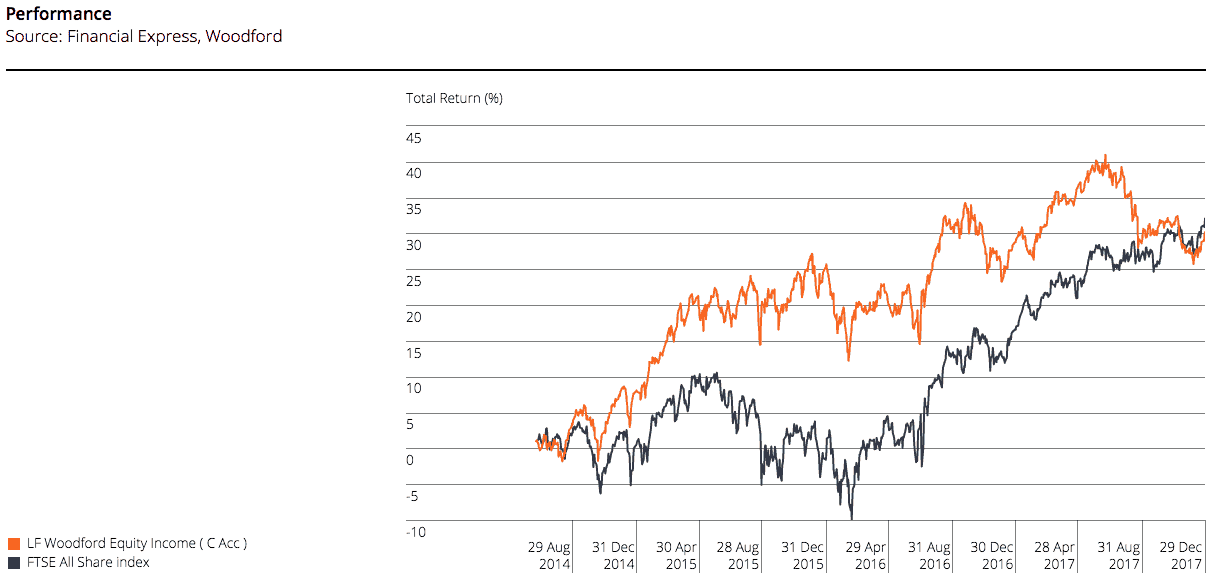
I bought Woodford’s flagship fund for my pension back in September 2014, not long after it launched. For a while, I was very happy with the performance of the fund. For example, in 2015, the portfolio returned 16.2%. This was comfortably in excess of the FTSE All-Share index’s return of just 1%
Woodford

Source: Woodford Investment Management

However, since then, Woodford’s performance has been pretty poor. In 2016 and 2017, the fund returned just 3.2% and 0.8%. In the same time, the index generated returns of 16.8% and 13.1%. That’s quite some underperformance.

While a performance like that is disappointing, it’s actually not the reason I sold the fund. Every portfolio manager will experience a challenging period at some stage or another. As a long-term investor, it doesn’t make sense to bail out of a fund just because short-term performance has been below par. Chasing the best performing funds is a dangerous strategy that can backfire. So why did I sell?

Equity income?

The reason I sold Woodford’s marquee fund is that the portfolio’s composition has changed dramatically since launch.

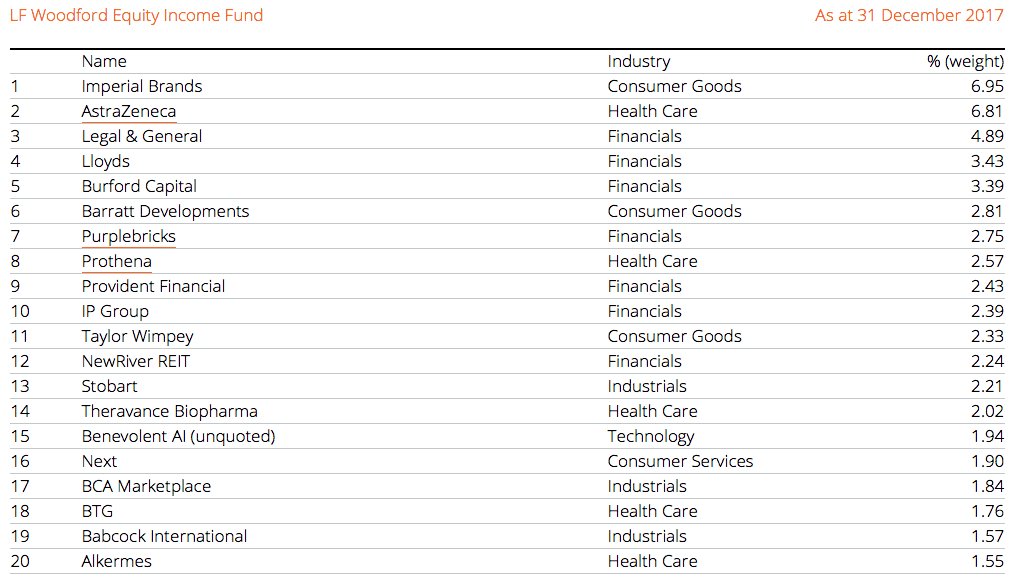
As an ‘equity income’ fund, I would expect it to hold a large number of blue-chip companies that have strong dividend track records. That’s the general approach to the investment strategy. And back in 2014, when it launched, it did contain a large number of these stocks. For example, the majority of the top 20 holdings were well-recognised FTSE 100 names, such as HSBC Holdings, BAE Systems, British American Tobacco and Reckitt Benckiser.

However, a glance at the portfolio’s top holdings today reveals a completely different story. If you strip out the top four holdings, the portfolio contains a very unorthodox list of names for an equity income fund. For example, online real estate agent Purplebricks, the seventh largest holding, is a company that is not yet making a profit and not paying a dividend. Similarly Prothena, the eighth largest holding, is a biotechnology company that does not pay a dividend.
Woodford Equity Income

Source: Woodford Investment Management

Ultimately, I sold Woodford’s fund because it no longer represents the investment style I was looking for in my SIPP.

Fund switch

After selling Woodford’s fund, I invested the proceeds in the J O Hambro UK Equity Income fund. This appears to be much more of a traditional equity income fund. For example, the top 10 holdings include names such as Royal Dutch Shell, HSBC, Rio Tinto and Aviva. Over the last three calendar years, it has returned 18.1%, 16.8% and 1%. The ongoing fee is just 0.67% per year on Hargreaves Lansdown’s platform.

Woodford’s performance could bounce back this year, but given that the focus of my SIPP is on secure, steady growth, I’m a lot more comfortable holding the more traditional offer run by J O Hambro.


Edward Sheldon owns shares in Royal Dutch Shell, Aviva and BAE Systems. The Motley Fool UK has recommended HSBC Holdings, Reckitt Benckiser, and Royal Dutch Shell B. Views expressed on the companies mentioned in this article are those of the writer and therefore may differ from the official recommendations we make in our subscription services such as Share Advisor, Hidden Winners and Pro. Here at The Motley Fool we believe that considering a diverse range of insights makes us better investors.

More on Investing Articles

Close-up of British bank notes
Investing Articles

£9,000 in savings? Here’s how to try and turn that into a £193 monthly second income

With a long-term approach and applying basic principles of good investment, our writer reckons someone with under £10k could earn…

Read more »

Investing Articles

A 2026 stock market crash could be a rare passive income opportunity

If a stock market crash comes our way then it might throw up plentiful opportunities for investors to secure a…

Read more »

Tesla car at super charger station
Investing Articles

£10,000 invested in Tesla stock 1 year ago is now worth…

Dr James Fox takes a closer look at Tesla stock with the incredibly volatile mega-cap company surging and pulling back…

Read more »

British pound data
Investing Articles

My personal warning for anyone tempted by the plunging Aston Martin share price

Harvey Jones was so captivated by the plunging Aston Martin share price that he ignored an old piece of investment…

Read more »

Stacks of coins
Investing Articles

This penny share just crashed 13% to 19p! Time to buy?

After another fall today, this penny stock has now crashed 70% since April 2021. Is it one that should be…

Read more »

Trader on video call from his home office
Investing Articles

Down 19%! Here’s why Barclays shares look a serious bargain to me right now

Barclays shares have slumped recently, but a big gap between price and fair value has opened, offering nimble long-term investors…

Read more »

CEO Mark Zuckerberg at F8 2019 event
Investing Articles

Why Meta Platforms shares fell 12.5% in March

Historically, investors have done well by buying Meta Platforms shares when the price has fallen. But is the latest legal…

Read more »

Arrow symbol glowing amid black arrow symbols on black background.
Investing Articles

£20,000 invested in BAE Systems shares 4 years ago is now worth…

BAE Systems' shares have soared since 2022, yet rising NATO budgets are just starting to feed through, so the real…

Read more »