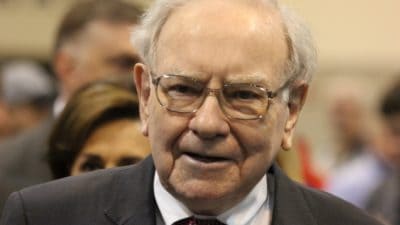
Jim Cramer of the CNBC made history a few years ago.
When asked whether investors should have sold all their Bear Stearns holdings in early March 2008, he said: “No, no, no, Bear Stearns is fine.”
Bear Stearns, one of the largest US brokers at the time, traded at around $60 a share back then.
As it turned out, unfortunately, the bank was sold to JP Morgan for $2 a share less than one week later, in a rescue deal orchestrated by the Federal Reserve.
In spite of a take-out price that eventually rose to $10 a share, investors were left nursing huge losses — the shares plummeted to $10 from $159 in less than a year.
Drawing a parallel, Greece may go belly-up — but is a very different story.
Systemic Risk
In the summer of 2007, two Bear Stearns fund mangers brought down one of the broker’s funds following wrong bets placed on risky mortgages, whose prices had precipitated to somewhere around zero.
At that time, BNP Paribas also had some problems, and it froze a few funds it had under management because of subprime-related losses. Meanwhile, the syndication of the record debt package backing the leveraged buyout of Alliance Boots was pulled as liquidity dried up.
By the end of 2008, Bear Stears had collapsed, followed by Lehman a few months later, while Merrill Lynch was forced to merge with Bank Of America, and a few insurance behemoths, including AIG, were bailed out by the Fed.
Goldman was safe, but it raised expensive capital from Warren Buffett, who profited from the trade.
In those days, from the US to Europe and elsewhere, systemic risk stood at its highest level on record since the Great Depression.
Now, seriously, why should you bother about the possible demise of a tiny country that represents just a tiny fraction of the Eurozone’s GDP (less than 10% of the GDP of the UK), whose trade relationships with the rest of the world carry very little significance, if any, and whose accounts should have not been trusted ever since day one?
Its primary deficit — which is just like the earnings before interests and taxes (Ebit) line for a corporation — is a structural issue that only a full restructuring would solve, quite simply because revenue increases and cost cuts are no going to do the trick. This issue has been apparent ever since the first restructuring deal between Greece and its creditors was agreed a few years ago.
That’s not to mention its huge fiscal deficit.
Default — So What?
The way I see it, a soft default of Greece is a possibility, but it’s a risk you should have considered at least five years ago or earlier, when the FTSE 100 traded at 4,800 points — when it traded some 30% below its current level.
As I write, this Bloomberg headline just hit my inbox: “Greece documents can be basis for a deal: EU official”, while a second broker noted that Greece does “not intend to change its stance on certain unnecessary fiscal measures” that are being proposed.
A third email stressed the fact that no agreement had been reached, but “now both sides (are) working on a ‘feasibility blueprint’“.
Finally: “Eurogroup meeting delayed by 30 minutes to 1.30pm in Brussel.“
Bond prices have signalled uncertainty over the last 48 hours, but they do not suggest a meltdown scenario.
Either way, what history teaches us is that a domino effect — who’s next: Portugal? Italy? France? Spain? — is a possibility, but remains highly unlikely. Under a worst-case scenario, panic would spread across the world, but the UK would be set to benefit over the long term, one of reasons being that capital inflows would boost the value of GBP-denominated assets.