
The new stocks and shares ISA season for 2026/27 is here — and investors have a limited window to start building £10,000 a year in passive income.
That urgency isn’t about a closing door, but about time: the earlier money is put to work in a Stocks and Shares ISA, the longer it has to compound and grow towards that goal.
What it really takes to earn £10,000 a year
A £10,000 annual income would typically require a Stocks and Shares ISA worth somewhere in the region of £150,000 to £200,000, depending on the dividend yield achieved.
For example, a 5% yield would require a £200,000 portfolio, while a more ambitious 7% yield would reduce that figure to around £143,000. But higher yields often come with higher risks, so striking the right balance is key.
Using a more balanced 6% annual return as a planning assumption, the next question is how long it might take to build an ISA of that size.
The chart below illustrates how consistent monthly investing can compound over time at this rate.
What it highlights is simple. Even with a relatively healthy return, lower levels of investing may still fall short of the portfolio needed to generate £10,000 a year. That means contributions, time, and investment choices all matter.
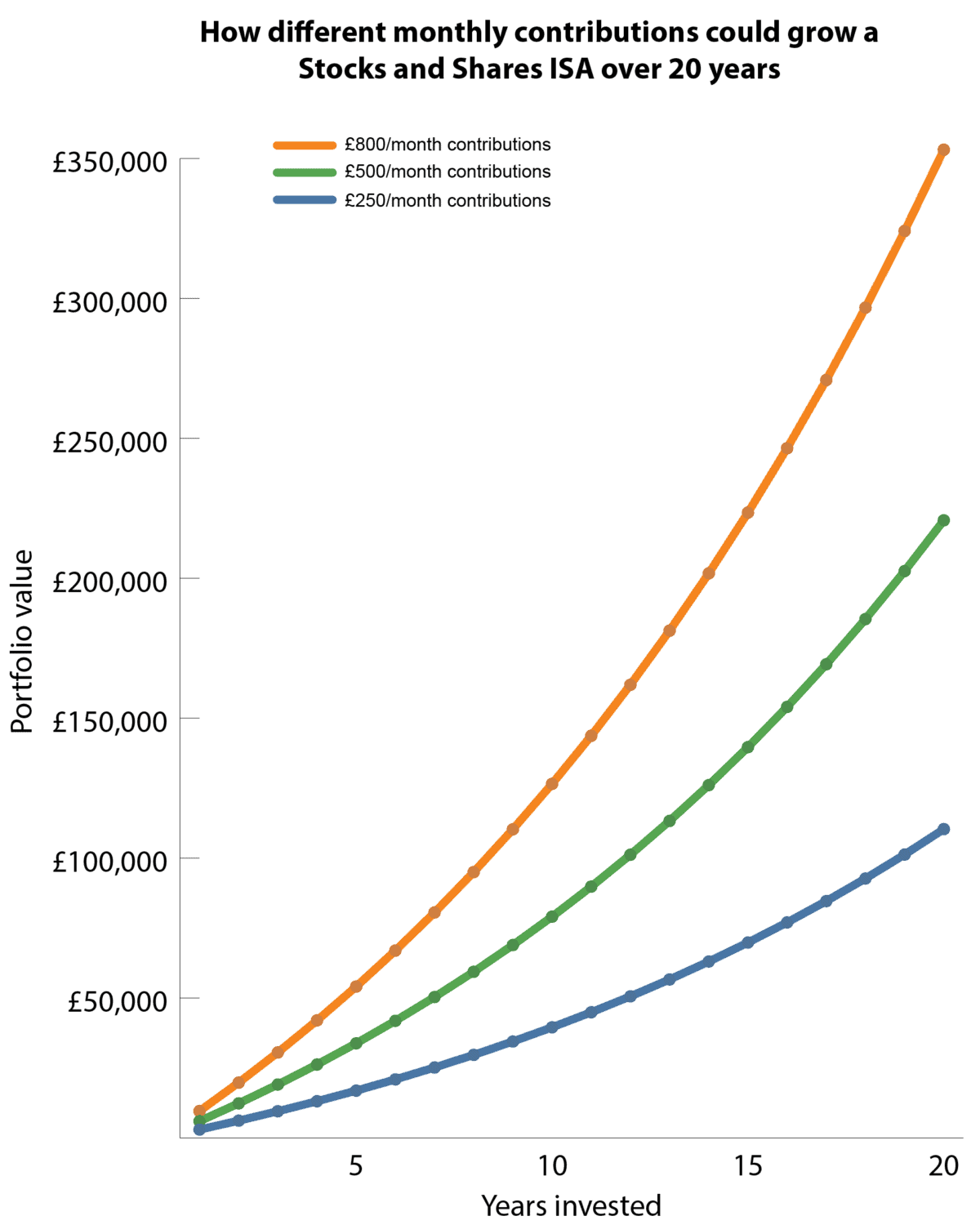
Chart generated by author
Energy play
One stock I think investors should consider is BP (LSE: BP.). The oil major currently offers a dividend yield of 4.1%, and strong recent share price performance reflects the scale of cash being generated across the business.
While profits can be cyclical, BP has consistently produced strong free cash flow in recent years. That has supported its growing dividend, alongside additional shareholder returns through buybacks.
This combination of income and cash generation is exactly what I look for in today’s volatile markets.
The main risk, however, is that earnings remain tied to energy prices and capital allocation decisions. If conditions weaken or investment spending rises too quickly, returns to shareholders could come under pressure.
Portfolio stabiliser
To balance that, I suggest considering a very different type of energy exposure in National Grid (LSE: NG.). The business currently offers a dividend yield of around 4%, supported by a recent pullback in the share price that has pushed income levels higher for new investors.
Unlike BP, the company is not driven by commodity prices. Instead, it operates regulated electricity and gas transmission networks, meaning returns are largely set by agreed frameworks with regulators. That gives the business far greater visibility over future cash flows.
The key attraction here is less about high income today, and more about steady, inflation-linked dividend growth over time. That makes it a useful stabiliser within an income-focused ISA portfolio, particularly when combined with more cyclical holdings like BP.
Risks remain — including regulatory changes, higher interest rates, and the capital demands of maintaining and upgrading grid infrastructure. However, the underlying income stream is typically far more predictable than most equity investments.
Bottom line
For me, building a £10,000-a-year income from a Stocks and Shares ISA is about combining different types of dividend payers and staying invested through market cycles. BP and National Grid are just two examples of how I approach that balance. But they are far from the only opportunities I’m currently watching.