
City analysts are all convinced the Barclays (LSE:BARC) share price will soar over the next year. The question is, how high can the FTSE 100 bank reach by next March?
Right now 17 brokers have ratings on Barclays shares. And not a single one of them expects the bank to fall in value over the next 12 months. One thinks it will rise 54%, to 590p, though the average price target among all analysts sits back at 537.4p, up 40% from current levels.
Even the most pessimistic number cruncher is predicting big gains. Their 12-month price forecast is 450p, suggesting a 17% increase.
But how realistic are these Barclays share price estimates? With risks rapidly increasing, I’m not confident that the FTSE bank will rise at all.
Red flags
Let me get one thing out of the way. I’m not saying that my opinion is any more valid than those City brokers. I didn’t, after all, didn’t expect Barclays shares to soar 78% over the course of 2025.
Guessing the near-term direction of shares is a notoriously difficult business. But the challenges facing the retail bank are considerable. And following the outbreak of war in the Middle East, the risks are growing.
The biggest threat to Barclays and its share price is continued economic weakness in the UK. Why? The bank makes just over half of revenues from British customers, so a flatlining or declining economy can hammer loan growth and drive up impairments at group level.
Unfortunately for it, latest official data showed zero growth for January, down from the meagre 0.1% rise the month before. Things might get much worse too, as the Middle East conflict fuels inflationary pressures and hits consumer spending. Some analysts are now even predicting a recession later in 2026.
Don’t forget that Barclays’ US retail bank is also sensitive to the war’s unintended consequences. Worryingly, economic conditions Stateside have been worsening too, with GDP growth slumping to 0.7% in Q4 from 4.4% the previous quarter.
Will the shares crash?
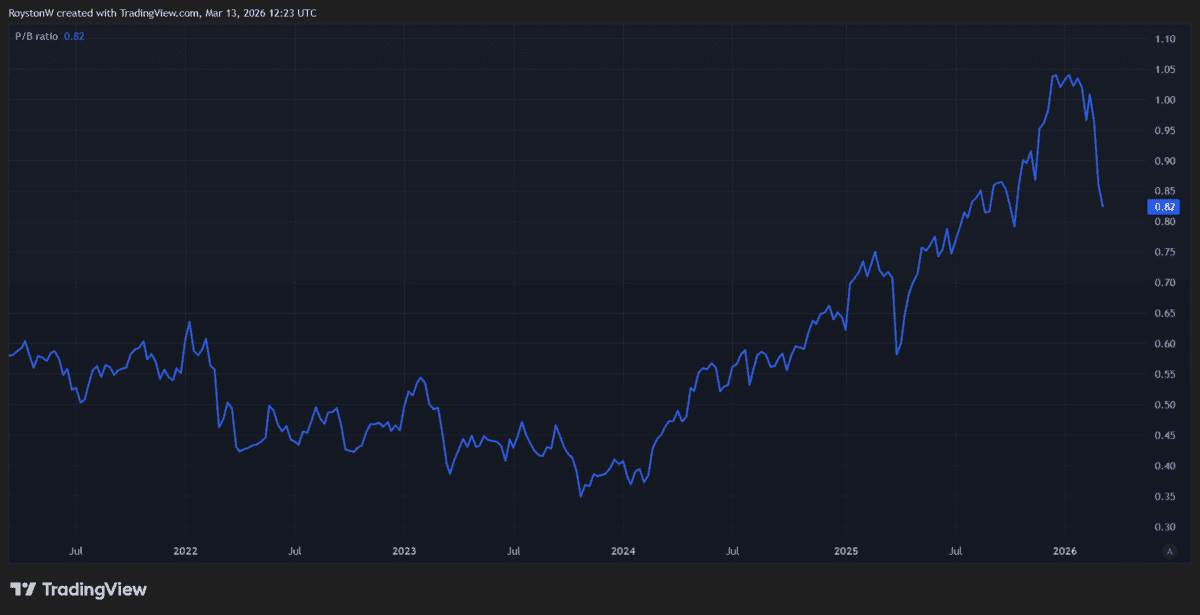
Reflecting these rising dangers, Barclays’ share price has slumped 15% over the past month. The problem for me is that the FTSE 100 bank still looks mightily expensive following 2025’s enormous gains. And this leaves it in danger of a sharp correction.
The bank’s price-to-book (P/B) ratio has fallen alongside its shares. However, at 0.8, it remains more than double the 10-year average of 0.4. If existing investors are looking for an excuse to sell up, this might be a good one.
It’s important to say things aren’t looking totally grim at Barclays. Rising inflation could see central banks maintain or even hike interest rates, meaning margins could end up better than they appeared to be heading. Major cost-cutting should also keep on boosting the bottom line.
But with the economic outlook in the UK and US darkening — and its investment bank profits in danger of sinking if the stock market crashes — I don’t fancy buying the FTSE bank for my portfolio. On balance, the chances of Barclays’ share price sinking are uncomfortably, high in my opinion.