Share your opinion and earn yourself a free Motley Fool premium report!

We are looking for Fools to join a 75 minute online independent market research forum on 15th / 16th December.

To find out more and express your interest please click here

How Warren Buffett achieved returns of 20% a year (and how investors can copy him)

Warren Buffett hasn’t just beaten the market over the decades – he’s smashed it. Here are three key things that have led to his success.

| More on:
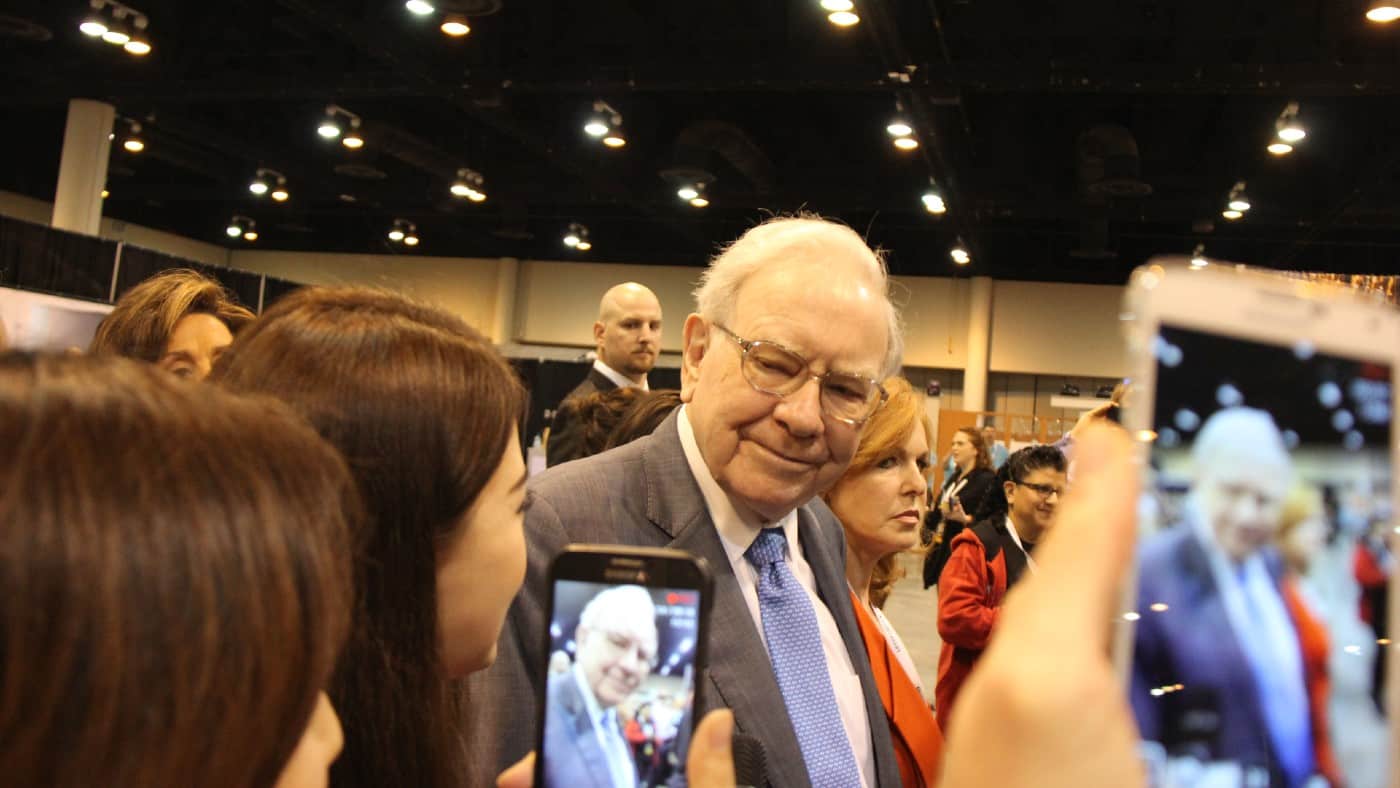
Fans of Warren Buffett taking his photo

Image source: The Motley Fool

You’re reading a free article with opinions that may differ from The Motley Fool’s Premium Investing Services. Become a Motley Fool member today to get instant access to our top analyst recommendations, in-depth research, investing resources, and more. Learn More.

With Warren Buffett announcing that he’ll no longer be writing Berkshire Hathaway’s annual report, there’s been a lot of focus on his amazing long-term track record recently. It really is quite astonishing – since the mid-1960s he’s generated a return of around 20% per year for his investors.

That’s nearly twice the annual return of the S&P 500 over that time and much higher than the returns that most other investment managers have delivered in recent decades. It begs the question – how’s he done it?

A focus on quality and compounding

I’ve spent a lot of time studying Buffett’s investment’s strategy. And the way I see it, there are three key things that the investing guru has done differently to most other investors.

First, he’s focused on high-quality businesses. Originally, he was a value investor, seeking out extremely cheap ‘cigar butt’ companies that no one else wanted to invest in. However, over time, he pivoted to a ‘quality’ approach — companies with dominant market positions, wide economic moats, strong balance sheets, and high levels of profitability.

As part of this quality strategy, he’d look for companies that were consistently able to generate a high return on equity (ROE) and continually reinvest their profits for future growth.

This is ‘compounding 101′. If a business is highly profitable and can reinvest a large chunk of its earnings consistently, it’s likely to get much bigger over the long run.

“The primary test of managerial economic performance is the achievement of a high earnings rate on equity capital employed and not the achievement of consistent gains in earnings per share.”
Warren Buffett in the 1970s

He held stocks for decades

That brings me to my next observation. Buffett has often held stocks for decades, allowing the underlying companies to compound their earnings significantly.

A great example here is Coca-Cola (NYSE: KO). He first invested in the beverages firm all the way back in 1988.

This is a high-quality company with a strong brand and a dominant market position. It’s also very profitable – over the last five years its ROE has averaged about 43%.

Add the high ROE with Buffett’s multi-decade investment horizon, and we get spectacular results. I calculate that Buffett has made over 20 times his money on this stock and that’s not including dividends!

An unorthodox approach to portfolio construction

There’s one more thing I need to mention though and this is that Buffett has always had an unusual approach to portfolio construction. In short, he hasn’t been afraid to have huge positions in certain stocks.

We can see this with Coca-Cola today. Currently, it’s about 9% of his portfolio.

Ultimately, what he’s done is ride his winners for the long run. Instead of selling out after a share price doubled or tripled, he’s held on for the big gains.

Most investors don’t or can’t do this. For example, compliance departments at investment management firms generally don’t allow fund managers to have huge positions in individual stocks (one reason why many managers underperform).

Now, I’m not saying that investors should consider rushing out and loading up on Coca-Cola shares today. They look a little expensive right now and there are also some risks around consumer spending.

But by following Buffett’s approach, investors may be able to improve their long-term returns significantly.


Edward Sheldon has positions in Coca-Cola Company. The Motley Fool UK has no position in any of the shares mentioned. Views expressed on the companies mentioned in this article are those of the writer and therefore may differ from the official recommendations we make in our subscription services such as Share Advisor, Hidden Winners and Pro. Here at The Motley Fool we believe that considering a diverse range of insights makes us better investors.

More on Investing Articles

Young woman holding up three fingers
Investing Articles

Want to start investing in 2026? 3 things to get ready now!

Before someone is ready to start investing in the stock market, our writer reckons it could well be worth them…

Read more »

Investing Articles

Can the stock market continue its strong performance into 2026?

Will the stock market power ahead next year -- or could its recent strong run come crashing down? Christopher Ruane…

Read more »

Businessman hand stacking money coins with virtual percentage icons
Investing Articles

Here’s how someone could invest £20k in an ISA to target a 7% dividend yield in 2026

Is 7% a realistic target dividend yield for a Stocks and Shares ISA? Christopher Ruane reckons that it could be.…

Read more »

A quiet morning and an empty Victoria Street in Edinburgh's historic Old Town.
Investing Articles

How little is £1k invested in Greggs shares in January worth now?

Just how much value have Greggs shares lost this year -- and why has our writer been putting his money…

Read more »

Businessman using pen drawing line for increasing arrow from 2024 to 2025
Investing Articles

This cheap FTSE 100 stock outperformed Barclays, IAG, and Games Workshop shares in 2025 but no one’s talking about it

This FTSE stock has delivered fantastic gains in 2025, outperforming a lot of more popular shares. Yet going into 2026,…

Read more »

Close-up of British bank notes
Investing Articles

100 Lloyds shares cost £55 in January. Here’s what they’re worth now!

How well have Lloyds shares done in 2025? Very well is the answer, as our writer explains. But they still…

Read more »

Thoughtful man using his phone while riding on a train and looking through the window
Investing Articles

How much do you need in an ISA to target £2,000 a month of passive income

Our writer explores a passive income strategy that involves the most boring FTSE 100 share. But when it comes to…

Read more »

Investing Articles

£5,000 invested in a FTSE 250 index tracker at the start of 2025 is now worth…

Despite underperforming the FTSE 100, the FTSE 250 has been the place to find some of the UK’s top growth…

Read more »