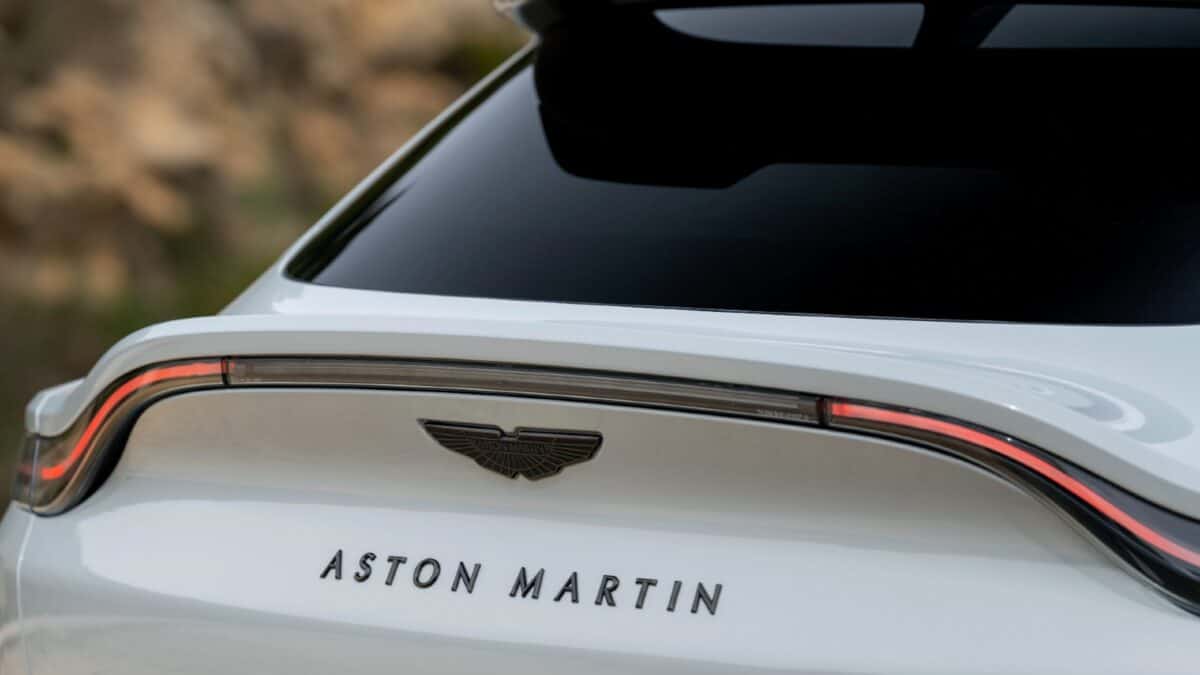
Since its listing on the London stock market in 2018, Aston Martin Lagonda (LSE: AML) has lost 99% of its value. That is right, the Aston Martin share price today is just 1% of what it was little more than seven years ago.
Clearly, this has been a disastrous share to own for many investors (though along the way, there have been some growth spurts, so some may have profited depending on when they bought and sold).
But with its prestigious car brand, well-heeled customer base and long history, Aston Martin has a lot going for it. So might it be able to claw back some or even all of the decline in its share price?
A fundamental problem
While the brand is indeed strong and gives the firm substantial pricing power, Aston Martin has a fundamental problem as I see it (that in turn has created another big problem).
That problem is it has been consistently lossmaking since its flotation. So those fast cars with their vertiginous price tags have not yet translated into black ink.
That in turn has created another problem: funding the losses. Aston Martin has repeatedly issued new shares to raise funds, diluting existing shareholders in the process. I see a risk that it may do that again.
It has also taken on a lot of debt, often at high interest rates. At the end of September the company’s net debt stood at £1.4bn.
Thinking like an investor
That helps explain why the Aston Martin share price has been such a poor performer. Despite the strong assets the company has, it has in recent years been unable to prove that they are enough for it to stand still financially, let alone make money.
Without looking at the financial statements or debt-laden balance sheet, someone might look at the legendary marque, its forthcoming planned ramp up of deliveries of the pricy Valhalla and the price even of its standard cars and see it as a license to print money.
As a potential investor in the company though, I am looking for more than just evidence that Aston Martin has the bare bones of what could be a great business.
Rather, I want to look at what sort of business it actually is. The high debt and ongoing cash outflows do not appeal to me.
Could things get better from here?
However, the company has said it expects to be profitable next year. It also expects free cash flow to “materially improve” although what that means in practice (if it even happens) remains to be seen.
Profit is an accounting concept, so it is the prospect of improving cash flows that grabs my attention. If Aston Martin can move closer to being free cash flow positive, I think its share price could move up – potentially a long way.
I see no realistic prospect of it getting back to where it stood back in 2018. Share dilution means that the share price increasing 100-fold would mean a market capitalisation of around £60bn. That seems far-fetched given the company’s size and struggles.
I think Aston Martin still has a huge amount to prove. I will not be investing.