
Down 96% since IPO. Is it time to consider buying this FTSE 250 fallen icon?

This FTSE 250 car manufacturer made its stock market debut on 3 October 2018. Our writer takes a closer look at its post-IPO financial performance.

| More on:

The content of this article was relevant at the time of publishing. Circumstances change continuously and caution should therefore be exercised when relying upon any content contained within this article.

Finger pressing a car ignition button with the text 2025 start.

Image source: Getty Images

You’re reading a free article with opinions that may differ from The Motley Fool’s Premium Investing Services. Become a Motley Fool member today to get instant access to our top analyst recommendations, in-depth research, investing resources, and more. Learn More.

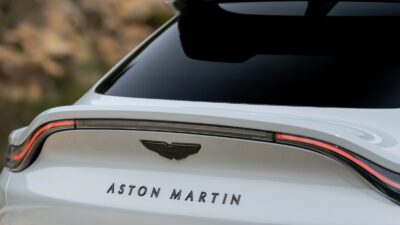
In my opinion, Aston Martin Lagonda (LSE:AML), the FTSE 250 luxury sports car maker, is a bit of a legend. It makes some of the most beautiful cars around and has won numerous awards for its cool brand.

Since 1982, it’s held a Royal Warrant and its vehicles have featured in over half the films made under the James Bond movie franchise. Its cars were once described as “authentic pieces of art”.

Even the group’s annual reports look stylish with some eye-catching photographs and attractive typeset. What’s not to like about Aston Martin?

Persistent losses

Well, if I was a long-standing shareholder, I’d be pretty disappointed. That’s because, since its IPO in October 2018, its share price has fallen 96%. And another profit warning issued today (6 October) is unlikely to help shareholders’ mood. Sales in 2025 are now expected to be a “mid-high single-digit percentage” lower than in 2024.

In 2017, just before the group listed, it recorded a post-tax profit of £77m. Every year since, it’s reported a loss.

Some might prefer that I’d used adjusted figures in the table below — I’ve taken each period’s statutory result from the group’s annual report and accounts – but it’s still loss-making even when one-off non-recurring items are removed. Fundamentally, it doesn’t really change anything.

YearVolumesRevenue (£m)Net profit/(loss) (£m)
20175,09887677
20186,4411,097(57)
20195,862981(118)
20203,394612(411)
20216,1781,095(189)
20226,4121,382(528)
20236,6201,633(227)
20246,0301,584(324)
2025 (first six months)1,922454(149)
Totals47,9579,714(1,926)
Source: company reports

Since 2017, it’s accumulated losses of £1.93bn. It means it’s lost nearly £200,000 for every car its sold. Compared to 2017, its average selling price (ASP) is approximately £86,000 more. But its gross profit margin has fallen from 43.4% to 27.9%.

In effect, it’s having to do more to stand still.

Challenging times

Tariffs have contributed to the group’s problems. Aston Martin euphemistically describes them as “unhelpful”. To provide some relief, the UK now has an agreement where 100,000 cars can be imported into the US at a tariff of 10% (previously it was 25%). Although disappointing, at least there’s some clarity.

However, the group remains hopeful that things will improve over the medium term (2027-28). It has a revenue target of £2.5bn which, based on its current ASP, is equivalent to approximately 10,500 vehicles. It’s aiming for an operating margin of around 15%.

But the group has a history of missing its targets. When it presented its 2018 results, it said its medium-term aim was to produce 14,000 cars a year and have an adjusted operating profit margin greater than 20%. In 2024, it sold 6,030 units and its margin was negative.

I think Aston Martin has all the hallmarks of a company that will eventually be taken private. I’m sure its directors would argue that a stock market valuation of £870m doesn’t truly reflect the value of the group. They might point to Ferrariwhich has a market cap of €82.6bn (£71.9bn) – to support their argument. But that firm’s 2024 accounts reveal that it sold 13,752 cars, achieved a gross profit margin of 50.1% and made a post-tax profit of €1.53bn. Although I don’t think its market cap is justified, it does show how a premium brand can attract an above-average valuation from enthusiastic investors.

I remain a fan of the Aston Martin brand. But it hasn’t yet found a way of making cars profitably. Until it does, there’s no point being in business. As an investment, it’s not for me.

James Beard has no position in any of the shares mentioned. The Motley Fool UK has no position in any of the shares mentioned. Views expressed on the companies mentioned in this article are those of the writer and therefore may differ from the official recommendations we make in our subscription services such as Share Advisor, Hidden Winners and Pro. Here at The Motley Fool we believe that considering a diverse range of insights makes us better investors.

More on Investing Articles

Middle-aged white man pulling an aggrieved face while looking at a screen
Investing Articles

£10,000 invested in Microsoft stock 1 month ago is now worth…

Microsoft stock took a huge tumble after delivering its earnings for the second quarter, triggering wider panic across the tech…

Read more »

A handsome mature bald bearded black man in a sunglasses and a fashionable blue or teal costume with a tie is standing in front of a wall made of striped wooden timbers and fastening a suit button
Investing Articles

How much do you need in a Stocks and Shares ISA to aim for a million by 2036?

Aiming for a million in a Stocks and Shares ISA takes time. But once the power of compound interest gets…

Read more »

Concept of two young professional men looking at a screen in a technological data centre
Investing Articles

I asked ChatGPT for its top passive income stocks to buy in February and it said…

When Stephen Wright asked AI for passive income ideas for February, some of the suggestions it came up with were…

Read more »

Hand of person putting wood cube block with word VALUE on wooden table
Investing Articles

A 4.3% dividend yield and an 8.4 P/E ratio: should I consider buying this under-the-radar cheap stock?

With a dirt cheap P/E ratio and attractive yield, could this little-known stock offer long-term growth potential AND a generous…

Read more »

Businessman with tablet, waiting at the train station platform
Investing Articles

Up 100% in 3 months, this US stock may be undervalued by around 173%

This US stock has been good to Dr James Fox. He bought the shares at around $9 and they've since…

Read more »

BUY AND HOLD spelled in letters on top of a pile of books. Alongside is a piggy bank in glasses. Buy and hold is a popular long term stock and shares strategy.
Investing Articles

As the FTSE 250 closes in on new highs, here are the stocks I’m buying in February

Stephen Wright outlines two FTSE 250 shares with genuine near-future growth prospects. Both are on his list of stocks to…

Read more »

British pound data
Investing Articles

Here’s how a stock market crash could boost passive income potential by 33%

Jon Smith points out why the ability for investors to enhance passive income from dividend shares can increase when the…

Read more »

Close up of manual worker's equipment at construction site without people.
Investing Articles

Falling 26% in 5 years, is Taylor Wimpey one of the best stocks to consider buying now?

James Beard explains why he thinks one of the worst-performing FTSE 250 shares could be among the best stocks consider…

Read more »